

Local laws proceed even with Hochul’s Executive Order
by Robert Lynch; July 15, 2026
At the Enfield Town Board’s July 8 meeting, this Councilperson, Robert Lynch, made a blunt admission: “If anybody charges me with plagiarism, I’m guilty as charged.”

One night later, speaking before the Newfield Town Board, the same lawmaker made the same open admission, this time extending a compliment to Thomas Smith, attorney for the Town of Newfield.
Smith’s three-page, 1300-word script, drafted for and adopted by Newfield that night, would aim to forestall the quick arrival of data centers within the limits of Enfield’s southern neighbor. And Enfield has lifted Smith’s scripting almost word-for-word to construct its own local law.
And even though New York Governor Kathy Hochul has since imposed a one-year, state-wide moratorium on new Data Center permitting, the Newfield and Enfield laws hold purpose. They could delay construction of computing centers that might otherwise slip through the cracks of Hochul’s directive.
Tompkins County municipalities have been running scared ever since data center developer TeraWulf announced its plans in mid-2025 to retrofit the shuttered Milliken Station coal-fired power plant in Lansing and make it a large-scale computing hub. In June, activists opposed to the conversion submitted more than 17,000 petition signatures urging authorities to reject the TeraWulf proposal.
The TeraWulf scare has already prompted town boards in Dryden and Danby to enact zoning law changes that would ban data centers within their boundaries. In March, Councilperson Jude Lemke, sensing majority support, proposed a data center ban for Enfield as well.
What the Newfield Town Board adopted July 9 was a “Local Law Imposing a Temporary Town-Wide One Year Moratorium on Data Processing Centers.” The Newfield Board’s vote was unanimous. There was no Board discussion before the vote. Newfield began its meeting with a Public Hearing on the law. Three people spoke briefly, mostly posing questions. No one objected to the moratorium. The hearing was over in five minutes.
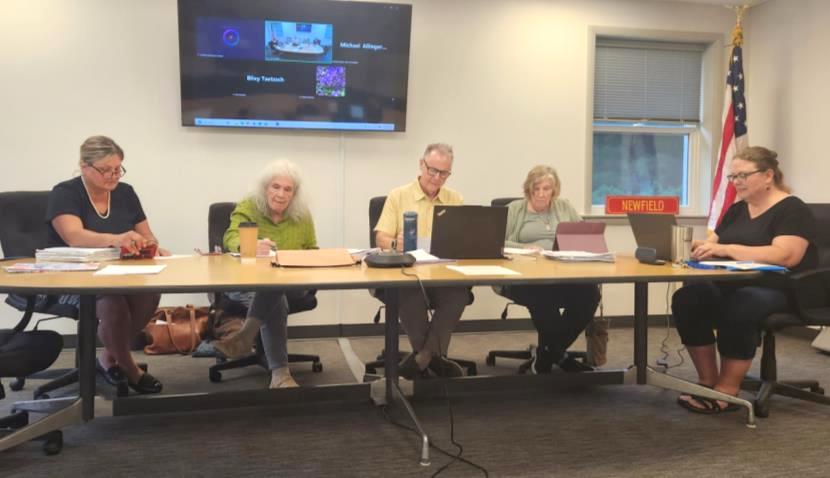
“This is a farming community,” Bull Hill Road resident Joe Pellegrino reminded Newfield’s Board as he addressed the public hearing. “If they dropped it (a data center) in the middle of open land, I don’t see how this is going to benefit us in this community,” he surmised.
“I don’t see how we need a data center,” Pellegrino continued. It would bring “no tax value to the community.” Data centers are “minimally staffed,” resulting in little new employment, he said. “Have any local owners been approached?” Pellegrino asked.
“Not aware of it,” Newfield Supervisor Michael Allinger answered dryly.
And that was the extent of public comment in Newfield that night.
As Supervisor Allinger correctly observed, what Newfield adopted last week—and what Enfield will likely act on in a couple of months—stands not in response to an immediate threat, but rather serves as a backstop to impede some future data center initiative, yet unseen and likewise unknown.
“I think it’s virtually—very unlikely that we’re going to have any kind of thing like that here,” this Councilperson, Lynch, advised Enfield’s Town Board on the night before Newfield voted. “But I sense that a majority of the Board was interested in doing something just in case,” he said. “And there’s nothing wrong with doing something just in case.”
“The Town Board finds and determines that the consideration of any Data Processing, without the adoption of appropriate local laws could have a harmful effect on the health, safety and welfare of any exiting or future residents of the Town,” Enfield’s first draft of a moratorium law states.
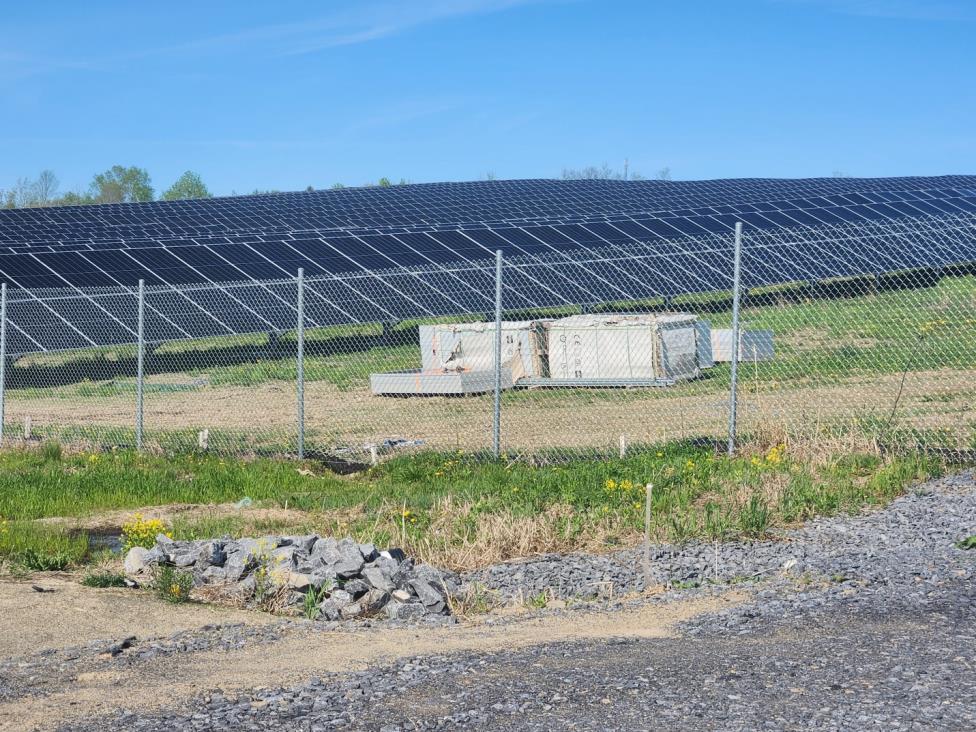
As for Newfield, the 12-month adopted moratorium would buy time for its Town Planning Board “or other select committee” to draft amendments to Newfield’s 2013 Comprehensive Plan and address in that document how the arrival of data centers and cryptocurrency mines would impact “the Town’s natural, historic, cultural, and infrastructure resources, including its water and electrical resources,” its law states.
Enfield, unlike Newfield, has a tough Water Protection Law on the books. So the Enfield Board July 8 wordsmithed its planning board’s assignment somewhat differently.
In line with a resolution previously adopted in May, Enfield would delegate to its Planning Board the initial data law drafting duties. Enfield’s directive would call upon the Planning Board “to review, draft and recommend appropriate new legislation or revised legislation that addresses the issue of A.I. Data Centers,” legislation that the Town Board would later adopt.
The May 13 Enfield resolution had given the Planning Board a six-month window to hand up its recommendations. The new moratorium law, likely to reach a Town Board vote in September, would provide the process a full year and stall any data center permitting until fall 2027 at the earliest.
At first glance, Governor Hochul’s July 14 imposition of a first-in-the nation year-long, state-wide moratorium on data center permitting would render the Enfield and Newfield initiatives moot. But the devil’s in the details. And for smaller communities, those details can, indeed, bedevil.
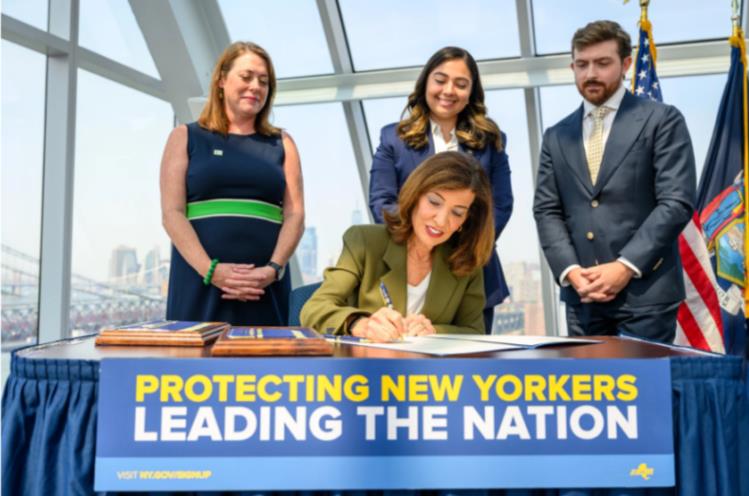
The Hochul executive order would restrict its one-year permitting moratorium only to high-powered “Hyper-Scale Data Centers,” namely those that “consume or can consume 50 megawatts of energy or more.”
Lansing’s TeraWulf plant would likely fall within that “hyper” category. The Lansing facility would reportedly draw 300 megawatts. Yet media reports quote TeraWulf officials as remaining confident that their project will proceed and do so consistent with the governor’s directive.
Meanwhile, Lansing government officials, some critical of the project, remain cautious.
Lansing Supervisor Ruth Groff said that she and her staff are “investigating the implications of the moratorium,” according to a July 14 report in The Ithaca Voice. “Therefore, we have no comment at this time,” Groff advised the publication’s reporters on the day Hochul signed her order.
The governor’s executive order would also exclude from the moratorium facilities “primarily used for manufacturing, research… education… or the provision of medical care.”
Compare the executive order’s 50 megawatt peak demand threshold to the much-lower, 20 megawatt cutoff contained in the so-called “omnibus” bill, the “Responsible Data Center Development Act,” a measure that passed both houses of the New York State Legislature at the close of extended budget deliberations June 4. It, too, would have imposed a one-year permitting moratorium.
Ithaca Assemblymember Anna Kelles had co-sponsored the omnibus bill, itself an amalgam of as many as five separate pieces of legislation. The omnibus bill was viewed as a compromise. Kelles had initially sought a three-year data center moratorium.
With its much-stricter definition of ”large data center,” which would subject a proposal to the one-year moratorium, the omnibus bill would likely have pulled under its umbrella many more modestly-sized data centers, facilities more likely to locate in rural, infrastructure-starved places like Enfield. Our town might not be able to support a 50 megawatt facility. But a 20 megawatt one might prove doable.
Even after issuing her executive order, Governor Hochul could still sign the omnibus bill. She could do so until year’s end. But the governor has not yet signaled her position. She may sign. She may veto. No one knows. Her indecision leaves environmental and consumer advocates in a bind. Do they accept half a loaf as better than no loaf at all? Or do they press forward for the more sweeping moratorium?
Queens State Senator Sen. Kristen Gonzalez a main sponsor of the omnibus bill, appeared with Governor Hochul at the executive order’s signing ceremony Tuesday, the New York Public News Network reported.
“With this executive order, Gov. Hochul is setting the standard that government should improve our lives, not pollute our environment,” Gonzalez was quoted that day.
Assembly Speaker Carl Heastie says discussions about the bill’s fate continue. Hochul has said she “absolutely wants to continue to talk about it.” Heastie was quoted concerning a bill signing.
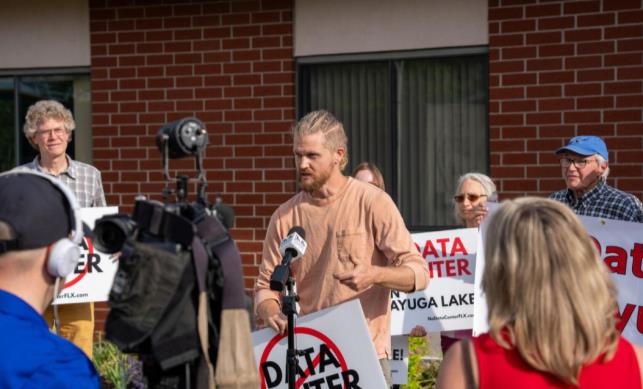
The higher, 50 megawatt threshold is “something I have concern about,” Ben Basem, an organizer with the locally-based “No Data Centers FLX,” an opponent of TeraWulf, told The Ithaca Voice. “The job is far from over,” Basem warned. New Yorkers wanted the omnibus bill, he said. Hochul gave them her executive order instead. “The will of the people in New York State continues to be dwarfed by the demands of energy companies, big tech and the construction industry,” the local activist maintained.
As of late-Wednesday, Assemblymember Kelles had not released a public statement on the executive order, specifically contrasting it to the legislation she’d co-sponsored.
How far Enfield planners will take their crafting of any data center law remains to be seen. During their June and July meetings, the Planning Board attended to other matters, not to a data center law. Planning Board Chair Dan Walker has signaled that any proposed data center, given its likely size, could be handled readily under Enfield’s existing Site Plan Review Law.
Based on its recently amended text, the review law forces Planning Board review of any new commercial building exceeding 4,000 square feet.
“You’re looking at a 40- or 50-thousand square foot building that would need to set on 10-15 acres, basically,” Walker told the Town Board in support of the Site Plan law’s adequacy.
But despite its recent revision, Enfield’s Site Plan Review Law fails to define a data center, or to recognize the potential drain it might have upon the natural or human-created environment. The need for recognition and special treatment lends support for adoption of a stand-alone local law. It’s something the Planning Board has yet to consider.
Enfield Supervisor Stephanie Redmond and Councilperson Lemke have previously expressed support for an outright ban on data centers and cryptocurrency mines. But fashioning such a prohibition for Enfield in the absence of town-wide zoning poses a challenge.
“I know that Jude is finalizing that language,” Redmond told Town Board colleagues July 8. Lemke admitted her task remains unfinished.
“So you know, if a resolution or a local law came before this board calling for our outright ban on data centers, I probably would not vote for it,” this Councilperson, Lynch, told colleagues July 8. But “common sense, tough regulation,” he said, might prompt a different vote.
“So if somebody wanted to come in here, for example, and put one in (a data center), I think there’s two things that they should do: “Number One, they should generate their own power; and Number two, they should bring in their own water,” Lynch said, “because they are two things that we’re very concerned about; depleting the grid and depleting our water supply… We have no public water; we have to rely on our wells.”
Indeed, that lack of readily available grid capacity and ample fresh water render Enfield one of the unlikeliest of places for anyone to site a data center or cryptocurrency mine right now. Such a center requires many megawatts of readily-accessed electricity to process its banks of computers. And it needs plentiful water to cool them.

During a wide-ranging, 40-minute brainstorming discussion of land use regulation and development pressures at its meeting July 1, the Enfield Planning Board raised the data center issue.
Dan Walker identified two areas of Enfield where a data center most likely might locate. One spot would be on Black Oak Road near the soon-to-be upgraded FLAIR power transmission line. The other would be on South Applegate Road, a location where it could draw upon the 15 Megawatt Norbut solar array for power. That’s presuming, of course, that batteries could store the array’s energy.
“If you want to ban something in the Town, it’s a really slippery slope,” Chairman Walker cautioned during the discussion.
“But if a data center wanted to come in and draw 50,000 gallons a day, there’d be an environmental review,” Walker thereafter acknowledged.
“Could we say no to that?” Planning Board member Mike Carpenter asked as to a site plan veto.
“Yes,” Walker answered. “We can deny anything. It’s a matter of which court you go to.”
For now, of course, there’s Kathy Hochul’s moratorium. Enfield may impose its own, more expansive data center moratorium in a couple of months. Beyond that, the path is uncharted.
###