
News Briefs:
State of Emergency: NY, Tompkins
(Oct. 31): Amid fast-moving legal developments, both New York Gov. Kathy Hochul and Tompkins County Administrator Korsah Akumfi have issued emergency orders which could provide relief for those in danger of losing their federal “SNAP” food assistance benefits because of the ongoing Washington government shutdown.
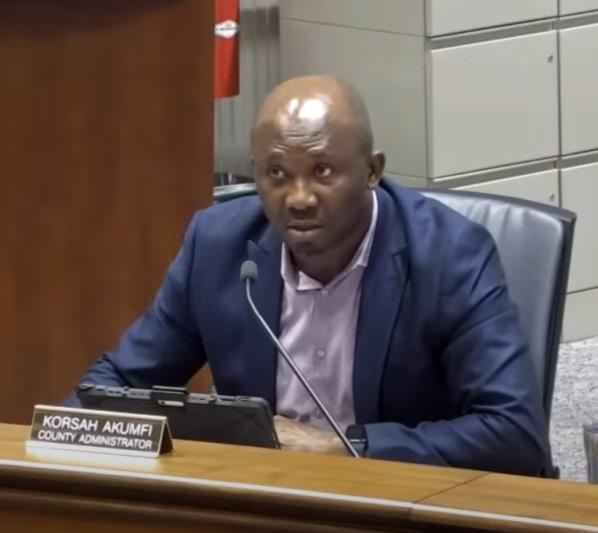
Akumfi’s Emergency Order, declared October 30, and announced the following day, releases $50,000 in County contingency funds to in large part “purchase staple food items sufficient to support impacted families.”
“This emergency action allows us to respond quickly to protect the health and well-being of Tompkins County residents who depend on SNAP benefits,” the County Administrator said in a statement.
When the local emergency order was signed, it had been expected the federal legislative impasse would prevent SNAP recipients from accessing their entitlements effective Saturday, November 1.
However, in two parallel decisions October 31, federal judges issued rulings ordering the Trump Administration to use the SNAP program’s contingency funds to keep payments flowing.
The decisions are only temporary, they may be appealed, and they could provide only partial payments.
Administrator Akumfi’s statement indicates the locally-released funds are “sufficient to supply approximately 30,000 to 35,000 pounds of staple foods” for distribution at local food banks and through community food programs..
The county says approximately 7,200 of its residents rely on SNAP benefits.
###
Snap Meeting Messages “SNAP”
(Oct. 30): At a meeting called so hastily it may have violated state law, the Enfield Town Board Thursday night messaged federal, state, and Tompkins County officials to continue payment of SNAP food assistance benefits to recipients nationwide and to increase funding to local food banks should SNAP benefits cease, as feared, on November 1.
“The Town of Enfield urges the United States House of Representatives and the United States Senate to immediately pass emergency legislation authorizing the continuation of SNAP benefits during the current governmental shutdown,” Enfield’s resolution states.
Should the federal deadlock not be broken, the resolution continued, New York State should “pass emergency legislation” to fund food vouchers, and the Tompkins County Legislature should “provide emergency funding to local food banks, including the Enfield Food Pantry.”
The Enfield resolution passed 4-0, with Councilperson Robert Lynch (this writer) abstaining. Lynch questioned the October 30 meeting’s legality, as it had been requested only the afternoon before and not accorded the two days’ notice otherwise required by law.
Supervisor Stephanie Redmond maintained that the supposed “emergency” nature of business fulfilled a legal loophole.
The resolution spends no Town money. But Lynch suggested he may later propose “buying food” for the local pantry using contingent funds should suspension of the SNAP program stretch into the second week of November.
###
Enfield’s Election Day Four

(Oct. 29): On Election Day, Tuesday, Nov. 4, four candidates will seek two positions on the Enfield Town Board. The Councilperson positions are the only contested Enfield races on the ballot this year.
Rosie Carpenter and Robert Tuskey are challenging incumbents Cassandra Hinkle and Jude Lemke for the two Town Board positions. Elected terms will likely run for the next three years (shortened from four years due to a change in state law.)
Thank you, Tompkins Weekly for interviewing each candidate and for writing an objective and balanced story. You can read it here.
Now be sure to vote next Tuesday. / RL
###
Five Plead for Funding
(Oct. 28): One step away from final adoption, Tompkins County’s $240 Million Budget for 2026 faced a Public Hearing before the County Legislature Tuesday night.
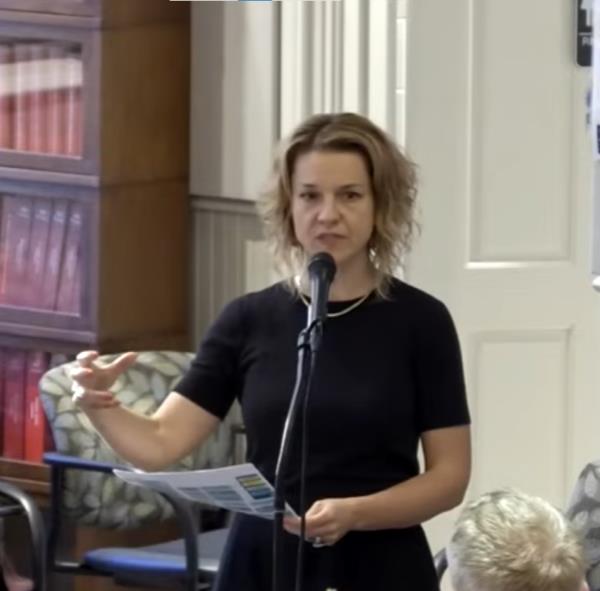
The hearing was over and done in less than a half-hour, much shorter than the two-hour long “Budget Forum” September 30 when as many as 44 people commented on the package then considered.
Yet now, just as then, a program to assist the formerly-incarcerated took prominence.
Of the five who spoke October 28, as many as four urged the Legislature restore funding cuts for the ex-offender aid program OAR (Opportunities, Alternatives and Resources) and also for a closely-tied educational outreach effort, “College Initiative Upstate.”
One speaker, “Paula,” termed OAR the “primary hub” at the intersection of homelessness, court supervision, and recidivism. And she claimed OAR can do its job better than can government.
OAR Director David Sanders said two years of cutting would strip what had been the agency’s $540,000 county subsidy by 25 percent. And if this year’s $99,000 reduction goes through, supporters warned, Endeavor House, one of OAR’s shelters, would close.
As for College Initiative Upstate, its manager, Sherron Brown, testified, “We provide a future for people who never thought they had one.” Thirty-eight of the initiative’s students are now college enrollees, Brown said. “These are not statistics, these are not numbers, these are lives.”
The County Legislature may adjust the budget before its vote November 18.
###
T.C. Budget Tweaked, Advanced
(Oct. 22): Debating details for more than an hour before they voted, members of the Tompkins County Legislature Tuesday night approved and advanced to an October 28 Public Hearing an amended Tentative Budget that would cost the owner of a hypothetical “median-priced home” about $28 more a year in tax.
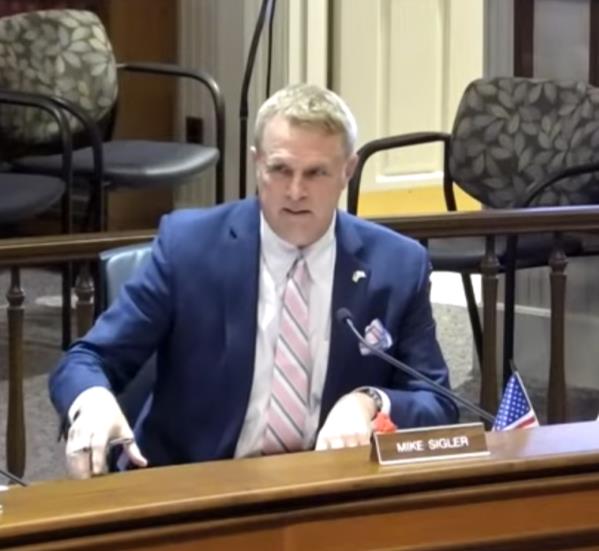
Before it reached its unanimous vote, the Legislature added-in two relatively small ticket items that would tack nearly $37,000 more onto the committee-endorsed $240 Million County spending plan.
But those revisions pale in comparison to what Mike Sigler would have added. The Lansing Republican briefly proposed—then withdrew—his idea that County Government assume as a direct obligation $11.1 Million in debt held by the Ithaca-Tompkins International Airport.
“This is our debt, we already own it. It’s just in a different place,” Sigler maintained.
Only after a preliminary amendment lost badly did Sigler pull back his idea. He may advance it later, maybe next year. Had it passed, the added obligation would have fattened the budget by nearly $684,000 in debt payments for 2026.
Sigler’s Republican colleague, Lee Shurtleff urged further study. “The undercooked turkey should have been sent back to the kitchen for some more seasoning before we carved it here at the dining room table,” Shurtleff said of the debt assumption idea.
As advanced to hearing, the proposed 2026 Tompkins County tax levy would climb by 3.37 percent over that for 2025.
###
Close Votes Preserve COFA Move
(Oct. 22): Seniors protesting the impending move of the Tompkins County Office for the Aging (COFA) from Ithaca’s west end to rural Lansing may wish to blame, of all groups, the National Honor Society.
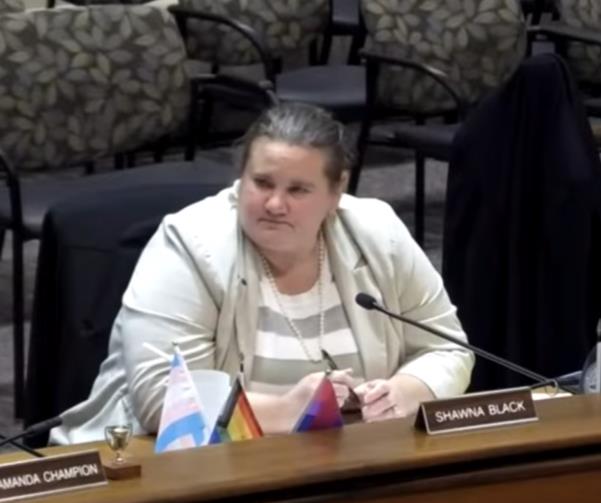
Responding to complaints from downtown residents and the Office for the Aging’s Advisory Committee, Ithaca legislator Shawna Black had placed last-minute on the County Legislature’s October 21 agenda a resolution that would have paused the office’s Lansing relocation for perhaps a month, long enough to permit an early-November “public forum” in legislative chambers to fully air opinions.
But when the resolution came to a vote, Black had stepped away, as she later stated, to watch her daughter’s induction into the Honor Society. Black would have provided the decisive vote needed for passage. But the resolution failed, seven-to-six, with eight votes required.
Near meeting’s end, after she’d returned, Black sought to reconsider the vote. But Newfield’s Randy Brown had changed his position by then, and Black’s initiative lost in a tie.
COFA’s planned relocation to Lansing’s Dutch Mill Road “has generated significant public concern regarding accessibility for seniors, caregivers, and residents who depend on public transportation or who have mobility limitations,” Black’s failed resolution stated.
Nonetheless, given Tuesday’s votes, the relocation will likely proceed as planned.
###
New York High Court Backs Odd-to-Even Elections Law
(Oct. 17): New York’s highest court Thursday cleared away the presumed last legal roadblock to the eventual shift of most municipal elections from odd-to-even numbered years.
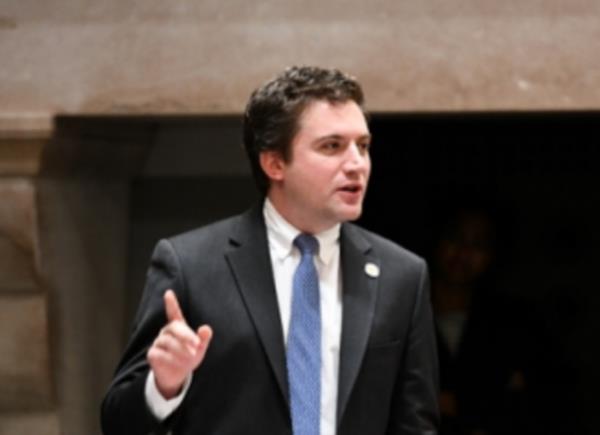
Most immediately, the unanimous Court of Appeals decision October 16 means that those elected next month to Enfield town offices like Supervisor and Town Board will serve three-year terms, not four. Those not up for election this time would have future terms shortened by one year in a following election cycle.
“We hold that there is no express or implied constitutional limitation on the Legislature’s authority to enact the Even Year Election Law,” wrote Court of Appeals Judge Michael Garcia, the opinion’s author.
James Skoufis, the Democratic Hudson Valley State Senator who spearheaded the legislative change, called the Court’s decision “unsurprising, yet extremely welcome.”
The New York Legislature adopted Skoufis’ initiative in 2023. But it’s taken two years for challenges to work their way through the courts.
Change opponents suggested they could appeal Thursday’s ruling to the U.S. Supreme Court.
While local town elections and those for the Tompkins County Legislature will shift to even-numbered years, city elections and those for select offices, like District Attorney, are constitutionally locked in place unless New York voters move to alter them. That couldn’t happen until after 2027 at the earliest.
Senator Skoufis told the Albany Times Union he’s already moving that further change forward.
###
CEDO Departure Imminent
(Oct. 17): A position Tompkins County Government has found hard to fill in the past is once again open.
Though little-publicized to date, Charlene Holmes, Tompkins County’s Chief Equity and Diversity Officer (CEDO) will imminently leave her local post, according to WHCU radio Friday, a first media report confirmed by a County HR Department job posting.
Holmes, recruited after a long search and serving since September 2023, has been instrumental in expanding her office’s profile and was heavily involved in authoring an “Institutionalizing Equity Report,” adopted along strict party lines last February.
Few county governments Tompkins’ size have CEDO positions. Holmes is only the second person to hold the administrative-level role, which falls just short of department head.
“What an asset (you’ve) been for the short time that you’ve been here,” Dryden legislator Mike Lane said in commending Holmes at an October 2 committee session, where the CEDO quietly confirmed her planned departure. “You’ve educated us, you’ve had a very nice tone in all of your presentations… and we’re going to miss you,” Lane said.
“You are leaving a lasting impression on the County,” legislator Greg Mezey echoed.
Charlene Holmes has yet to disclose future plans. Tompkins County will accept applications for the position until November 9.
###
Play it Again, LWV
(Oct 15): It was nourishing food for the Enfield soul.

Tuesday, Oct. 14, the four candidates seeking two seats on the Enfield Town Board, each candidate well-qualified, traded their opinions on town governance and shared their visions for the future in a Candidate Forum organized and moderated by the Tompkins County League of Women Voters.
Incumbents Cassandra Hinkle and Jude Lemke face challengers Robert Tuskey and Rosie Carpenter in the November 4 General Election. All other candidates for Enfield office run unopposed, as do both of Enfield’s Tompkins County Legislature candidates. Nonetheless, each offered remarks.
The League has made the forum’s nearly hour-and-a-half-long recording available for viewing online. If you didn’t attend personally, or wish to refresh your memory, you may access the video here.
Enfield politics can be feisty. But all candidates Tuesday night kept to civility, as did those who attended.
A vibrant constitutional republic thrives on political competition. And it relies on your vote. Please view the video. Learn where each candidate stands. And then exercise your vote. / RL
###
“FLOCK” Won’t Fly Away
(Oct. 15): It took a long, long… long time for the Tompkins County Legislature October 7 to reach its decision. But it did.
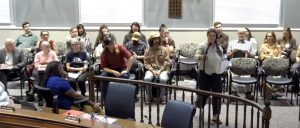
Four hours after the meeting had convened and the discussion had commenced, County lawmakers voted 9-4 to accept a $220,650 state “Gun Involved Violence Elimination” (GIVE) grant that’ll retain the “Flock” surveillance cameras about the county for yet another year.
The Flock debate has torn the community. As many as 11 people spoke to the issue—almost all of them critically—at the meeting’s start.
“Flock is not a security camera company. Flock is not a license plate reader company. Flock is a state-of-the-art surveillance enterprise,” Cornell grad student Eric Simmons asserted. ”Everyone in this room has opted into being tracked just by living here.”
Ann Johnson, a self-described “soccer mom” was drawn to tears. Despite Flock’s and law enforcement’s assurances to the contrary, “ICE is going to come knocking on the door, and they’re going to say hand over the camera data,” Johnson asserted.
After exhaustive debate and a presentation by a Flock representative, legislators finally voted. Only Shawna Black, Mike Lane, Veronica Pillar and Amanda Champion opposed the program’s continuation.
Expect renewed debate next year.
###
Oberacker Aide-Wannabe Implicated
(Oct. 15): Bobby Walker wasn’t exactly well-known locally, though he could have been soon.
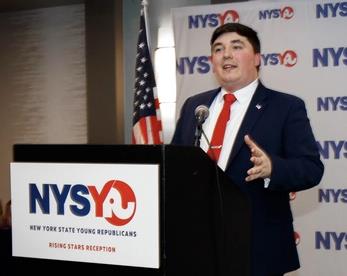
The leader of the group “New York State Young Republicans” stood in line to become manager of State Senator Peter Oberacker’s nascent campaign to unseat Congressman Josh Riley. He no longer is.
A spokesman for Oberacker’s campaign said that Walker won’t be brought on board after a Politico expose October 14 implicated Walker in a seven-month long string of blatantly offensive text messages shared among millennial and Gen-Z Republicans across four states, most notably New York.
“Together, the messages reveal a culture where racist, anti-Semitic and violent rhetoric circulate freely—and where the Trump-era loosening of political norms has made such talk feel less taboo among those positioning themselves as the party’s next leaders,” Politico concluded from the 2,900 pages of chats it obtained between early January and mid-August.
The crude conversations over the message board Telegram employed racial slurs, derided gays and the mentally disabled, and often commended Hitler and Holocaust-style executions.
Bobby Walker says he’s sorry. “There is no excuse for the language and tone in messages attributed to me,” the once-planned Oberacker campaign leader stated. “The language is wrong and hurtful, and I sincerely apologize.”
New York GOP leaders have been quick to distance themselves from the whole mess.
###
TC Levy Hike Cut to 3.3%
(Oct. 9): Using revised sales tax estimates and a draw on accumulated savings, a committee of the Tompkins County Legislature comprised of all legislators Wednesday night slashed next year’s projected tax levy increase to 3.31 percent, a far cry from the double-digit increases first proposed.
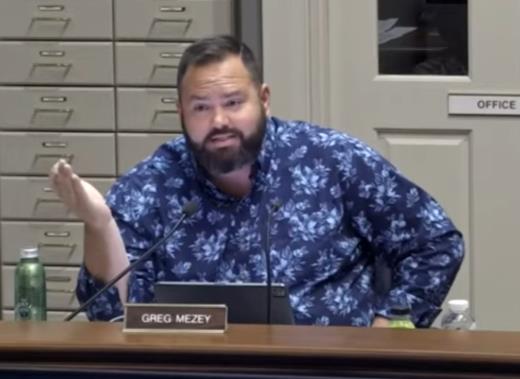
“I just don’t think in this time and this economy we can ask our taxpayers to pay more in their property tax when we have an opportunity to adjust revenue to a reasonable number that even if we’re off by 500 thousand we could still absorb,” legislator Greg Mezey, one of those leading the drive for a lower levy, said Wednesday.
Final tax cutting decisions came at the end of an exhaustive more than four-hour budget meeting October 8. The Expanded Budget Committee’s final recommendation goes to the full Legislature and then to public hearing. Expect few further changes.
Newfield-Enfield legislator Randy Brown led the effort to draw on heightened sales tax receipts to soften the property tax hit. Lansing’s Deborah Dawson, in turn, proposed using accumulated fund balance savings to draw $1.75 Million into the budget to replace what would otherwise need tax money.
What emerged Wednesday night stands as a far cry from the double-digit tax increases the County Administrator had feared at mid-summer, the 4.5 percent increase he’d advanced last month, or the 7.77 percent increase running totals had calculated before Brown and Dawson had suggested their changes within an hour of adjournment.
###
Enfield ’26 Budget Advances
(Oct. 8): Aside from the formalities, the Enfield Town Board pretty much put its next year’s budget to bed Wednesday.
By a unanimous vote—at least one member said he voted reluctantly—the Board advanced a modified version of Supervisor Stephanie Redmond’s Tentative Budget to Preliminary status and set October 22 for a Public Hearing after which the Board could make the budget final.
The $2.6 Million spending plan for 2026 would increase overall spending by about 6.5 percent and raise the property tax levy by about the same percentage.
Having accomplished most of the heavy lifting at a meeting three weeks earlier, the Town Board refused October 8 to make any further changes. It defeated, four-votes-to-one, Councilperson Robert Lynch’s (this writer’s) appeal to grant the Town Justice and her clerk a further $530 annual raise.
The Board also rebuffed Highway Superintendent Barry Rollins’ request to replenish a $75,000 equipment reserve fund that Rollins insists he needs for future purchases. Redmond said to fund the reserve would have pushed the tax levy increase past 10 percent.
Next year, even more than for 2025, the Enfield budget would rely on accumulated savings—fund balances— to contain taxes. Still, Board members were cautioned the cushion in their General Fund is falling near to the amount past Boards have said should be kept in the bank.
###
They Came. They Pleaded
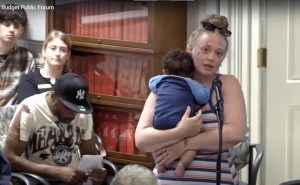
(Oct. 1): Forty-four people, an abnormally large number, took their varied appeals before the Tompkins County Legislature September 30 as it held a “Public Forum,” essentially an early-stage public hearing, into the county’s proposed $240 Million next year’s budget.
Limited to three minutes each, attendees—most who came in person—lobbied for restoring administrative cuts to human service programs and other vital services. Some supported the TCAT transit system; others the County Library.
Yet most often, and most passionately, speakers lauded OAR, (Opportunities, Alternatives, and Resources), a support group for the once-incarcerated.
“I’ve been incarcerated, I’ve been homeless, and I’ve been a drug addict,” an emotional Ashley Cramer, holding her baby to her chest, told lawmakers. “And the only person that has not forgotten my name or brushed me off as a nobody is OAR.”
A frequent target was the Ithaca-Tompkins Airport, for which Administration has proposed a hefty subsidy. But the money, critics argued, should be put to other programs.
“You’re trying to fund an airport. You’re joking, right?” Kirk Rosenfeld, another ex-inmate OAR supporter, asked. “We’re talking about people’s lives… not flying planes. We can’t afford a plane ticket. We’re trying to get food.”
The County Legislature will continue massaging the budget through October.
###
Ithaca BOE Blesses Foreign Trips
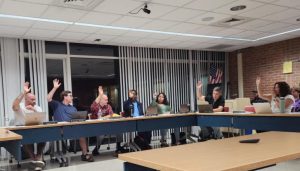
(Oct.1): With very little discussion, and by quick, unanimous votes, the Ithaca Board of Education September 30 approved a pair of school-sanctioned foreign trips; one to Morocco, the other to Vietnam.
Ithaca students have traveled overseas before. But in June, School Board members questioned whether ICSD should suspend the trips in view of international tensions, the Trump Administration’s travel bans, and immigration enforcement.
“Legal counsel has some concerns about ICSD sanctioning travel,” Board President Sean Eversley Bradwell had cautioned back then.
None of those issues arose at this more recent Board meeting. Asked afterwards, members deferred questions to Eversley Bradwell, who didn’t attend Tuesday.
By a rough count, between 20 and 40 students join the school-sponsored overseas journeys, which take place between late-March and early-April.
Officials stress no tax money gets spent. Parents either pay the cost, or fundraising efforts raise the expenses for lesser-advantaged students who want to go.
###