

Reporting and Analysis by Robert Lynch; January 29, 2026
Labor goes first; management second in these sorts of things. And that’s the way it was Tuesday night as the Ithaca Board of Education granted final ratification to a new, three-year contract with its teachers union, a pact that on its surface appears to grant instructors and their bargaining unit just about every key provision they’d wanted. Teachers had ratified previously.
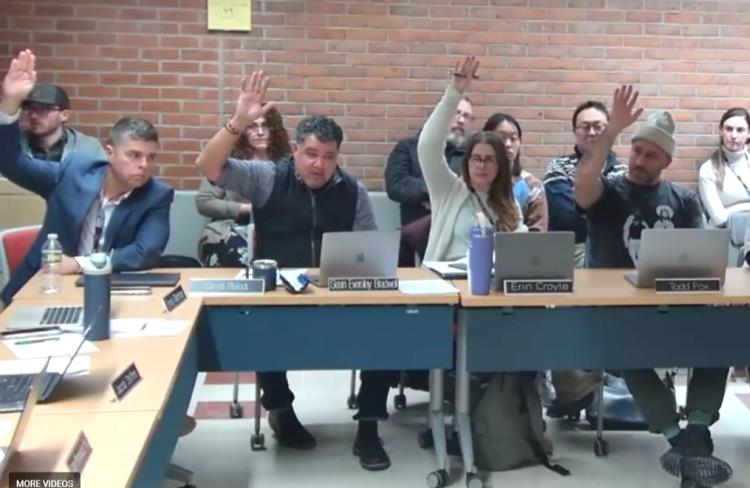
“As an educator, I am really excited about the vast majority of this contract,” Jacob Shiffrin, new to the school board this school year, said of the agreement. “That raise; that’s a kick-ass raise. It is far beyond what’s being given across New York State, and I think it’s really well-deserved.”
The triennial pact for teachers, a contract back-dated to last July, would grant instructors average seven percent salary increases this school year and again next year, followed by a six percent raise in 2027-28. But more importantly, the agreement puts in place a “step-and-lane” compensation plan that rewards teachers based on their experience and on academic credits gained toward professional development.
Ithaca teachers desperately wanted and fought hard for step-and-lane.
It’s almost unheard of for a school board to direct its negotiating team to bargain for minimally acceptable terms of an agreement and then reject the final work product. In my more than 50 years of watching local school systems, I’ve never seen that happen. Union rank-and-file, on the other hand, can prove fickle. So customary protocol calls for a tentative contract to go to union members first and be put to the elected board only thereafter.
Media reports tell us a full 86 percent of Ithaca Teachers Association (ITA) members approved the contract during a weeks-long ratification process that ended December 15. Teacher approval, and now the school board’s action, concludes negotiations that commenced last January. Negotiations aired publicly and proved at times tense.
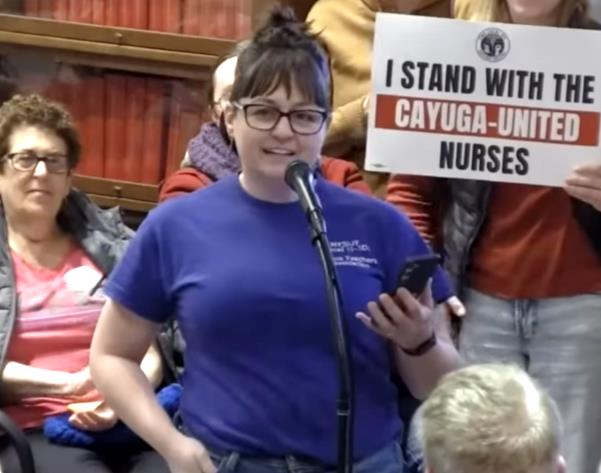
Novel in the profession and not used locally before, the frequent, after-class bargaining sessions were open to the public and live-streamed on the internet. Despite the transparency—or possibly as a result of it—the union and the Ithaca City School District (ICSD) declared impasse last June. Everyone adjourned for the summer. Bargaining resumed in the fall, and both sides struck a tentative agreement in late-October.
When negotiators took sides last spring, teachers were asking for raises of about 7.5 percent. The district offered about 4.59 per cent, and without any step-and-lane sweetener. When accord was reached near Halloween, one could readily see who got the better of the bargain.
And from the words that flowed both from Board members and administrators prior to the January 27 ratification vote, one wonders whether management in those final negotiating days fought all that hard.
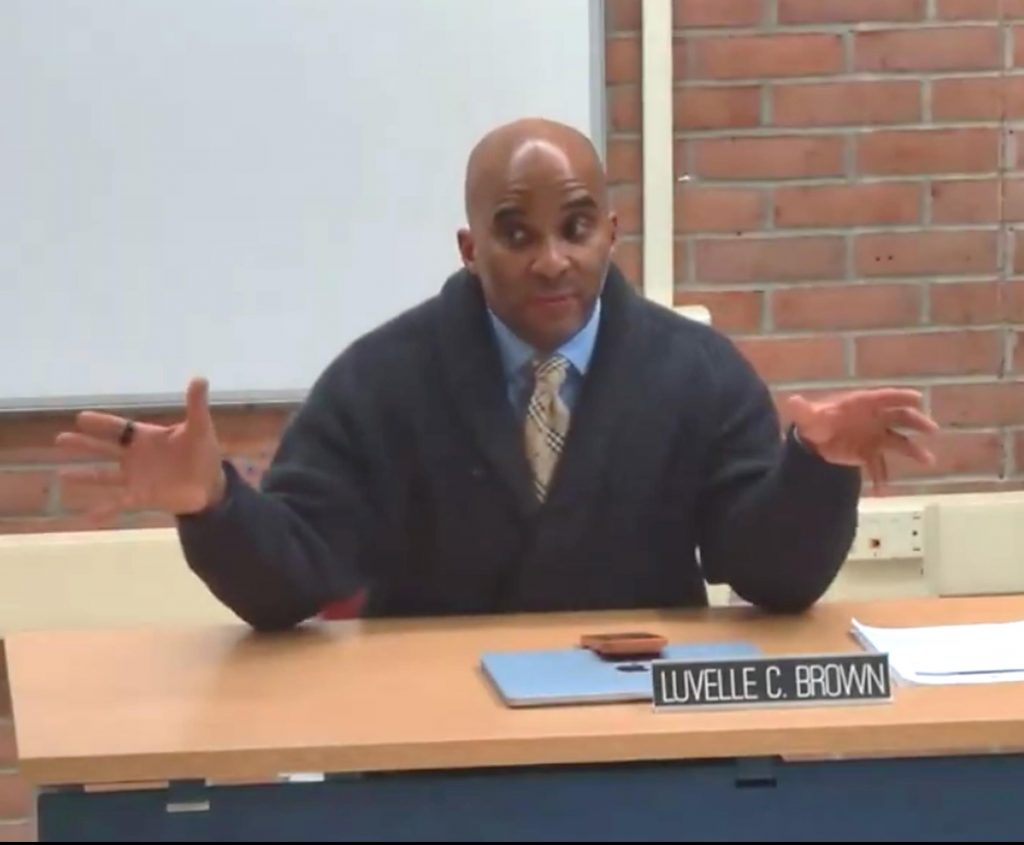
“Our contract puts our compensation model at the top tier of our region and our competitors; not in the middle, not in the median, but in the top tier,” School Superintendent Dr. Luvelle Brown crowed that night. “I now understand step-and-lane in ways I didn’t before, and I know that it’s mutually beneficial.”
“For me, this contract is legacy work,” Board President Dr. Sean Eversley Bradwell, a 17-year Board veteran, stated proudly. “It’s historic in a number of ways,” he said.
Eversley Bradwell, like Superintendent Brown, took particular note of the public face of negotiations.
“We were told time and time again, don’t do it,” the Board President recalled. Some skeptics, he said, “had reservations about disrupting a negotiation process that has been in place for decades.” But warnings aside, they still broke the mold. “That disruption from my perspective has proven to be fruitful,” Eversley Bradwell concluded.
The “fruits” of change, Eversley Bradwell recounted, included a video archive and a transcript. And from that transcript, he said, “you understand the nuance about the conversations.”
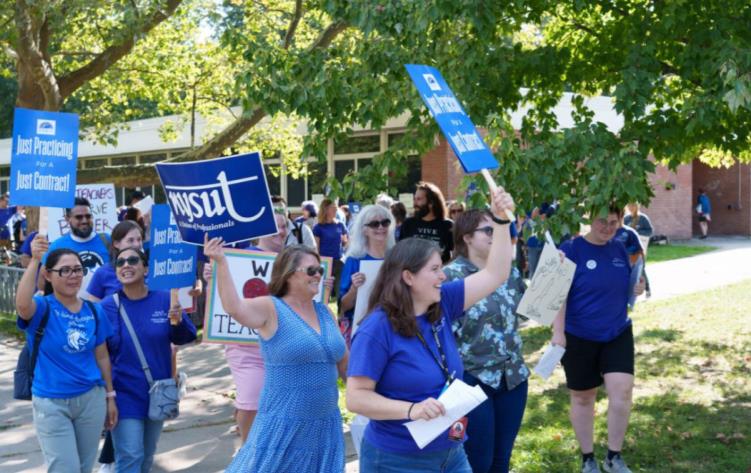
But there are two ways to view open-air public negotiations. They may have provided the process valuable transparency. But they also built a platform for teachers to advocate their positions in real-time for a willing audience to absorb. Instructors could co-opt those talking points to verbalize their grievances at the many ITA-organized protest marches that punctuated the protracted negotiations.
“Having things open has really given us a great chance to have a huge community conversation about our schools and our needs,” ITA President Kathryn Cernera told The Ithaca Times in an interview after the tentative agreement was announced.
The January 27 school board ratification was overwhelming, yet not unanimous. Jacob Shiffrin supported the agreement, yet dissented on grounds that in his view—one shared by at least two other board members—that more work needed to be done.
The ICSD-ITA contract runs 115 pages. And in Shiffrin’s opinion, some of its language—not related to step-and-lane, he qualified—raises “financial and legal concerns.” Those concerns, Shiffrin maintained, could be “tweaked within a few sentences,” and could be resolved in “one brief bargaining session.”
Colleagues Emily Workman and Todd Fox voiced similar concerns, yet each voted to ratify the contract.
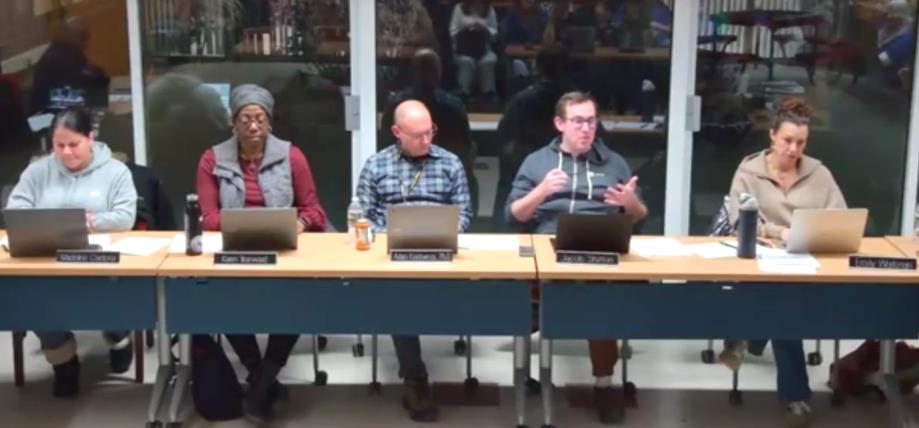
“I thought about voting against it for the sake of hopefully trying to clean up some stuff that down the line could cause serious issues for the district,” Fox announced.
“I’m excited to vote in favor of this resolution, and yet I’m doing so with some reservations,” Emily Workman said of the contract. “On the balance, I’m voting yes because I believe the pay increase for our teachers is rightly important and very, very well-deserved.”
Neither Workman’s “reservations” nor Todd Fox’s “stuff” got detailed during the meeting. But Eversley Bradwell did comment that to him, “All the concerns that have been expressed to me are ‘wins’ for teachers.”
Noticeably absent from the school board’s discussions was any serious consideration of the contract’s impact on future operating budgets or the Ithaca City School District taxpayer. Indeed, the evening’s focus on personnel and program benefits produced a lopsided discussion for any objective observer.
Even though the annual ICSD budget vote stands less than four months away, Board planning for the 2026-27 ICSD budget remains in its infancy, at least from the public’s perspective.
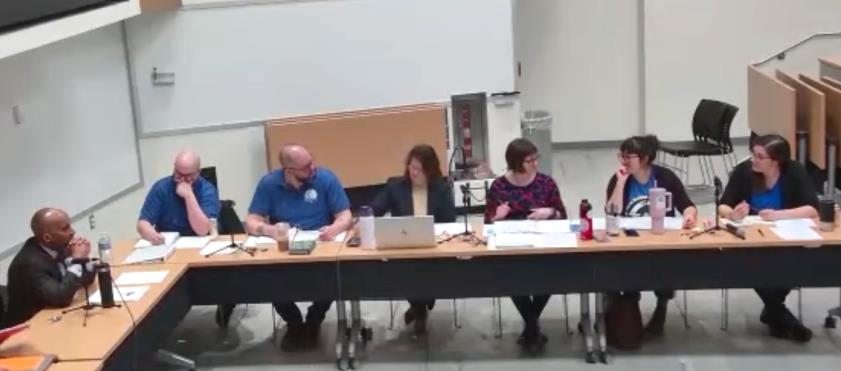
The closest we’ve gotten so far came at an open-ended, 45-minute roundtable discussion during the school board’s prior meeting, January 13. Superintendent Brown and his financial assistant provided only preliminary forecasts. A PowerPoint slide roughed-in a stated $174.5 Million in budget revenues and a property tax levy of $107.2 Million. But the numbers were never fully explained. A $174.5 Million budget, if that’s the case, would mark a modest 3.25 percent rise above the $169 Million dollar budget for the current year.
Expect ICSD budget planning to begin in earnest come February.
“We have been assured by Dr. Brown and his team that we can afford the costs associated with a number of the provisions in the contract,” Emily Workman stated in defense of her ratification vote. And, “from the financial information that has been provided to the Board, it looks like we can,” she said. Workman’s comment was about the closest any Board member came January 27 to discussing the agreement’s fiscal implications.
That said, Workman voiced unspecified questions “about the potential impacts of the reallocation of moneys and use of the district’s reserves.” Those “reservations” made Workman’s support but lukewarm.
Elections matter. And one wonders whether a labor contract like the one ratified Tuesday night would ever have been reached had Jill Tripp still been on the Ithaca Board of Education.
Noted for her frugality, her influence, and her outspokenness, Jill Tripp was voted off the Ithaca school board last May. In contrast with the taxpayer revolt of the 2024 election, Ithaca City School District voting last year marked the electorate’s generally-predictable return to its left-of-center preferences. Program preservation overrode austerity. Each of the four candidates who secured school board seats in 2025 carried the ITA’s endorsement. Jill Tripp had not earned it.
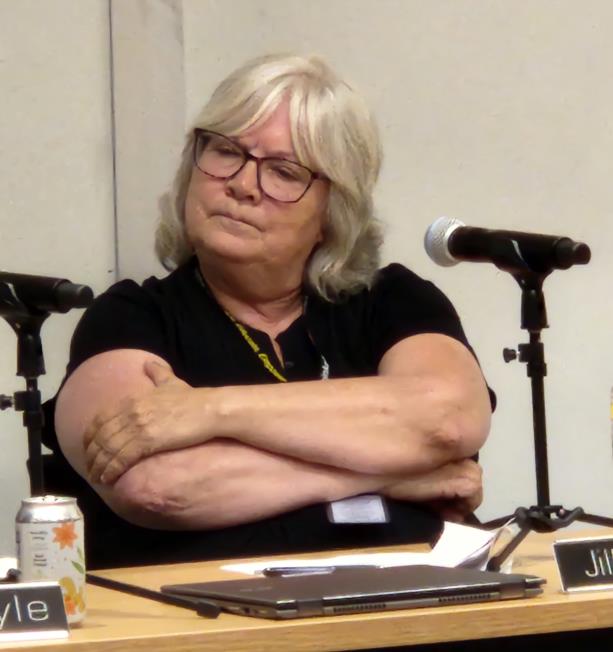
School boards set negotiating strategies during closed-door executive sessions. And it’s there where administrative bargainers get their marching orders. Had Jill Tripp huddled in those meetings last fall, she might have urged a tougher bargaining line.
Inexplicably, between the declaration of impasse in June and the reaching of a teacher-friendly agreement in late-October, the gap between labor and management narrowed. Yes, there were marches and rallies last fall. But for reasons unstated, teachers found getting what they wanted a whole lot easier.
During the talks, Ithaca teachers had complained that formerly-existing compensation policies—and particularly the absence of step-and-lane, had placed them and the ICSD at a disadvantage. Good teachers went or stayed elsewhere. But that was then. Superintendent Brown now believes the tide has shifted.
“I can now say that the product (of these negotiations) is one that puts us as one of the most competitive and most attractive school districts,” Brown said during Tuesday’s meeting. “This is one of the best school districts not only in our state, but in our nation, and I think this contract represents it,” the Superintendent heralded, “and it’s a mutually-beneficial one, and I will say that to anyone, and we can afford it.”
Affordability, of course, is a discretionary standard. One person’s economy is another’s reckless spending.
Recognize “the realization of how deeply flawed the funding of public schools are—it’s absolutely broken,” Erin Croyle, one of Board of Education’s more progressive voices, imparted during the January 13 first-round budget talk. “I know that our tax bills in this town are just absolutely unsustainable and ridiculous,” she acknowledged. “But I also know that it’s not like we’re—we truly are not spending in an inappropriate manner here in our district.”
Erin Croyle moved to adopt and then voted for the three-year ITA contract two weeks later, yet said little else that night about it.
“I feel proud about legacy work,” Sean Eversley Bradwell said just before calling the ratification vote. “I feel proud about a contract that is historic and will mark time and educational spaces.”
Teachers like this contract. The Ithaca Board of Education likes this contract. We may find out what voters think of it come May 19.
###