
by Robert Lynch; August 24, 2026
By coincidence, both actions happened the same day. And given that one was so predictable and the other such a reporter’s long drive from Ithaca, neither got much media attention.
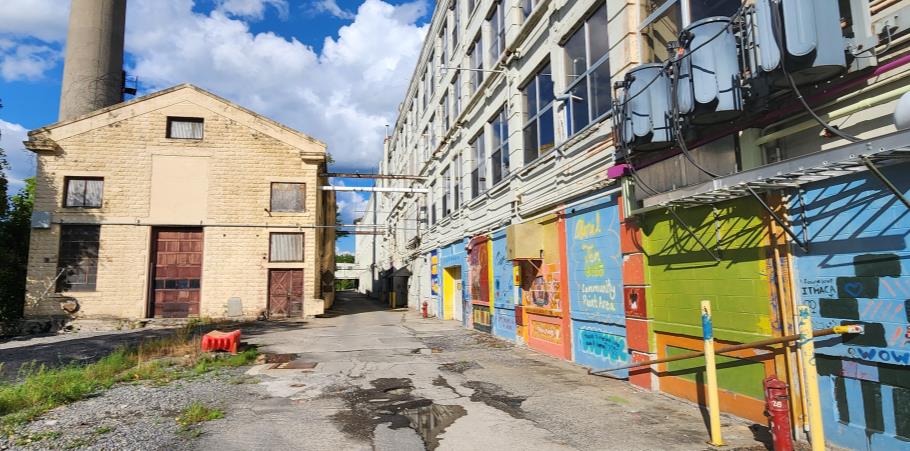
By the unanimous vote from six of its members, all seated in Legislative Chambers, the Tompkins County Industrial Development Agency (TCIDA) August 12 approved the expensive—and increasingly controversial—Payment-in-Lieu-of-Tax (PILOT) agreement to benefit Beacon Communities LLC, the firm that would develop vacant land near Ithaca’s former Morse Chain/Emerson Power Transmission factory into affordable housing as part of the SouthWorks economic revitalization.
Then, that evening, miles away, the Enfield Town Board granted its own unanimous consent. Enfield’s action, only peripherally-related , urged New York Governor Kathy Hochul to sign legislation that would enlarge the TCIDA’s Board of Directors’ membership and attempt to make the agency more diverse and responsive to community concerns and its decisions less automatic.
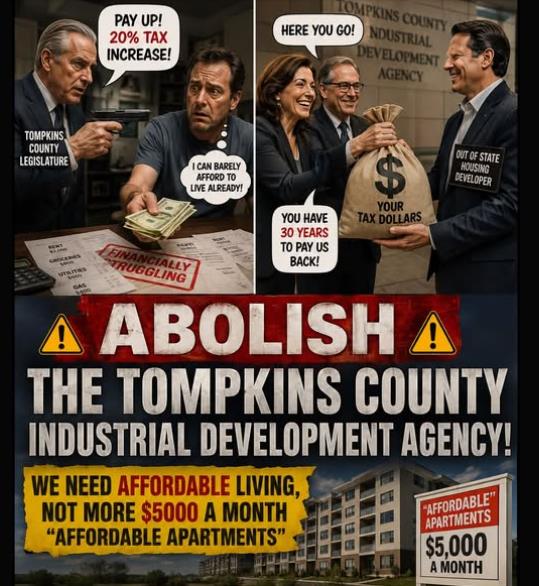
The Enfield resolution reaffirmed the Town Board’s desire to enlarge IDA Board membership from seven to nine. Expansion requires New York State’s endorsement. The hope among Enfield’s leaders is that one of those added seats would go to a representative from our county’s smaller towns. Ithaca City School District (ICSD) officials and their teachers’ union also want a seat in the IDA.
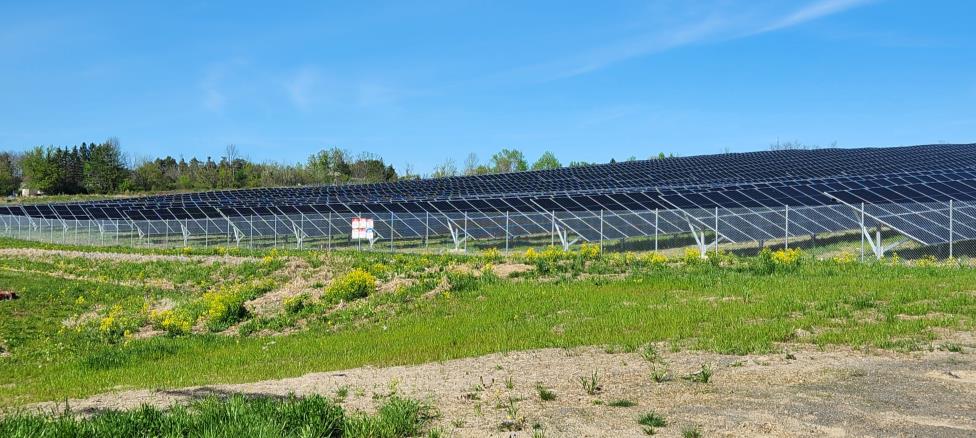
“We didn’t have much of a voice back when the big solar project came to pass,” this Enfield Councilperson, Robert Lynch, reminded the Town Board at its meeting. “And there probably will be other solar projects in the future; and who knows, maybe a data center might request a PILOT agreement… And so you want to have local input in these decisions.”
The Enfield resolution to urge Hochul’s signature passed with little additional discussion. It reaffirmed a position the Town Board took in January 2025 before the enabling state legislation pressed its way through Albany’s legislative meat grinder..
State Senator Lea Webb and Assemblymember Anna Kelles introduced the companion bills that year. The measures cleared the Senate, but died in the Assembly that June. This spring, they passed both houses. Before year’s end, the final bill will wind its way to Governor Hochul’s desk, and she’ll have just a few days to sign it.
Once the bill becomes law, the Tompkins County Legislature would decide whom to fill those two extra seats. Expect the Ithaca Board of Education and the Ithaca Teachers Association to lobby hard for one designated member. Rural municipalities may do the same. A City of Ithaca Common Council member already occupies one of the seven current TCIDA positions.
Ithaca Alderperson Ducson Nguyen was among the six who cast votes in favor of the SouthWorks-related PILOT agreement August 12. (The seventh TCIDA member attended only remotely that day, and agency rules dictated he couldn’t vote.)
Discussion of the PILOT agreement to Beacon Communities that day was relatively brief and definitely one-sided. No one on the TCIDA Board raised a serious reservation to a tax abatement that over its 30-year term is valued at $17.5 Million.
The pair of Beacon projects—the smaller one in the City of Ithaca near the former factory’s main entrance and the larger one in the Town of Ithaca, on vacant land south of the plant—would add 230 units of so-called “affordable housing.” The PILOT agreements approved at the meeting would not affect the decaying factory itself.
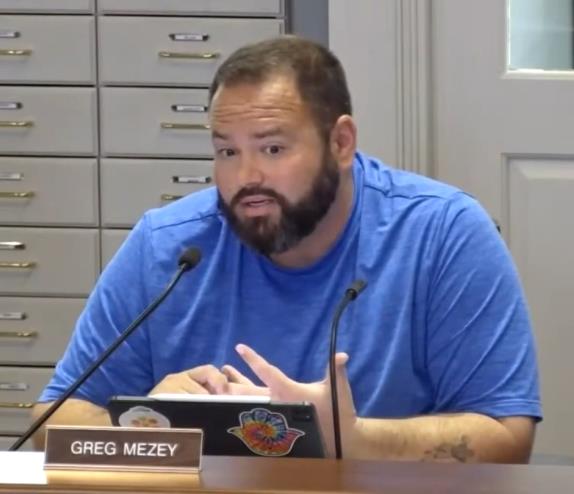
“This is an easy one to point to; everybody loves a villain,” Tompkins County legislator and IDA Board member Greg Mezey told the meeting. But don’t hate the PILOT, he said, “This is not something to be vilified. This is something that is a mechanism of government that we can do to get the type of things that we want in our community.”
At the first of two public hearings July 29, several Ithaca Board of Education members and Ithaca Teachers Association President Kathryn Cernera urged the TCIDA to give Beacon’s PILOT further scrutiny. In their view, the combined developments, when tax abated, would deprive the Ithaca City School District of too much revenue. Meanwhile, they said, the projects would burden the school system with perhaps 150 additional students to teach, pupils drawn from the families who’d move there.
“I am here today to urge the IDA to strongly consider the impact the tax abatement the developers of the SouthWorks project are requesting would have on our schools and our community as a whole before making any decision about this project,” Cernera told the industrial development agency that day.
School officials made it clear they didn’t necessarily oppose the SouthWorks redevelopment; only that they were cautious and wanted a “pause.”
There will be no pause.
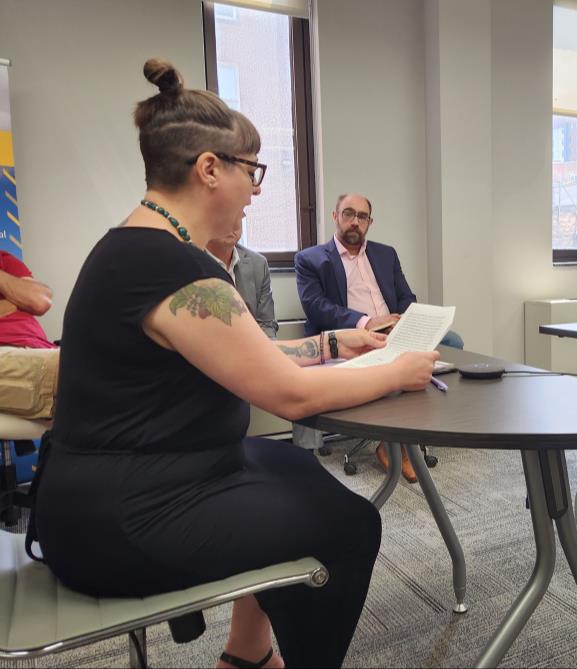
That 150-student estimate is the product of “back-of-the-envelope calculations that, quite frankly, have no basis,” TCIDA Board member Jeff Gorsky, a business consultant, asserted at the meeting. To the contrary, Gorsky claimed Ithaca student enrollments are falling. It’s part of a national trend, he said. People are having fewer children.
Demographics dictate Ithaca City School District enrollments will continue to fall “leaving continued capacity,” TCIDA Board Chair Deborah Dawson—a County legislator—stated.
“The project doesn’t pencil out without the abatement,” Dawson asserted. Affordable housing projects, she and others argued, don’t pay for themselves without tax breaks. If developers don’t get abatements, they build upscale, “market rate” apartments instead.
Legislature Chair Shawna Black, also on the TCIDA Board, questioned why this one, particular SouthWorks housing initiative has generated so much public resistance, both from the school district and from others.
“For me, the optics are a little bit off,” Black stated. “Whenever we talk about affordable housing as a community, we know we need that desperately. And then the one project that we actually hear from people is the affordable housing.”
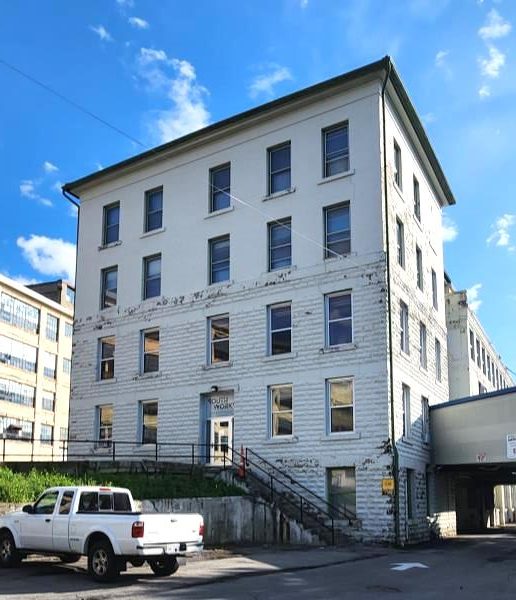
Beacon Communities’ 230 unit endeavor, Gorsky pointed out, is only the “first part of a much larger SouthWorks redevelopment of an industrial site that we all know and need to happen.”
“We only have so many levers in the State of New York to pull,” Mezey advised. “Property tax is one of them.” And to Mezey, population growth on South Hill—young and old—would not be a bad thing. “We need to bake bigger pies,” he said.
What confuses some is the seeming redundancy. Two years ago the TCIDA awarded SouthWorks an $85 Million, 20-year tax abatement on its nearly half-Billion dollar venture, old factory included.
As Dawson described it at the latest meeting, that earlier abatement was an “umbrella” of sorts. Smaller segments of the development—in this instance, Beacon’s two housing clusters on old parking lots and brushland—stand under that umbrella. Understandably, the tax-conscious among us grow cautious. What’s next?
And for them, a fresh, contrarian voice on the Industrial Development Agency—either from a board of education member or from a rural town board leader—would infuse a breath of fresh air; someone to ask tough questions and not treat his or her publicly-facing role as that of Big Development’s reliable rubber stamp. That’s where Enfield’s resolution of mid-August might work to do some good.
****
The Enfield Town Board had expected to proceed August 12 to set a September Public Hearing on a proposed Local Law that would impose a one-year moratorium on any new data center that might propose building in the town. But the board held off action, postponing the process for at least a month and pushing off any hearing and the law’s adoption until October at the earliest.
The moratorium’s initial draft had been modeled after a law adopted in Newfield July 9. The Enfield moratorium’s text had undergone two successive rewrites between July and the mid-August meeting. Town legal counsel Guy Krogh had recommended many changes. The document had grown from three pages to eight. And in the weeks ahead it may expand still further.
Councilperson Jude Lemke, an attorney herself, had spoken with Krogh earlier on the day of the meeting. Krogh had lingering concerns.
There are “many infirmities with their moratorium,” Lemke quoted Krogh’s observation of the Newfield law. Newfield’s counsel (Tom Smith) “is not a municipal lawyer,” Lemke cautioned.
Lemke also relayed Enfield counsel’s worry that should TeraWulf ever build its major data center in Lansing, as it’s proposed, “satellite data centers” could pop up around it, potentially in Enfield.
For months, Councilperson Lemke has urged adoption of a permanent ban on data centers in Enfield, but she has yet to bring a script to the Town Board.
“Why are we nitpicking so much?” this Councilperson, Robert Lynch, asked. “This is a moratorium. This is not a permanent prohibition.”
Others on the board said they’d welcome a prohibition. All agreed to confer privately with Krogh before their next meeting in September and to seek Krogh’s direction.
“Let me just state for the record, I will oppose an outright ban,” Lynch stated, his having previously observed that prospects of a data center in Enfield stand next to nil and that he’d prefer heavy regulation to blunt prohibition.
“I believe that supporting an outright ban on data centers ties our hands and opens us up for litigation,” this Councilperson warned colleagues.
Other items addressed by the Enfield Town Board August 12:
- Highway Superintendent Barry ‘Buddy” Rollins brought good news. Ending a year-long—and sometimes contentious—debate over whether to purchase a new mower tractor and whether to purchase new or used, Rollins announced he’d ordered a new machine, but for considerably less than the $165,000 budgeted this year. Rollins reduced the purchase price to $110,000 by foregoing purchase of a new rear mower and instead retaining the Highway Department’s current rear mower, which the superintendent said remains in good condition. This Councilperson commended Rollins for achieving savings.
- In response to concerns raised during the Enfield Planning Board’s recent review and subsequent approval of a new Verizon cell tower off Van Dorn Road N., the Town Board directed its planners to draw up new, more rigorous standards for the approval of future communications towers. (Details are provided in separate reporting.)
- The Town Board set its schedule toward adoption of a next year’s budget in the weeks ahead. The timetable calls for the proposed 2027 budget to be made public at a special meeting September 23. Several work sessions would follow. The budget would go to a Public Hearing October 28.
- The Board made final arrangements to proceed with the testing of drain water at the Enfield Highway Garage. The analysis is required toward securing a permit to resume use of the Ithaca Area Wastewater Treatment Facility (IAWWTF) as a repository for garage floor effluent. The IAWWTF has barred Enfield from using its Ithaca plant for nearly a year. The decision has forced the Town to contract for costly transport of drain water to Schenectady. Once testing by a Cortland-based laboratory is complete, the Town will know better how it must remediate the effluent—if at all—to make it acceptable to Ithaca. The test will cost just over $2,300.
- And midway through its meeting, the Town Board retreated for a private, closed consultation with attorney Dan Cohen to discuss long-stalled negotiations toward renewal of Enfield’s cable TV franchise with Haefele Connect. The old contract expired in late 2022. And in April 2024, the Town Board’s majority retained Cohen’s firm for $8,900 to negotiate a renewal. After the 20-minute, mid-meeting conference, the Board made no statement about the progress of talks toward a new franchise agreement.
###