
Deadline-driven, legislators repurpose CMC’s biggest award
Reporting and analysis by Robert Lynch; May 7, 2026
It was a product of the pandemic. And just as the pandemic has ended, so, too, has it. Don’t expect a party.
Fueled by millions of dollars in federal COVID relief money, Tompkins County’s Community Recovery Fund drew to an unassuming close late last month. It did so as lawmakers repurposed the last of its set-aside cash on a laundry list of unglamorous bureaucratic necessities. Leaders buried the decision as best they could.
One meeting later, I marked the moment.
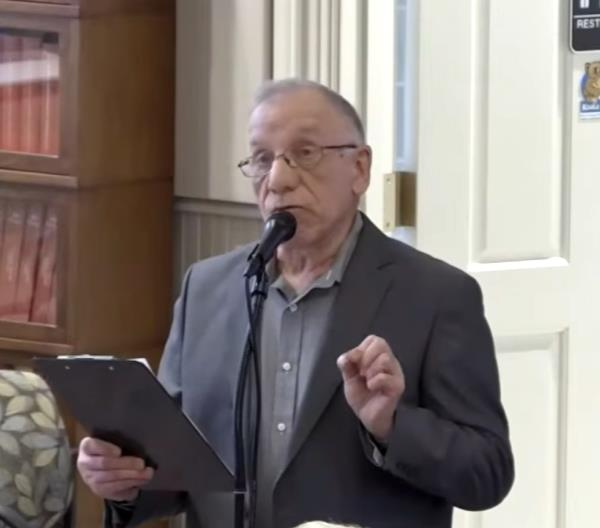
“On April 21, two weeks ago, the Community Recovery Fund effectively ended,” this Enfield Councilperson, Robert Lynch, reminded the Tompkins County Legislature as it met this past Tuesday, May 5. “It did when this Legislature redirected more than $1.6 Million in unspent American Rescue Plan (ARPA) funds from Community Recovery Fund grants and instead repurposed them for such mundane things as buying Microsoft 365 subscriptions.”
“Why?” I asked. “Mostly because despite all its wealth and political clout, Cayuga Medical Center could not drag its Crisis Stabilization Center project over the finish line. Its inability to do so simply baffles me.”
As it stands now, the Tompkins County Community Recovery Fund has spent barely $5 Million of its original sum toward its originally intended purpose. And that purpose was to assist nonprofit agencies, local governments, and struggling small businesses hard-hit during this decade’s early years by COVID-induced shutdowns.
This year’s late-April decision marked “the turning of a page,” I advised the Legislature. “There was no fanfare. Few may have noticed,” I said. “But we in Enfield did.”
Enfield remembers the Community Recovery Fund because our town’s government and the agencies we support got little benefit from it.
The Community Recovery Fund started with seven million dollars. County government’s own budget needs quickly pared that total to just over $6.5 Million. But of that amount, the only money that came to Enfield was $26,592 to buy some replacement two-way radios for the Highway Department.
$26,592 is just four-tenths of one percent of the $6,513,893 the Recovery Fund had set aside for its late-2022 and subsequently revised funding awards. Perhaps a little something is better than nothing at all.
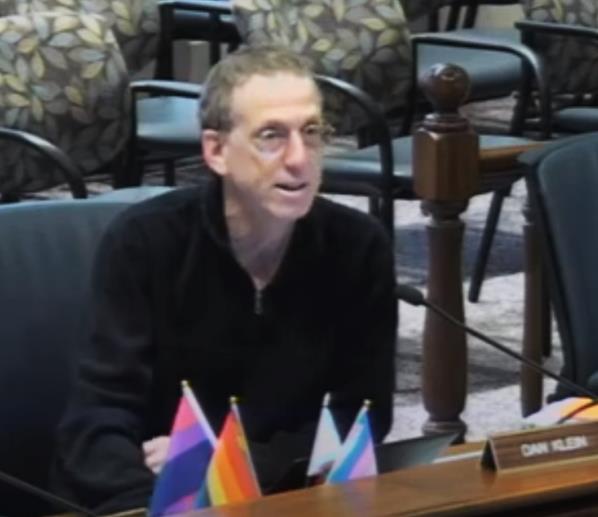
Truth told, the highway radio money was a last-minute add-on, an allocation not originally recommended. Former County legislator Susan Currey gets the credit for providing Enfield at least a morsel of nourishment.
The federal government’s American Rescue Plan (ARPA) awarded Tompkins County nearly than $19.9 Million in 2021. Washington’s relief supposedly was to compensate Tompkins County for revenues lost during the pandemic, fiscal shortfalls that never really occurred.
The late-April reassignment of money became necessary because ARPA rules specify that any appropriated moneys not actually spent by the end of this year get clawed back to Washington.
Back five years ago, County leaders first floated the idea of shoveling ARPA’s money into “cash for capital.” It would have earmarked Washington’s entire windfall toward major building projects. The idea didn’t please the public. Many preferred investing in hard-pressed agencies and people.
In September of that year, the Community Recovery Fund was born. It started on wobbly feet.
Initially, an assigned trio of lawmakers proposed a more ambitious, $15 Million, three-year funding scheme. But their money pot soon shrunk to $7 Million, and lawmakers jettisoned the multi-year concept.
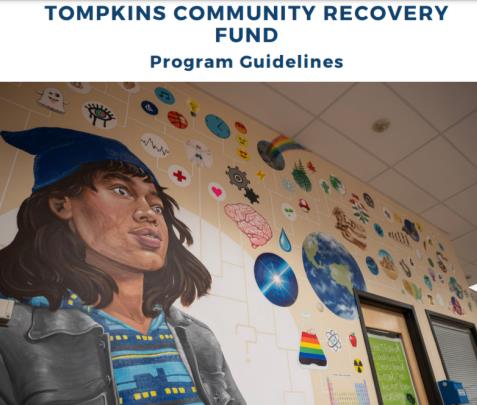
Although Recovery Fund awards were initially to have come from County Government’s own savings, not from ARPA, legislators later reversed course upon learning that ARPA rules accorded them far greater flexibility in gifting public money to non-governmental recipients.
A consultant was hired. Invitations went out. And requests for support came in by the bushel.
As of an October 2022 deadline, as many as 231 non-profit organizations, qualifying individuals and local governments had applied for program support. Of those, 23 filed for the highest funding category, each seeking over $250,000 apiece.
Among those 23 was Enfield Food Distribution, which sought up to $1.6 Million to build a new food pantry. Among applications less expensive was that of the Enfield Community Council (ECC). The agency asked for $206,000 to build a “Mental Health and Community Services Wing” onto its community center.
The aggregate $34 Million in requests overwhelmed the Recovery Fund’s resources. Requests stood at more than five times the amount of grant money available.
An exhaustive, consultant-aided, yet legislator-driven triage began. Some would later fault the process as being arbitrary and unfair. A select panel of six legislators scoured (and scored) each application. Within minutes during marathon meetings, members rated each separate request one by one. Individually and collectively, those six lawmakers wielded tremendous power. Unanimous support by all six almost always assured a grant’s award. A three-three tie (or something less) eliminated an applicant from contention.
The Enfield Food Pantry fell from favor early on. (It garnered only two votes out of six.) The Enfield Volunteer Fire Company’s low six-figure request to build a volunteer bunk room, died in a three-three tie. The Enfield Community Council’s appeal squeaked past first-round review (four-to-two), only to tumble out of contention later on after the money supply ran out.
Bangs got a new, $150,000 ambulance from the fund. And for a brief while, Second Wind Cottages stood in line for money to grow its Newfield encampment of tiny homes for the formerly unhoused. But Second Wind later forfeited its $510,000 after community objections became too burdensome to bear.
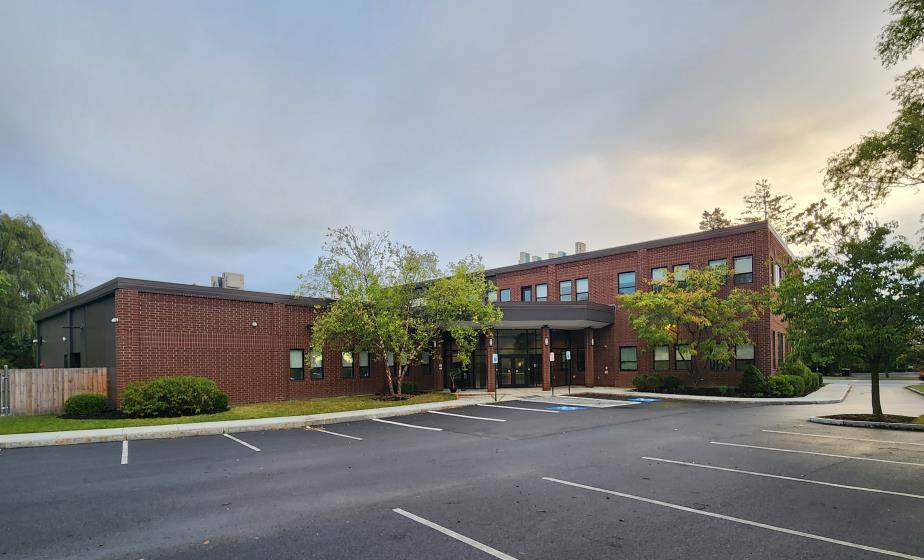
Yet by far, the biggest winner from the start was Cayuga Medical Center (CMC). Its award was the largest of all. CMC had requested $1.5 Million to build an Intensive Crisis Stabilization Center to treat substance abusers and the mentally ill. The hospital first planned to quarter its center in the Shops at Ithaca Mall. But it later switched to a stand-alone building on North Triphammer Road, one that the Alcohol and Drug Council had vacated after it folded operations.
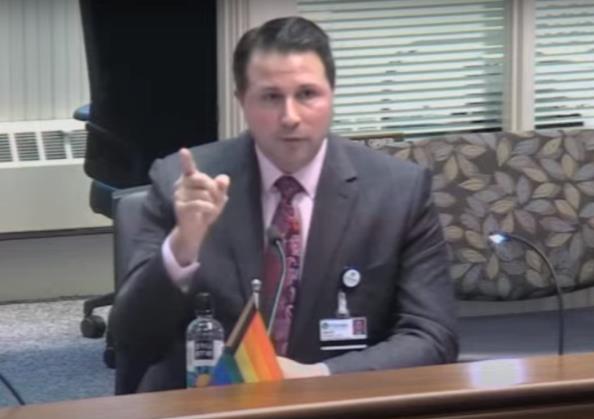
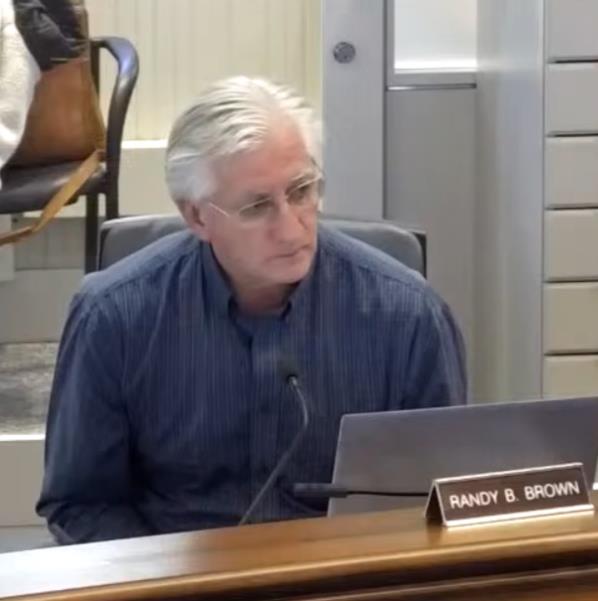
Even though some would view CMC’s application as shaky, the hospital corporation’s request won every round of Recovery Fund review. It gained support from five out of six on the review committee. It then won final approval when the full Legislature made its decisions in late-December 2022. Only Enfield-Newfield legislator Randy Brown opposed the hospital’s seven-figure grant.
“I’m not against the project,” legislator Brown stressed to Enfield leaders in his monthly report prior to the December vote. It’s just that the one request would eat up 23 percent of the fund, he said. “Cayuga Medical has over $130 Million in cash and investments as of January 1, 2023 and is contributing very little to the project,” Brown asserted.
As it came to pass, CMC’s most ambitious of all applications never got its money.
Cayuga Medical needed two more things to move its project forward; a New York State license and clear title to the use of its building. It could gain neither. And it would have needed them by year’s end.
Along the way, some in Enfield became none too pleased that the hospital took so much time, ate up so much of the Recovery Fund’s cash, yet had so little to show for it. .
“This makes me so angry,” one prominent Enfield resident wrote on social media last month upon learning that administrators had to repurpose the award. “Some of that money could have accomplished tremendous things for the county’s towns and villages,” she wrote. “Instead, the county gave extension after extension for a plan that was dead in the water from almost the beginning.”
“Tompkins County’s entire process to allocate the six million that they disbursed was laughable,” another Enfield resident, a former legislator, said, “and in the end (it) didn’t end up disbursing the money to many that could have used it legitimately.”
Yes, CMC’s inability to see its project to the finish line troubles many, including a few of the leaders who doled the money out.
Quite rightly, intensive crisis stabilization locally would serve a purpose, a valuable one. Local legislators wholeheartedly endorse it. Yet year after year the hospital hit insurmountable roadblocks. And CMC officials often danced around the edges as to the reasons why.
“I wish I had a better update for you,” CMC Assistant Vice President Frank Kruppa prefaced his remarks to a County Legislature committee last November 19. ”We are still efforting to get the Withdrawal Stabilization and Intensive Stabilization Center operational, but are having challenges related to the ownership of the building,” he admitted.
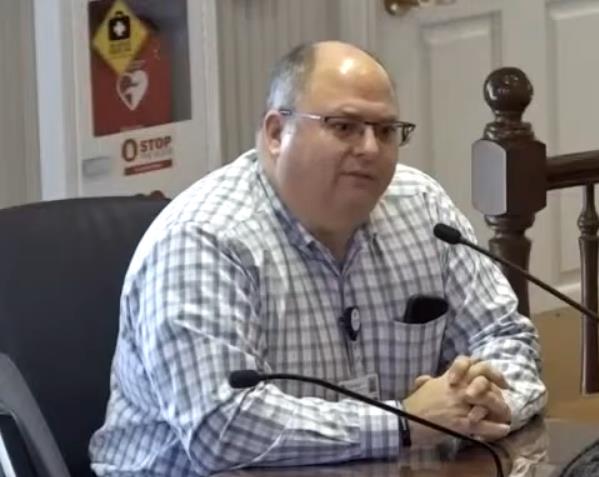
For 20 minutes that November day, Kruppa, Tompkins County’s former Health Commissioner, hired away last year by CMC to guide the Stabilization Center down the home stretch, attempted to explain to the Health and Human Services Committee why approvals had taken so long and still hadn’t arrived. His roundabout journey never persuaded attendees convincingly.
Two state agencies, the Department of Health and the Office of Addiction Services and Supports (OASAS) must license the center. But there’s a tangle.
The Alcohol and Drug Council still owns the North Triphammer Road building, Kruppa advised the committee. The Department of Health bonded the Drug Council’s purchase and renovations. But the Drug Council now exists only on paper at best. And until someone can figure out how to move a defunct agency to grant consent, state licensure cannot proceed.
That said, what may have troubled legislators the most was what Kruppa said next:
“When the opportunity comes where we do have approvals from the state to move forward, with the ever-changing health care environment as it is, the health system has to evaluate every new program almost in every moment when there’s decisions to be made about moving forward,” Kruppa admitted.
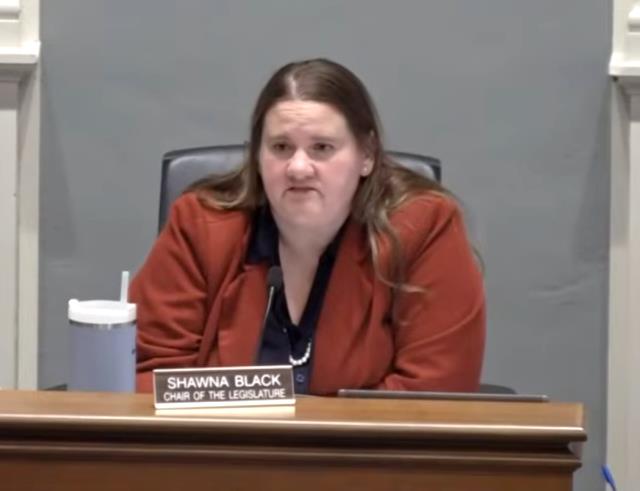
“I think we have to have a conversation about Plan B for us,” legislator Shawna Black, now Legislature Chair, reacted to the hospital rep’s tenuous commitment. “Because if you’re saying that Cayuga Health Partners is questioning if they’re going to pursue this, that also gives me pause.”
Frank Kruppa then denied that CMC was contemplating backing out. “There’s just a lot of moving pieces, much of which are out of our control,” for former health commissioner admitted.
“So it was a lot of money, and you all have known for some time that there was some issues, and there was no sharing of that information with us,” committee chair Travis Brooks reminded the CMC administrator that day. “So that’s disappointing to say the least.”
Now, nearly six months after the committee heard Kruppa’s unpredictable forecast, there’s still no known movement on either building title or state licensure.
And no, there is also no “Plan B.” In recent weeks, County Administration staff has made clear that at this late stage in the ARPA funding cycle, forfeited dollars cannot redirect themselves to new projects. Only agencies contracted before the end of 2024 qualify for extra support, and then only with difficulty.
One would think that given the high-powered attorneys Cayuga Health retains and the hospital’s high profile, mountains could be moved in Albany. But maybe those mountains resist movement. Perhaps state regulators really don’t like crisis stabilization centers all that much.
Tellingly, during another, little-publicized committee session, back in September 2023, former Cayuga Health CEO Martin Stallone admitted that regulators had rejected CMC’s initial proposals for crisis stabilization. Stallone advanced that what they only may accept was the equivalent of “a full-blown psychiatric emergency room.”
“To be clear, it’s not Crisis Stabilization,” Stallone then said of the revised option advanced to the state. “It’s a level above that.”
Again, if mountains could be moved, one would think someone could move them. The mountains don’t budge.
Hope springs eternal. Local legislators of both parties have offered assurances in recent weeks that once CMC casts obstacles aside, the County Legislature would likely re-appropriate from its own treasury the $1.5 Million the hospital corporation needs. It’s a source not impeded by ARPA deadlines. Never stated was how this alternate path would bypass that pesky state prohibition against gifting money to those outside of one’s own government.
“This legislature… has been committed to that project and we all realize the need for that in our community,” Shawna Black insisted April 21. Of crisis stabilization, she said, “That’s really the one missing piece—we actually have many missing pieces—but that’s one of the big ones.”
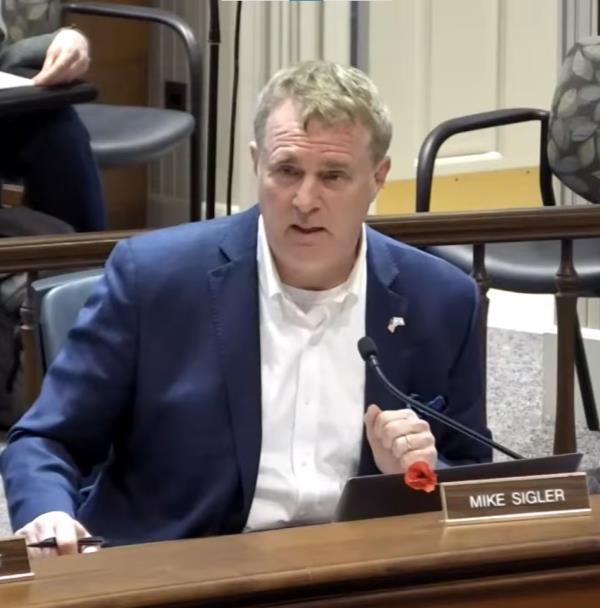
“Voting on the mental health stabilization unit… was one of the prouder votes I’ve had actually in this Legislature,” Republican Mike Sigler stated two weeks later, Sigler responding to this Enfield Councilperson’s critical assessment, “because I felt that that money actually addressed something that COVID exposed, and that’s what that money (ARPA money) was for,” Sigler explained.
“So I just take pause when people say that Cayuga Medical couldn’t get its act together or things along those lines,” Sigler added. “This project’s not dead. They are still working on it.”
“Enfield had shovel-ready projects that could have spent this money on time,” this Councilperson, Lynch, advised legislators last Tuesday. The Community Council’s mental health wing stands first among them. “It would have cost a fraction of what CMC planned to spend,” I stated.
And yes, it would have been finished on time, no Albany approvals required.
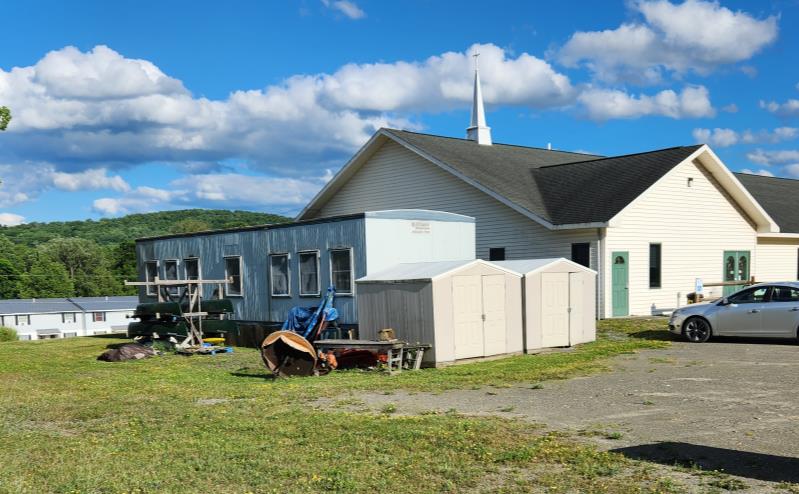
At an ECC Board of Directors meeting in late-March, speaking before learning that the ARPA money couldn’t be repurposed for her agency, Community Council President Cortney Bailey was already laying plans for demolishing the dilapidated modular annex that stands on the new wing’s site, and recruiting volunteers to construct the mental health wing “like a good, old-fashioned barn raising.”
But the ARPA money’s now been spent on other things. The Community Recovery Fund’s doors are closed. That said, Bailey remains resilient.
“We will get there one way or another,” Bailey assured her board one month later, on April 23. “It might take us a while. But we will do it. We will make it happen.”
And if gifting rules can be bypassed to help Cayuga Heath, why can’t a similar work-around also provide the Community Council money it needs? There’s been no immediate answer.
“Legislature, please helped the ECC and help Enfield,” this Councilperson closed his statement that night.
All of us move on from here.
###