

State grant approval could ramp Medical Response program up a notch
by Robert Lynch; July 25, 2026
For more than a year, leaders of Tompkins County’s Rapid Medical Response (RMR) program and its supporters in municipal government have talked about expanding RMR’s service with the addition of ambulances. What the Tompkins County Legislature authorized this past Tuesday night would not take RMR’s expansion quite that far.
Yet what the action would provide—assuming state authorizations and grant funding come through—is a mid-level step-up in what RMR has done these past two years. It would elevate a single one of the service’s flycars—and only one of them—to offer patients treatment more like what a Bangs paramedic administers, rather than what a fire company volunteer can legally do.
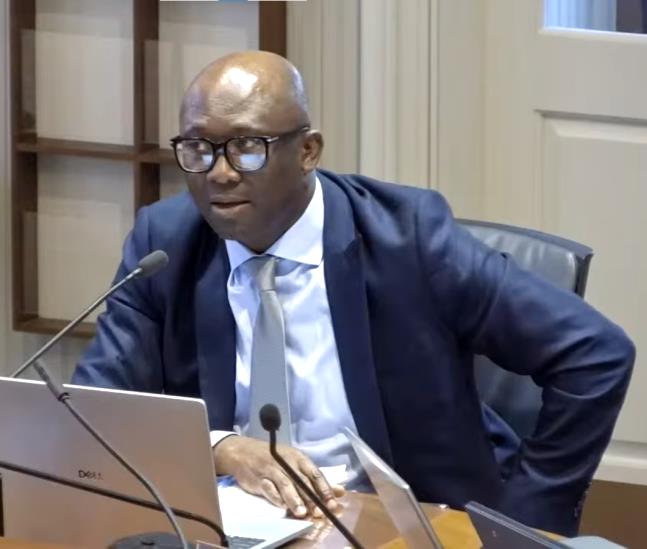
With the support of all 15 of its members in attendance (Iris Packman was excused), the Legislature retroactively authorized County Administration to file an application with New York State’s Dormitory Authority for a $500,000 grant that would, in part, buy and equip a new, fourth emergency unit, That unit would provide paramedic-level care, 24 hours a day, Monday through Friday.
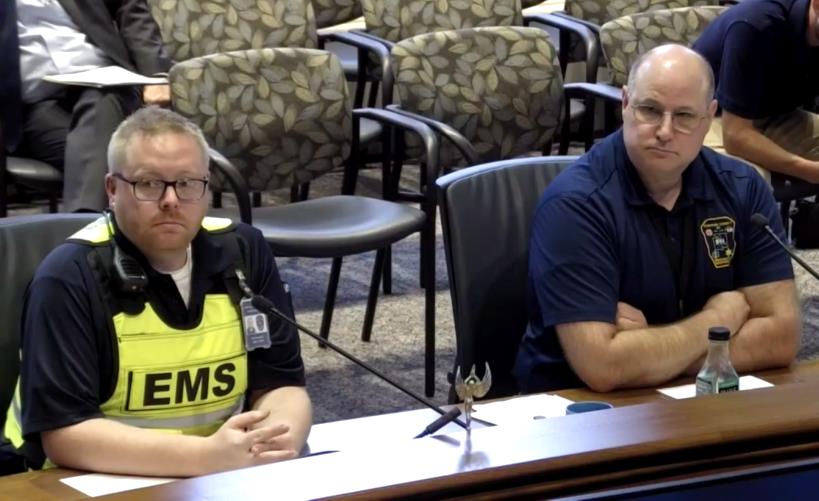
“I feel like we’re just sort of continuing the trajectory at a natural pace,” Mike Stitley, Director of Tompkins County’s Department of Emergency Response (DoER), told legislators July 21. “We’re not trying to add transport ambulances. We’re just trying to do this in baby steps and continue to provide a foundation.”
But the service’s incremental upgrade would carry a cost. You’d likely see it on your property tax bill. This RMR enhancement, albeit limited, could hike next year’s Tompkins County tax levy by a full one percent.
As stated at an earlier June 23 meeting of the Legislature’s Public Safety Committee, State Senator Lea Webb has recommended that the Dormitory Authority award RMR the half-million dollar grant under its Capital Grant Program initiative. Given Webb’s legislative clout, local officials feel confident that the authority will approve the award.
At the June committee session, Department of Emergency Response leaders admitted they’d already filed the application paperwork so as to meet Dormitory Authority deadlines. The significance of what the Legislature adopted Tuesday is that it more or less commits Tompkins County to match the authority’s grant money with a nearly equal $490,000 drawn from the Tompkins County treasury.
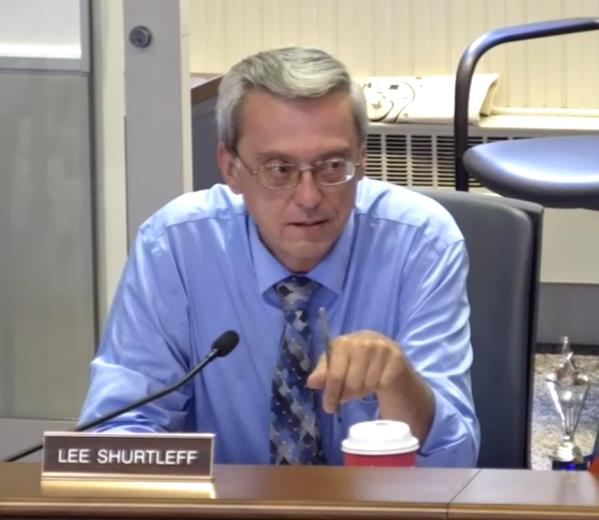
“We’re pushing one percent with the property tax levy by moving forward with this resolution,” Groton legislator Lee Shurtleff, a former Director of Emergency Response, cautioned during the committee’s June discussion.
“Absolutely, yes,” County Administrator Korsah Akumfi acknowledged to the committee. Yet that day Akumfi added, “So we would not be budgeting for the full amount in 2027 if we are awarded the grant, but it will actually hit the budget really in (the) 2028 budget that we will develop in 2027.”
Inexplicably, one month later, when the full Legislature took up the matter, no one talked about a one-year budgeting hiatus. Instead, expectation focused on imposing the first recurring taxpayer burden within the 2027 budget, set to be adopted this fall.
At this Tuesday’s meeting, Newfield-Enfield legislator Randy Brown put Akumfi on the spot.
“So Korsah, here we are adding a half-million dollars to the budget next year. And how do you feel about it?
“I feel neutral,” Akumfi said, giving his safest of answers. Legislators laughed.
“You’ll get that response once,” Brown amusingly rebutted.
“And you’ve already used it,” Brown’s colleague, the fiscally cautious Deborah Dawson interjected.
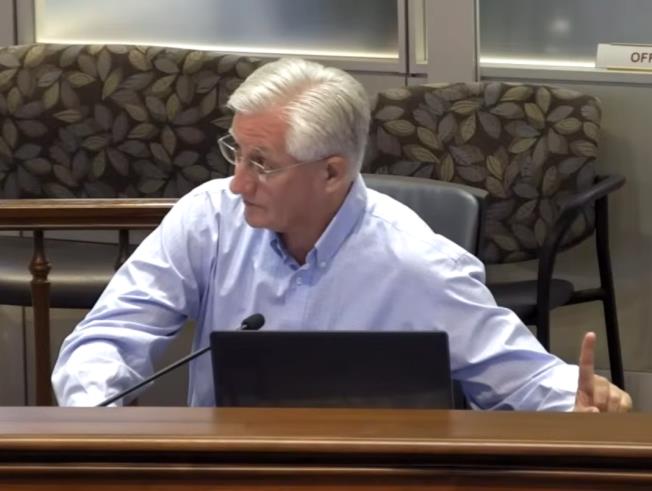
Akumfi waded back in. He acknowledged that a one percent increase in the tax levy is “something that we need to pay attention to.” Yet he also said that “the fact of the matter is” that “in most municipalities there’s more calls on (County Government) to step up with emergency management,” to “close gaps” in service. And what DoER proposes is one way to do that.
“There are some of our services that are hanging by the thread,” Akumfi cautioned the Public Safety Committee back in June. “So it is essential that we be ready in an event where (local services) need support from the county government to step in.”
Calls for action, however, come more from some places than from others.
Additionally, a paramedic-level upgrade of the Rapid Medical Response system—and especially its ability to bill patients and their insurance companies for paramedic service—hinges on the State Health Department’s grant of a “Certificate of Need,” an authorization Tompkins County has sought from the agency, yet has not yet received.
Tompkins County’s Rapid Medical Response program launched on April 2, 2024. It started with three pickup trucks and SUV’s. Responders patrolled the county Monday-Friday, 7 AM until 7PM. It offered Emergency Medical Technician (EMT) level “Basic Life Support.” It’s remained that way ever since.
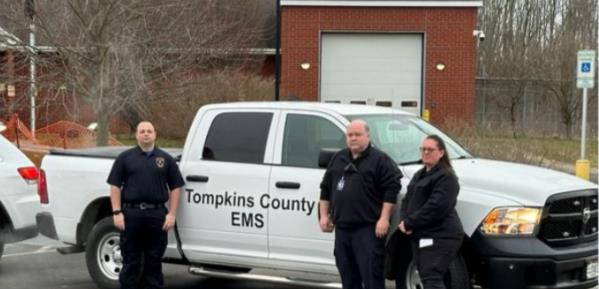
RMR’s initial goal was to fill daytime service gaps left by dwindling numbers of local fire company rescue responders. Fewer EMT’s step up. And those who still serve often have day jobs.
Yet since RMR’s creation, municipal advocates, especially those in Dryden and Trumansburg, two communities that operate their own paid ambulance services, have lobbied for RMR’s expansion. Dryden and Trumansburg find their ambulances increasingly drawn beyond their service areas to gap-fill when Ithaca-based Bangs Ambulance finds itself unable to keep up with call volumes.
And primarily because of that imbalance, Dryden and Trumansburg have urged Tompkins County to enhance RMR. Their advocacy led DoER officials in spring 2025 to propose adding one or two ambulances to RMR’s fleet. A consultant’s report, presented last fall, essentially suggested the same.
But what Mike Stitley now calls the latest “baby step” would yield only a measured expansion.
Stitley and RMR Program Manager Joe Milliman would employ the $500,000 Dormitory Authority grant to buy new vehicles. Each would stand equipped to offer “Advanced Life Support (ALS),” the kind of care that only paramedics can provide. Paramedics would staff one of those vehicles—a so-called “flycar”—all day and night, but only on weekdays.
The remaining three vehicles, although new and better-equipped, would remain providing what they’ve been providing, namely EMT-level “Basic Life Support (BLS).”
There’d remain no County-run RMR service on weekends, ALS or BLS.
New York State regulations provide an exhaustive list of medical interventions that on the road only a better-trained paramedic can deliver.
Emergency Medical Technicians (EMT’s) can perform bed lifts, take vitals, administer oxygen, splint fractures, remedy anaphylaxis, reverse narcotic overdoses, operate AED defibrillators, and a few other tasks, according to the “Scope of Practice” Policy Statement, issued by New York’s Bureau of Emergency Medical Services and Trauma Systems.
Paramedics, on the other hand, can do much more. In many ways, they serve more like Emergency Room nurses. They can administer and monitor IV medication drips, provide higher-level “cardiac arrest management,” administer controlled substances, intubate patients, and manage a wide variety of medical conditions “within their scope of practice and skills used in a pre-hospital setting.”
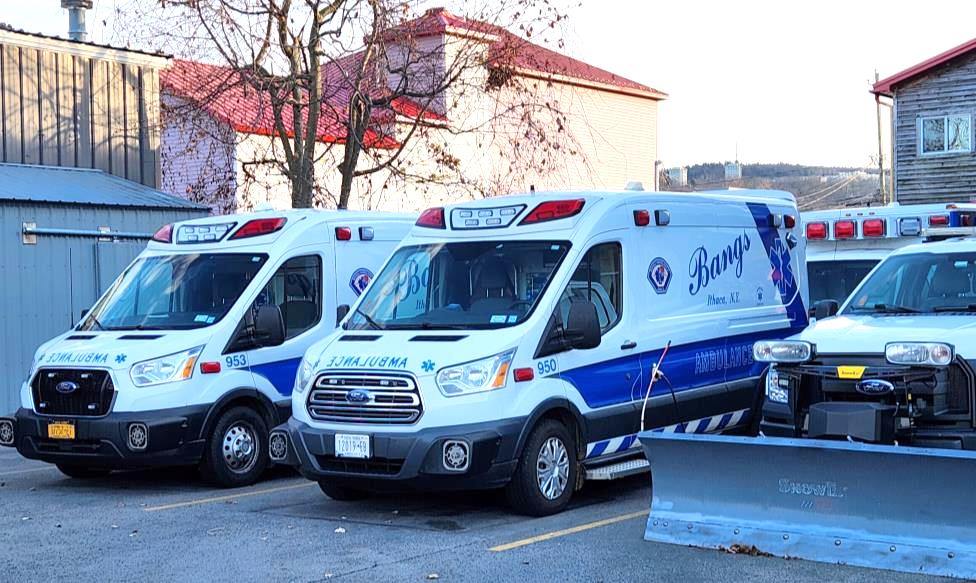
The state’s “Scope of Practice” reports an EMT requires 180 hours of training. It takes 1600 hours to become a paramedic, nearly nine times as much study.
“I can say that on a daily basis, our staff is reporting back to us that had there been an ALS provider, they would have been able to start care for the transport agency, to kind of get the ball rolling,” Milliman informed the Public Safety Committee in June.
“Half or a third of the time?” legislator Shurtleff asked.
“At the very least, yes,” Milliman answered.
Stitley told the Legislature this week that he already has paramedics on staff. And even were the Dormitory Authority grant money to come through and the RMR program to expand, some paramedics would continue staffing the BLS units.
“Why not elevate those with the training to be able to perform at the level they’re capable of?” Dryden legislator Greg Mezey asked.
“It really comes down to budgeting,” Stitley responded. Read the director’s words to imply that paramedics command higher salaries.
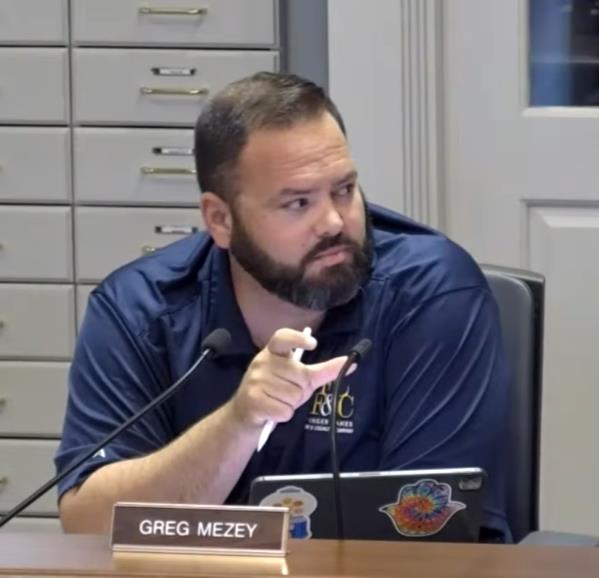
“There is still a need for Basic Life Support,” the director maintained,” because a lot of our calls are at that level,” he said.
The decision to supplement the newly-sought $500,000 Dormitory Authority capital grant with a nearly equal half-million dollars in taxpayer money was a choice made by locals. In the committee June 23, Akumfi conceded that the state’s rules don’t require a dollar-for-dollar local match.
“This does not require a match,” the Administrator informed the committee. But “we need to demonstrate to (the Dormitory Authority) an appetite of expansion,” Akumfi advised. He said it’s a local buy-in that funders expect. .
There’s no current talk of imposing upon rural municipalities emergency cost-sharing assessments, as had been discussed in the past. So the tax burden would fall countywide, despite the fact that benefits would not spread equally. People in the City and Town of Ithaca generally get quicker responses from nearby Bangs, and a paid Ithaca Fire Department stands ready to respond to calls it deems sufficiently urgent.
“If we put to our constituents that we’re going to be raising taxes so that when they or their kids or their family members need somebody qualified to show up for an emergency that they’ll have somebody who can show up, I’m hard-pressed to think that any of our constituents are going to object to that,” legislator Irene Weiser commented at Tuesday’s meeting.
But Weiser hails from Caroline, a town at the far edge of Bangs’ service area. Ambulance wait times are long there. Judith Hubbard represents a City of Ithaca district.
“Do we have to do both things?” Hubbard asked, seeking to shave the local cost. “Do we have to add a vehicle to get the ALS services, or could we get this ALS vehicle and put on hold one of the other ones?”
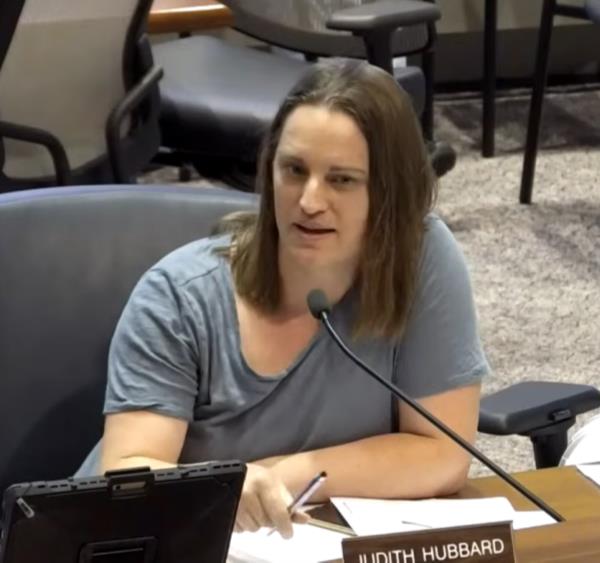
“I think that’s an option,” Stitley answered.
And then there’s scheduling. Why no weekend service? And why the emphasis on weekdays, seven to seven?
“I just have my instinct,” Dryden’s Greg Mezey stated. “Those hours seem like they fit the business model rather than, like, when (are) our calls,” he said. “Every neighbor I’ve ever seen that had an ambulance show up, it’s been at night.”
“The spirit behind the RMR program was to augment the volunteer services,” the Emergency Response Director answered. “Our hope is that in the evening hours that those volunteers will be able to cover those hours and cover the hours on the weekend.”
Still, daytime-limited, weekday-only scheduling may seem a little too “cushy civil servant” for some. And Saturdays and Sundays, when RMR’s ALS flycar would stand down, no volunteer paramedic would likely be stationed at a fire house to fill the void.
****.
Thursday, July 23, two days after the County Legislature approved the resolution, the Tompkins County Council of Governments (TCCOG) convened. TCCOG, and particularly its Emergency Preparedness subcommittee, has proven particularly vocal in promoting Rapid Medical Response enhancement.
Politely evicted in January from legislative chambers after its membership declined to be bound by the cumbersome New York State Open Meetings Law, TCCOG now convenes only online and in an obscure corner cubbyhole of the County Administration’s webpage.
TCCOG has preferred secrecy in tackling the emergency services issue. It will likely continue to demand it. TCCOG decided Thursday to devote part of its next meeting, September 24, to a closed “Executive Session” that’ll further explore emergency medical problems and solutions.
“There are issues that concern me,” Trumansburg Mayor Rordan Hart said to TCCOG membership July 23. “You can’t publicly say all that we know,” he added.
Best we “downplay it so we don’t scare the public,” Ulysses Supervisor Katelin Olson concurred.
No, we don’t know publicly what that was all about. We may never know. TCCOG these days closes its doors to casual curiosity. But the state of who arrives at your door—and how soon—when you call 911 with chest pains likely has something to do with it. So, too, did the resolution our County Legislature adopted this week. We must await the results.
###