
Fire Volunteers Press Town Board for Budget Change
by Robert Lynch, October 31, 2022
“The volunteers ask for very little. We don’t get paid… We don’t ask for health insurance. All we ask for is for the Town to provide us with the gear and equipment to be safe and do our job.”
Dennis Hubbell, President of the Enfield Volunteer Fire Company, Oct. 26.
****
Modern-day budget hearings often induce slumber. Tompkins County annually spends over $200 Million. Yet its downtown lawmakers often find themselves sitting in an empty chamber when they place their spending plan before the public each November.
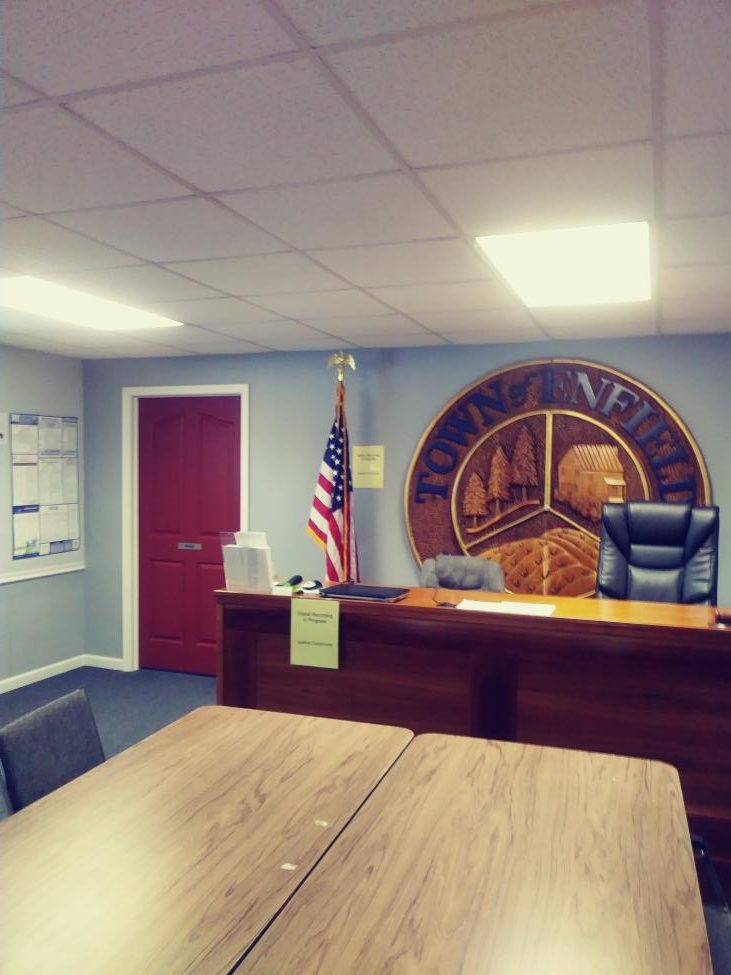
Last Wednesday night in Enfield, the Town Board held a budget hearing that clearly had a pulse. Well over a dozen volunteers of the Enfield Volunteer Fire Company (EVFC) filled visitor’s chairs or zoomed-in online to press their Town Board to increase next year’s spending for “Structural Firefighting Protective Equipment”—better known as “Turnout Gear”—so as to make that budget line the same next year as it’s been for this year and for the year before, namely $35,000 annually.
In a roundabout way, EVFC volunteers got what they wanted, but not the way they had wanted it. Instead of upping the Turnout Gear spending line by $25,000 in the budget, the Board’s majority left it at only $10,000 and snared the balance, $25,000, from federally-awarded American Rescue Plan (ARPA) funds.
Because they did, Supervisor Stephanie Redmond’s Tentative Budget, which had been elevated to Preliminary Budget status with only minor changes October 12, remained intact. The Town Board beat back proposed changes both to the firefighters’ account and to the Highway Superintendent’s salary line. Highway staff will get 12 per cent pay raises. The combined Town and Fire Protection levy will rise by nearly eight-point-five per cent.
“Not perfect, but aye,” Councilperson Robert Lynch (this writer) said as he cast his vote to make budget approval unanimous. Lynch was not the only one Wednesday left less than satisfied.
“It’s not going to kill anybody to really pay a little bit extra to make sure all the firefighters are protected so they can possibly save their lives and their families’ lives, Dennis Hubbell, President of the EVFC, told Enfield Board members that night in lobbying for a budgeted increase.
“The least that can be done for them is to provide them with gear that will hopefully prevent them from getting a horrible disease down the line or getting injured or burned,” said volunteer Monique Morris, whose husband and son also volunteer for the EVFC. Morris described volunteer dedication as “incredible.”
Wednesday’s Enfield Budget Hearing lasted nearly two hours. More than a dozen people spoke, often repeatedly. The Turnout Gear increase dominated the discussion. Only Town Supervisor Stephanie Redmond and Councilperson Jude Lemke offered any significant pushback. A motion by Lynch to increase the budget by the funds the Fire Company had requested failed with only his vote in its favor.
“I think that the $25,000 is money well spent to keep our people safe,” Lynch said after the hearing had ended and his motion found itself headed toward defeat.
And addressing the Board’s preferred alternative of tapping ARPA moneys for the turnout gear’s purchase, Lynch asked the Board, “And what are we denying them by doing that? We’re denying them other moneys that they need for other purposes, are we not?”
After defeating Lynch’s motion to add the $25,000 in equipment purchases to the budget, the Board then unanimously pledged to tap the ARPA money for the gear. A formal, follow-up resolution in November will likely affirm the Board’s intent.
EVFC leaders suggested Wednesday that they’d have preferred the ARPA moneys had been set aside for such things as purchase of portable radios or maybe a more expensive project, construction of a volunteer bunk room.
Firefighter turnout gear no longer comes cheap. A complete set—helmet and hood to boots—costs about $5,000 per volunteer. Those fighting fires inside buildings ideally need two sets of outerwear, since the gear must be cleaned before it’s used again. A second fire could always erupt in the interim. Hubbell advised the Board that the EFVC has about 50 members. Thirteen people have newly-joined, he said, and eight of those still wear outdated gear.
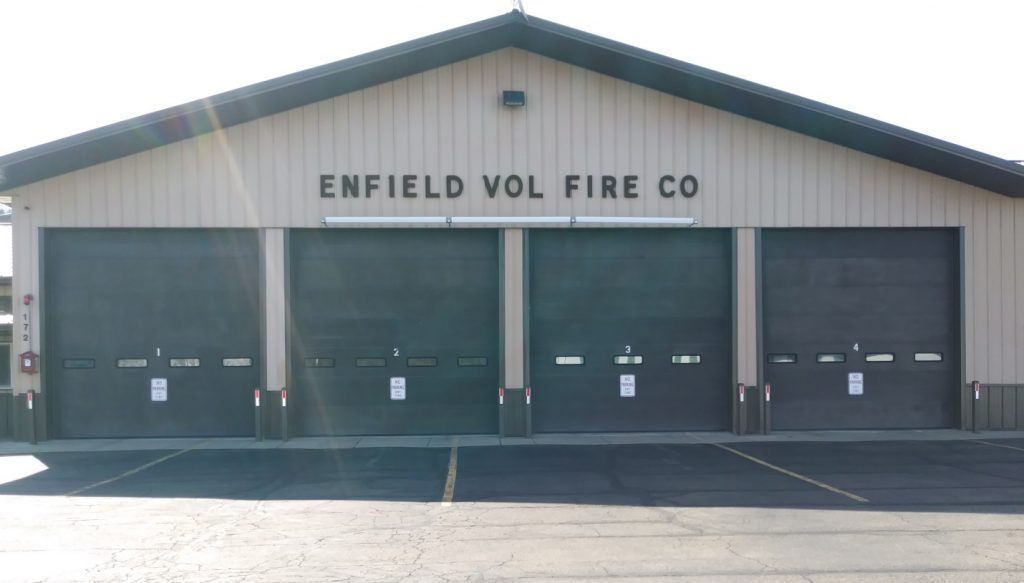
The EVFC President said turnout gear protects firefighters from carcinogens that could become airborne during a blaze. During Wednesday’s discussion, Hubbell pointed to an older company member, Jim Whittaker, sitting a few chairs away, whose neck clearly bore the signs of cancer surgery.
“Did we cause that?” Hubbell asked rhetorically. “I don’t know. But he’s a cancer survivor… I just want you to look at that man!”
After its first, more focused hour, the Public Hearing’s second half grew increasingly contentious. Talk turned away from the outerwear firefighters needed and toward a $41,000 truck, a “Command Vehicle,” that the Company had wanted and bought. Purchased for quick response during an emergency, the vehicle sometimes sits in the fire chief’s driveway.
Supervisor Redmond, critical of the truck’s acquisition, referenced a “straw poll” she’d allegedly commissioned, one with neither Board authorization or with respondents’ names mentioned.
“They were very concerned that money was spent on a truck, instead of turnout gear,” Redmond claimed she’d heard from the poll’s anonymous respondents, “a truck that wasn’t needed when turnout gear was needed.”
Redmond viewed the fire company’s financial choices as a tradeoff. “Obviously, the gear is more important than the truck. It just is,” Redmond insisted.
“If anybody wants to say the Fire Company’s incompetent by (buying the truck), so be it,” Hubbell responded. “But we purchased it. We have it. It’s not going away now. So we’re not going to sell it to buy turnout gear.”
Fire Chief Greg Stevenson reminded the Board that the Town’s three-year contract requires the EVFC to provide modern equipment; “suitable and adequate fire-fighting apparatus,” as the contract puts it.
“We can’t eliminate a truck in favor of a steamer and a
couple of horses, or a hand-drawn pumper,” Stevenson reminded the Board.
A second concern, raised by Councilperson Jude Lemke, was the EVFC’s annual banquet and its $7,500 cost.
“$7,500 for a banquet. Maybe we could do that for a lot less,” Lemke opined.
“I think it’s important to have these kinds of discussions to be able to understand both perspectives,” Redmond responded, a continued nod to contrary viewpoints. But then she inserted an ill-timed barb: “It’s a sign of intelligence, really, to be able to see other perspectives other than your own.”
Redmond’s comment struck a nerve and caused volunteer Robyn Wishna, to bristle.
“I think it’s really disrespectful and rude and offensive to suggest that there was a lack of education—”
“I didn’t mean it like that,” Redmond interrupted. The Supervisor apologized. The hearing went on.
But President Hubbell, a 47-year EVFC veteran, observed that convincing elected leaders of his fire company’s worth is nothing new. It tends to recur with each election cycle.
“Every single time we change a Town Board, every single time, we have to go through this whole thing, all over again; re-educate everybody about the fire service,” Hubbell said. “So I’m going through this process once again. And in four years I can guarantee probably none of you will be here again, and I’ll go through it again… and again… and again until I die.”
Inserting dedicated spending for protective equipment into the budget was Beth McGee’s idea. The former Town Supervisor placed that special line item in the 2021 Town Budget. The current three-year Fire Contract, negotiated for the Town largely by Supervisor Redmond and Councilperson Lynch, set aside $35,000 for the gear purchases in both 2021 and 2022, but decreased it to $10,000 for the contract’s final, third year. Had the Town Board Wednesday put the added spending into the budget, the contract would have required renegotiation.
****
Gaining far less comment, yet still significant—and maybe equally controversial—the Enfield Board, later rejected Councilperson Lynch’s attempt to scale back Highway Superintendent Barry “Buddy” Rollins’ pay raise. The Preliminary Budget had called for both Rollins and all of his subordinates to receive 12 per cent increases next year. The Board’s majority maintained that the job market’s current state requires above inflation-rate increases to avoid Highway staff resigning for more lucrative jobs and to keep Rollins’ compensation in line with superintendents in neighboring towns.

Addressing the hearing, Cortney Bailey, last year’s write-in candidate for Town Supervisor, took a different view. Bailey argued that the Highway Superintendent should settle for the $64,000 salary set for the job when he ran for it last year. She opposed the higher, budgeted rate of $71,680.
“Congress, on the national level, needs to stop giving themselves raises,” Bailey complained. “That’s not right. That’s not fair. I don’t want to see it happening in our town,” Bailey added, bringing her wider argument home.
After the Public Hearing, but before the final budget vote was called, Lynch moved to trim Rollins’ next year’s pay to first $69,000 (a 7.8% increase), and then $70,000 (a 9.375% increase). Lynch called it a compromise. Councilperson Cassandra Hinkle supported Lynch’s latter option, but no one else did. Rollins’ salary will carry the 12 per cent increase that Redmond had recommended.
The Supervisor argued that Rollins’ deserved the double-digit raise partly due to the work he performs, partly to assure that he earns at least as much as do his overtime-eligible subordinates, and partly to “recognize his senior status” in the Highway Department. Faulting Lynch’s philosophical reservations about a mid-term pay raise— Lynch’s concerns mirroring Bailey’s—Redmond also pointed to Lynch’s having backed a more than nine percent mid-term raise for Town Clerk Mary Cornell, one approved at a prior Board meeting.
Lynch said he’d supported Clerk Cornell’s increase for a different reason; to help elevate the Clerk’s compensation to a living wage, a newly-established salary of $35,000.
“The Highway Superintendent earns a Living Wage and then some,” Lynch stated. “He also has a Town-paid truck, for good reason. He has full benefits, which the Town Clerk does not have. There is a difference.”
“But he has a CDL (driver’s license) and years of experience. And I think you’re talking about hazard pay and things like that,” Redmond pushed back, the Supervisor attempting to contrast Rollins’ heavy equipment labors with the office duties of Clerk Cornell.
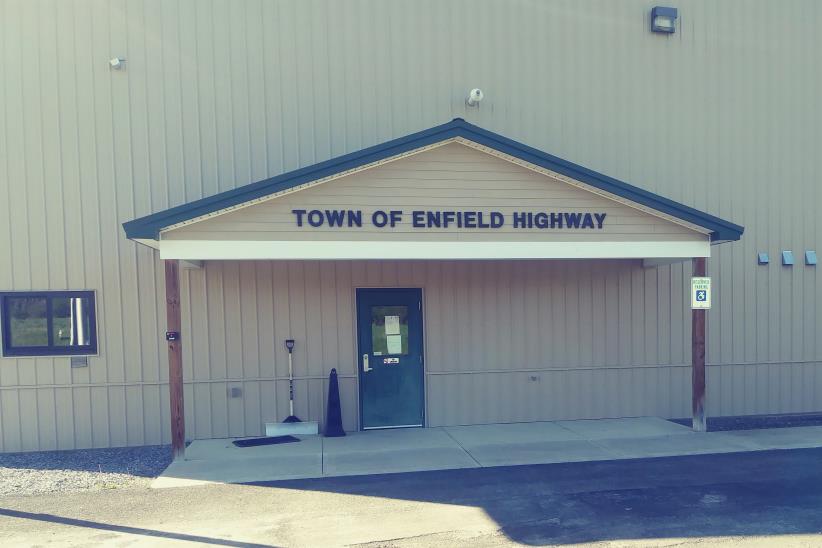
“And I dare say there is one member of this community who would say that is quintessential pink-collaring,” Lynch rebutted.
“Pink-collaring” is a phrase former Town Clerk Ellen Woods employed in her previous Enfield complaints involving gender equity.
Redmond conceded that the equity argument was “valid to a certain extent.” But she did not retreat from her asserting that Rollins deserved a larger percentage raise than Clerk Cornell did.
Enfield’s Final 2023 Budget, approved that night, tops $2.5 Million in total spending. The combined Town and Fire Protection District tax levy would increase by 8.49 per cent, nearly three times the State’s, highly symbolic “tax cap.” But because of double-digit rises in property assessments affecting Town taxes, the tax rate on local property would actually decrease slightly. Aside from the heftier increases given Highway staff, most Town salaries would increase by a more modest two per cent.
In other Enfield Board business October 26th:
- The Board endorsed a Resolution authored by Councilperson Lynch that urges Tompkins County continue its long-standing practice of convening Local Advisory Boards of Assessment Review to accept springtime complaints concerning assessment increases. County Assessment staffers propose eliminating the review boards after having suspended them for several previous years and then bringing them back this past spring. Town Board members pointed to planned County changes in assessment procedures as heightening the need for the local boards.
- And with one dissent, the Town Board endorsed an application by the non-profit ”Sustainable Finger Lakes” for what could be a $750,000 grant under Tompkins County’s Community Recovery Fund. The grant would retrofit mobile homes with heat pumps. Councilperson Lynch voted against the endorsement only because he knew too little about how it compared with all the other funding requests. Lynch said he didn’t want to “put the thumb on the scales” and jeopardize more worthy applicants.
###