

Commissioners mull Enfield Fire Service “no-rider” rule
By Robert Lynch; August 2, 2026
For Enfield’s Fire Chief, it’s Damned if you do; Damned if you don’t.
On the last Saturday in July, Chief Jamie Stevens headed out to the Enfield Volunteer Fire Company (EVFC) annual summer picnic at the fire house. He wanted to bring a guest. But to comply with a recently-adopted rule restricting ridership, Stevens took his personal vehicle, not the fire company’s “Command Vehicle,” the SUV permanently assigned to the top line officer for “official use.”
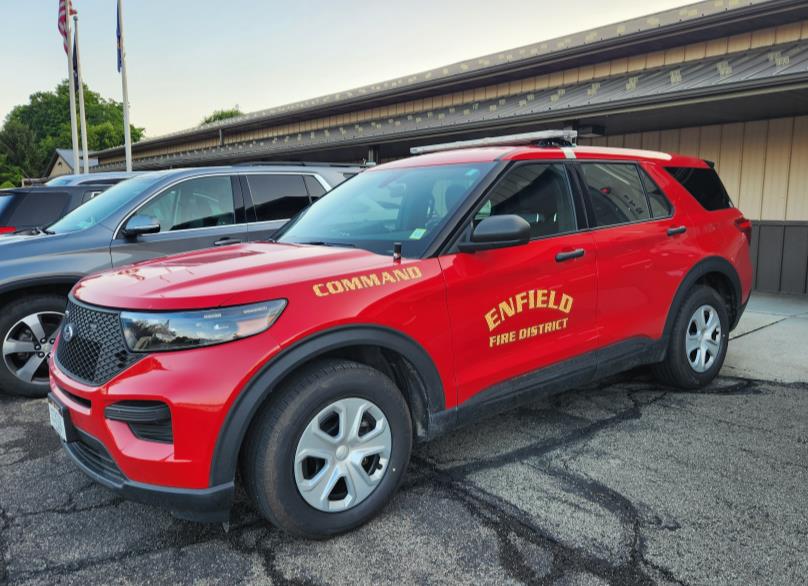
As the picnic began, an alarm came in. Dispatch needed Enfield firefighters to provide mutual aid in battling a house fire in Ulysses. Stevens would supervise Enfield’s response. Problem was, his protective clothing—his “turnout gear”—was locked away in unit 647, the Command Vehicle, parked in his driveway, miles away.
“I had to grab some gear off the wall,” Stevens informed the Enfield Board of Fire Commissioners three days later, July 28. He’d borrowed a coat, hat, and boots from the rack, gear assigned to some other volunteer who wasn’t present. Stevens then jumped into a fire truck—and not his personal vehicle—and rode to the scene. The gear might not have quite fit. But it worked in a pinch.
Yet for Stevens, the problem demands a fix. A fire chief needs both the machine and its contents at all times, he insists. Fires can occur when least expected, even when a chief’s attending a social event or running a personal errand. Wives, children, and girlfriends are a fact of life. You need and want to be with them at times. Maybe you’re on call as a firefighter 24/7, but you also have a life.
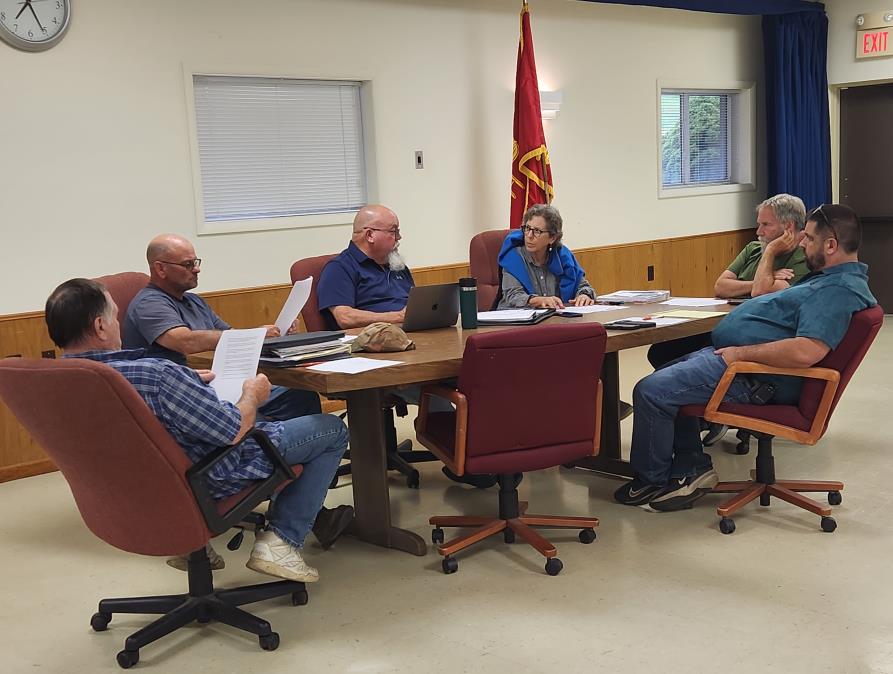
Chief Stevens brought his concern to the Enfield Board of Fire Commissioners at a special meeting on the Tuesday following the Ulysses fire. The meeting was hurriedly-called, yet had been planned even prior to the picnic-day incident. Its agenda listed discussion and possible action on policy changes and also a closed “executive session” to discuss a “personnel related matter.”
Chief Stevens stayed for the executive session. No public action on the personnel matter was taken after the closed discussion had ended.
But the 40 minutes of public debate prior to the closing of doors addressed head-on the policy matter prompting Stevens’ concern. The Chief spoke forcefully and passionately. The one action that Commissioners took that night never dealt directly with Stevens’ complaint. Action may come at a future meeting, although not necessarily.
“The car needs to be available all the time,” Stevens pleaded with the commissioners. “On Saturday, it’s plain why you let your family to ride in it,” he said.
Until recently, the Enfield Fire District’s “Standard Operation Guideline” (S.O.G.) authorized the Fire Chief to unilaterally waive what might be called the “no-rider rule.” It’s a prohibition on non-Enfield fire or EMS personnel from riding in Fire Company vehicles. In its prior form, its language would have precluded the chief’s need to seek anyone else’s permission to pile family or friends—or even strangers—into car 647.
But on May 19, the rule changed.
On that night, after a 45-minute executive session, the Board of Fire Commissioners unanimously revised the ridership policy.
“Non-fire personnel are not allowed to ride in emergency vehicles without approval of the Board of Fire Commissioners,” the revised adopted policy stated.
Asked after the May meeting’s adjournment as to why the rule had changed, Commissioners Chair Greg Stevenson would only state that, “It’s an issue.” Stevenson declined to give particulars.
The Commissioners Chair did offer a hypothetical example. It would later become reality when the board subsequently authorized Enfield’s participation in the Newfield Old Home Days parade. Commissioner Alan Teeter, an EVFC volunteer, would drive a parading fire truck. He’d like to seat his grandchildren as passengers. Under the new policy, Teeter would need to—as he did—secure advance Commissioners approval.
But the issue obviously involves more than kids in parades. Removing the chief’s authority for granting waivers zeroes attention on the vehicle he most frequently drives.
“Nobody should be riding in the vehicle who’s not in the fire company,” Fire Commissioner Donald Gunning asserted during the July 28 meeting.
“I’d like to get in one of those big trucks and go,” Gunning, not a firefighter, said of hopping into any of Enfield’s larger engines or pumpers and then riding to a fire. “Is the command car any different?” Gunning asked.
Well, to Chief Stevens, it is.
“The command car does a lot of stuff other than going to a fire,” the chief challenged Gunning’s comparison. “There’s time you’re tied up,” Stevens said. “You go get supplies.”
“There are hundreds of errands a chief has to run,” Stevens explained. “Stuff happens.”
“If you’re in the middle of the day doing something,” Stevens said, “that’s how you keep the home life happy.”
Chatting informally with this writer two nights later in the fire company’s apparatus room, the chief gave an example. Suppose he needed to travel to Syracuse to pick up some firefighting equipment or parts. Why not take a spouse or girlfriend along and buy her lunch?
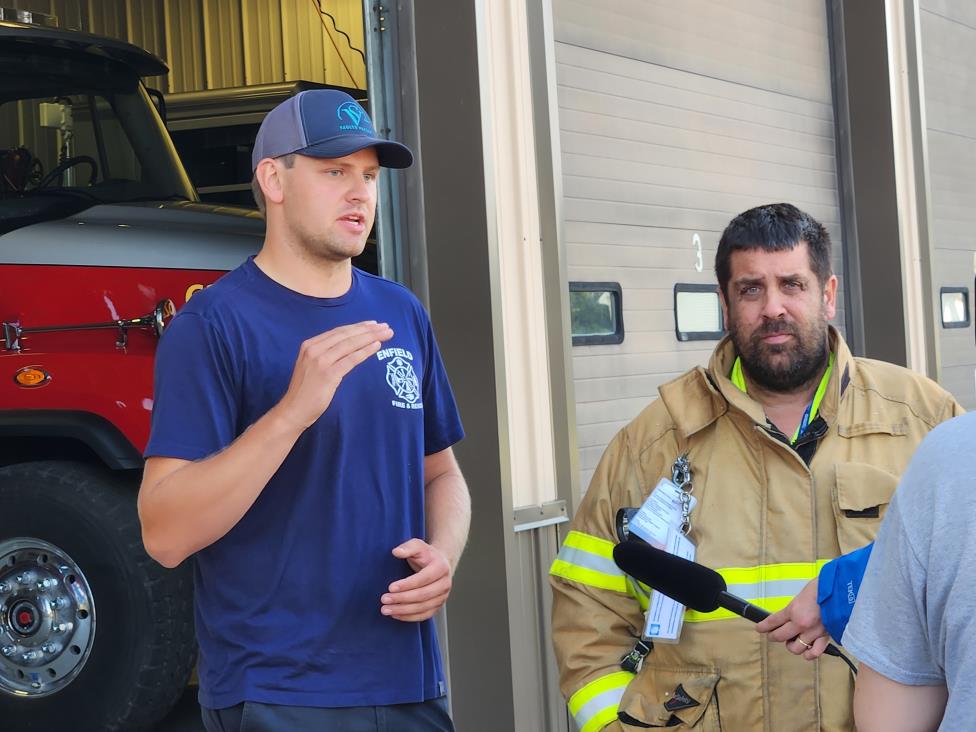
And with Board Chair Stevenson, as with Chief Stevens, the Enfield Command Vehicle is just as much a 24/7 necessity as is a flameproof coat and pants.
“A command vehicle is not just something the guy who bids up for Fire Chief gets as a perk,” Stevenson remarked during a separate conversation that Thursday night in the apparatus room. “It’s a tool the Chief needs to rely on in the protection of the life and property in our district.”
Stevenson related a tale he’d once shared at a prior meeting. There’d been a serious accident. It occurred years ago when Stevenson, himself, was Fire Chief and Enfield lacked a command vehicle.
A car had pinned against a tree; its driver trapped. As it was, Highway Superintendent Barry Rollins arrived before firefighters did. Rollins peered through a sliver of the mangled hood and saw a battery cable that could be severed to kill the engine and prevent a fire. Rollins phoned Stevenson and asked him to race to the scene with bolt cutters. Stevenson explained he didn’t have any.
But the Enfield Command Car carries those cutters now—and much more.
At the July 28 meeting, Chief Stevens cited another reason for relaxing the no-rider rule. Suppose there’s a wrecked car, and only two of its eight passengers are hurt, he said. “I could put the six non-injured people in the command car” and transport them, he said, so long as the rule gained some flex.
The only action the Board of Fire Commissioners took July 28 was to tighten the chain-of-custody restrictions for the Command Vehicle during the Fire Chief’s absences.
A 2022 policy within the Standard Operation Guidance had directed that, “If the member assigned the District vehicle is out of service for a period exceeding 72 hours, the vehicle may be reassigned for that period of absence by the Fire Chief.”
By unanimous vote, Commissioners shortened that period of permissible absence to 48 hours. The revision also provided that during such extended absence, the vehicle will be assigned “to the next highest ranking line officer or be available at the station.”
Recently, Chief Stevens took a multi-day vacation on short notice. But Jamie Stevens assured this writer that during that time, the EVFC Deputy Chief, Bailey Stevens, Jamie’s son and second-in-command, had custody of Unit 647.
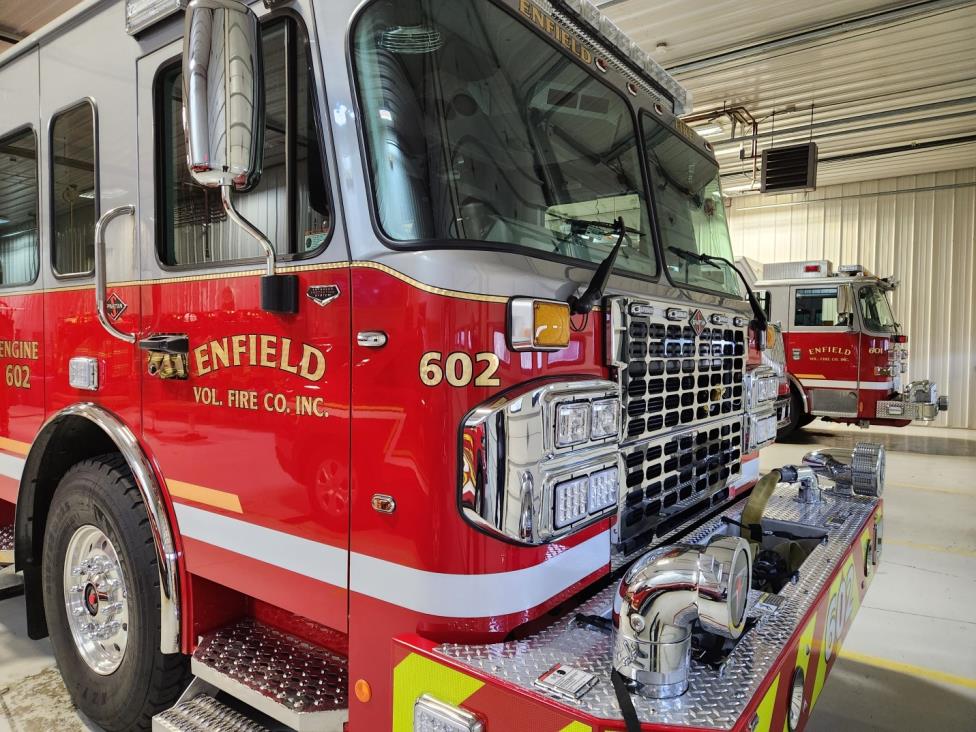
“It hasn’t been unavailable,” Commissioners Chair Stevenson said in a written statement after the Tuesday meeting as to the command vehicle, “but, in the opinion of the BOFC, its use, possession and the logistics need more oversight. We are working on that.”
Still, for Don Gunning, giving the Fire Chief full-time possession of the command vehicle parks it in the wrong driveway.
“I’d like to put the Chief’s car in the bay,” Gunning told the Tuesday night meeting. Keep it at the fire house, he said. “First person who gets here, gets it.”
But that “defeats the purpose of timely response,” Greg Stevenson countered.
Fellow Fire Commissioner Robyn Wishna sought compromise. She proposed that if family members or friends find themselves in the command vehicle when the Fire Chief gets a call, any non-member stays with the vehicle for the emergency’s duration.
“I want you to use the car all the time,” Wishna assured Chief Stevens. Nonetheless, she added, “It’s important to me that people not get out of the car if there’s a call.”
Once can easily understand Wishna’s rationale. There are insurance matters to consider, and the legal liability of one’s proximity to a fire.
Robyn Wishna would amend the S.O.G. to make the ridership restriction clear. Her amendment must await action at a future meeting.
Enfield’s even having a fire service Command Vehicle carries a tortured past.
The $41,000 SUV’s purchase four years ago drew controversy during the Enfield Town Board’s October 2022 budget hearing. At the time, the Town Board controlled fire service budgeting. It would be another year before EVFC oversight would transfer to an independently-elected Board of Fire Commissioners governing a newly-formed Enfield Fire District.
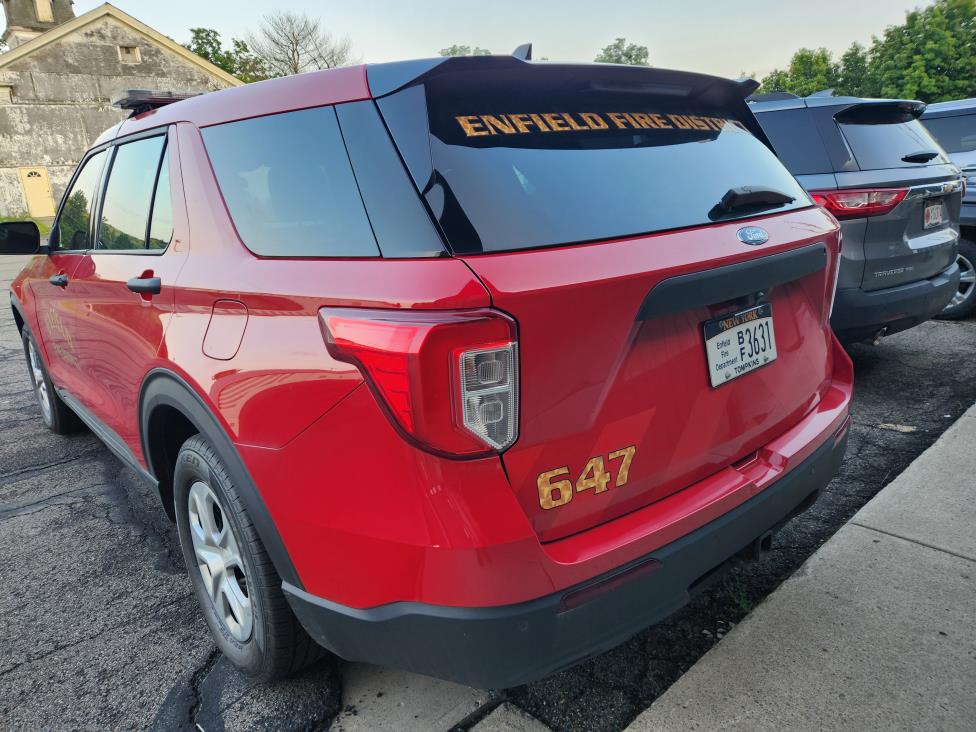
In 2022, the Fire Company had effectively bought the command vehicle “off-budget,” purportedly tapping sale proceeds from donated property. Yet at the hearing, some Town officials, notably Supervisor Stephanie Redmond and Councilperson Jude Lemke, had questioned EVFC fiscal priorities in purchasing the SUV at the same time that the fire company was seeking extra tax money to buy turnout gear.
Although they took criticism, fire service leaders never sold the command vehicle. Nevertheless, the controversy may have led to the fire service’s later efforts to sever its ties with the Town Board.
With the Command Vehicle now a permanent fact of life, the questions remain: Who uses Unit 647; where does it rest; how much does it get used; and when it does, who rides with whom?
“It’s not just about the car,” Chairman Stevenson told fellow fire commissioners July 28. “It’s the person in the car and the equipment in the car,” he said. “I’m a big proponent of the command vehicle.”
“The command car gives the district the ability to put a senior fire officer enroute to an emergency quicker than without said vehicle,” the Chairman said in his written statement of Tuesday night. “Considering the specialty equipment carried in the vehicle, along with a trained and experienced senior Chief, lives and property can be positively affected by the use of this tool.”
That said, during that night’s meeting, the chairman qualified his support: “It’s not a grocery-getting car. It’s to respond to emergencies.”
###