

Legislative committee factors unfilled jobs to reduce ’27 levy rise to the single digits
by Robert Lynch; October 18, 2026
In Syracuse this fall, Onondaga County Executive Ryan McMahon proposed a $1.7 Billion budget to the Onondaga County Legislature. He announced his budget September 15. Onondaga’s lawmakers adopted it just three weeks later, on October 6, and with little to no controversy.
Tompkins County does budgets differently—a lot differently. Tompkins County Administrator Korsah Akumfi presented his quarter-Billion dollar spending plan—a fraction of Onondaga’s— to the local legislature September 1, two weeks before McMahon unveiled his.
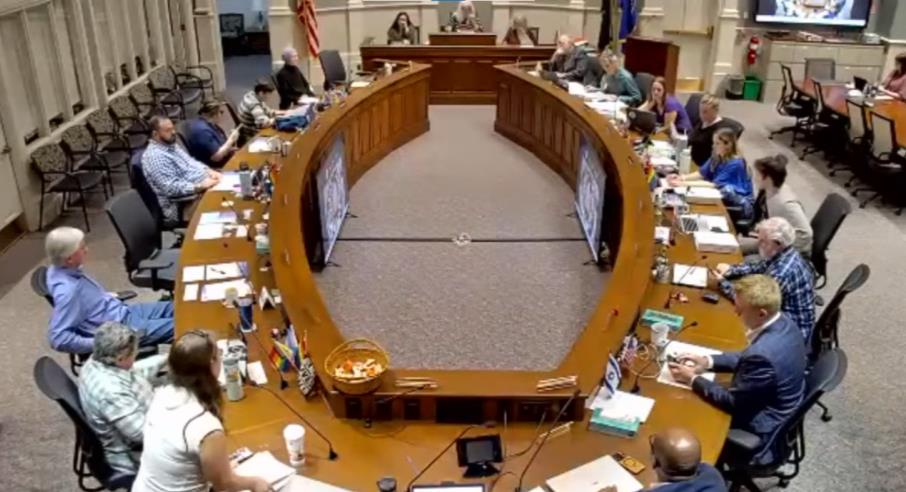
Six-plus weeks later, and after as many as eight departmental presentation meetings and three seemingly endless committee refinement sessions, the local legislature’s members have at long last put together something that they can act on.
Well, sort of. What emerged from a four-hour, tedium-inducing, committee-of-the-whole session this past Tuesday could yet be amended further before it reaches preliminary adoption by the Tompkins County Legislature this coming week. And no, the budget won’t become final until the third week of November.
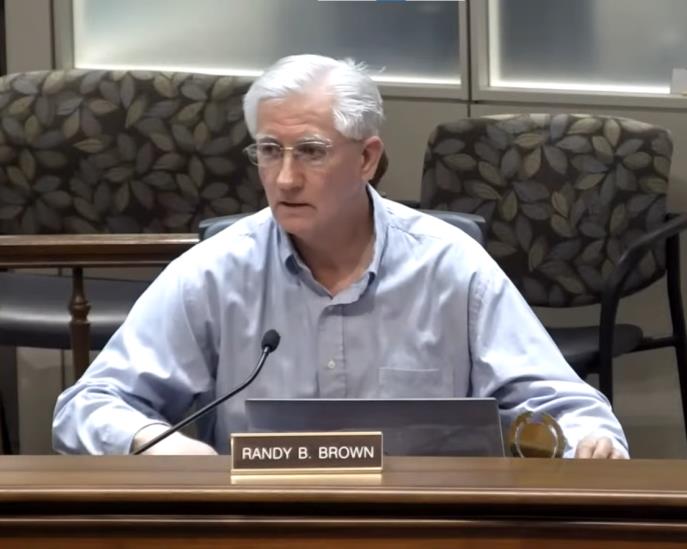
But what made news at the legislature’s Expanded Budget Committee (EBC) meeting October 13 was the tax levy. No, it’s not going down from the current year’s budget. The tax levy would still rise by far more than it’s done in past budgets. Nevertheless, the revised figure would avoid the double-digit increase that Akumfi had warned of when he first presented his 2027 recommended budget to the legislature September first.
Due largely to the legislature’s common-sense conclusion that not every governmental job is filled all the time, the EBC’s recommendation would reduce Akumfi’s earlier-forecast 11.96 percent rise in the tax levy to just 7.69 percent. That’s a 35.8 percent reduction from the earlier-feared increase.
Watching the EBC’s four-hour marathon online several days after it was held became at times painful. A four-hour meeting consumes half of a standard workday. Moreover, legislators—even those who’ve newly joined the body—held true to their time-honored penchant to talk more than decide. Just reaching a decision on the appropriate so-called “vacancy factor” for the workforce took a full hour of discussion time and four false starts before settling upon a compromise number.
Now, five days after the October 13 meeting, no Ithaca reporter has yet to tackle this meeting and its important tax rate revision. Even the county’s Director of Communications—the woman paid to chronicle what the committee did—has yet to file a website story. Either wading through the weeds proved far too arduous, or writers simply threw up their hands in frustration.
But let’s report what happened. It mattered.
By imposing on the budget a vacancy factor of two percent, legislators instantly cut $1.4 Million in proposed spending. Admittedly, it’s an on-paper, accounting adjustment. Predicting how many governmental jobs—and which of those jobs—will remain unfilled next year becomes a wild guess.
But history becomes an inexact teacher. Lawmakers were told that night that the vacancy rate stood at eight percent in 2023, three percent in ’24, and five percent in ’25. Akumfi said a lot depends on the job market. And he said more people are applying for county jobs now than in recent years past.
“I did some research on how counties are supposed to budget,” Newfield-Enfield legislator Randy Brown told his colleagues that Tuesday night. And “generally they say you’re required to with the information you have (do) the best you can to estimate your expenses and estimate your revenues, and to not do so is a disservice and could be illegal.”
Of any of the Legislature’s 16 members, Randy Brown was the tax-slashing hawk that Tuesday night. During that final EBC meeting, he urged lawmakers to embrace a higher vacancy percentage than the majority dared stomach. The Newfield rep pressed Administration to pare down payrolls through attrition. And he asserted that recent budgets have vastly underestimated revenues and overstated expenses. More accurate calculations, Brown insisted, could lower taxes.
Dryden’s Dan Wakeman, new to the legislature this year, began the meeting’s prime debate topic by proposing the budget assume four percent of full-time-equivalent (FTE) positions remain vacant next year. In rough terms, that’s about 20 full-time jobs. Wakeman’s plan would have saved taxpayers $2.8 Million.
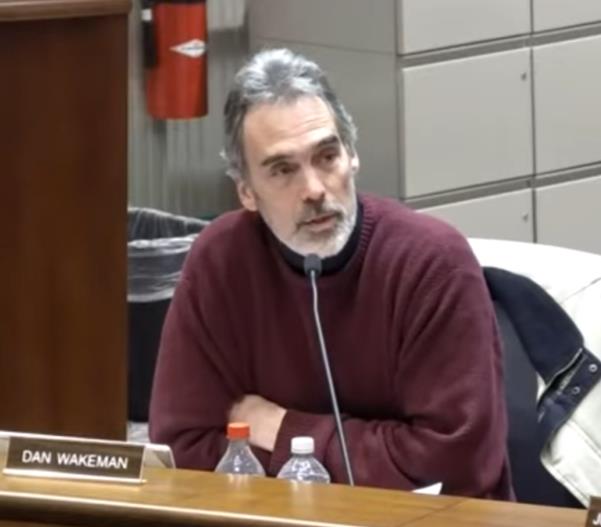
“What I’m not suggesting is cutting, Wakeman stressed. “We will have attrition opportunities, and as those arise, I’m suggesting that we be creative.”
Legislature Chair Shawna Black quickly countered; proposing slashing Wakeman’s vacancy percentage by half; to just two percent.
“Should we choose in January not to fill Director of Finance?” Black asked rhetorically. (The top-level position is now vacant.) “We have to fill that position, legally,” Black answered herself. “But I’m a little bit nervous whenever we talk about vacancy rate because… we also know that there’s some positions that are going to be critical to us being productive and providing service to our constituents.”
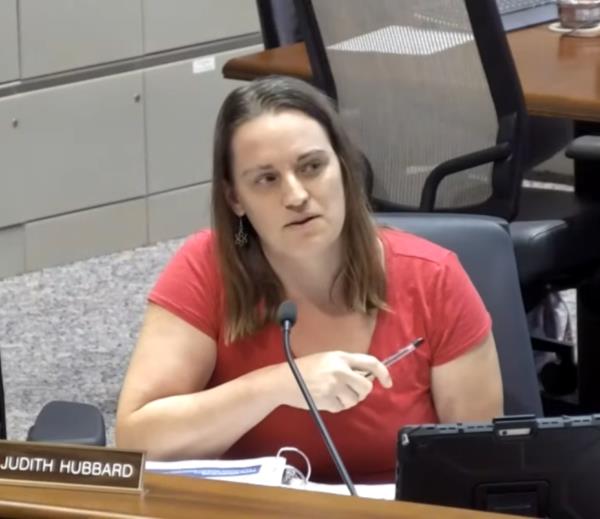
Ithaca’s Judith Hubbard went a step further. She argued that when an employee announces plans to leave, the county should actually spend more money; hire a new person before the departing one leaves, thereby providing “overlap for training.” Otherwise, Hubbard said, “it looks like dropping people into jobs (when) they don’t know how to do them.”
Randy Brown begged for reality: “So to use the two percent number where we’ve been averaging four percent over the last five years is not correct,” Brown said. “So we should be aggressive, but conservative. We shouldn’t be saying we’re only doing two percent just because we want to put more money away for the rainy day.”
Brown continued that sky-is-falling pushback argument when he spoke one night later before the Enfield Town Board. Asked by a councilperson why budget cuts weren’t deeper, Brown rationalized that many colleagues would rather store up surpluses like nuts for winter to bolster succeeding years’ accumulated savings, fund balances.
Tompkins County is “not transparent about income and expense in 2026,” Brown advised the Enfield Board.
During Tuesday’s protracted debate over fund balances, the Expanded Budget Committee waffled back and forth. When Akumfi had presented his recommended budget September 1, he’d inexplicably assumed zero employee vacancies. Sometime during succeeding weeks, according to an administrative memo referenced at the meeting, Akumfi had revised his prediction and offered a vacancy rate of 1.5 percent.
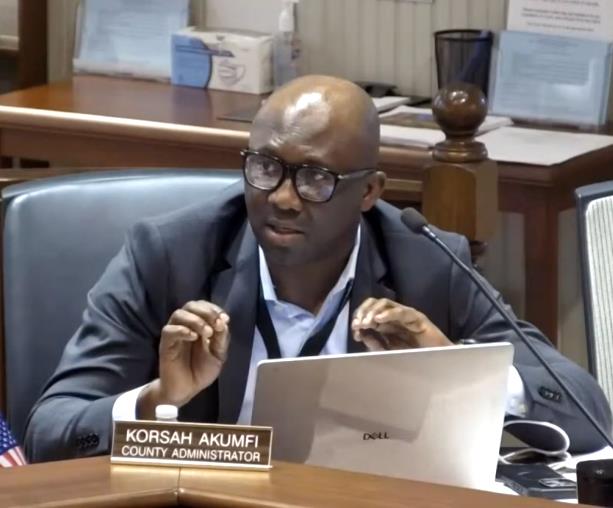
“If you choose a higher number as a vacancy rate,” Akumfi warned the committee,” then we have to force that vacancy throughout the year by making sure either (we) delay backfilling or actually eliminate some positions,” he said. In other words, managers would drag their feet on hiring or impose layoffs.
And shrinking Tompkins County’s workforce, at least by a little, would suit Randy Brown just fine.
“It’s not sustainable for us to continue to grow our staff like this at a rate much higher than our population is growing,” Brown told committee members. Being aggressive on the vacancy rate, he said, is “to let the Administration know we expect to reduce staffing in some way.”
Figures shared in September showed 857 FTE’s on the Tompkins County payroll. Brown said the number had climbed by 110 employees in just four years.
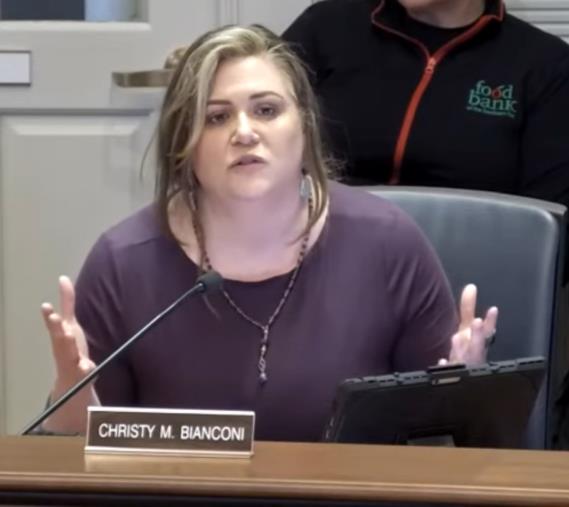
“We have to look at costs; we have to look at a way of reducing spending,” Christy Bianconi interjected, the Town of Ithaca legislator urging a balance be struck between providing quality services and constituent savings. “We have to put the taxpayer up front and center,” Bianconi advised.
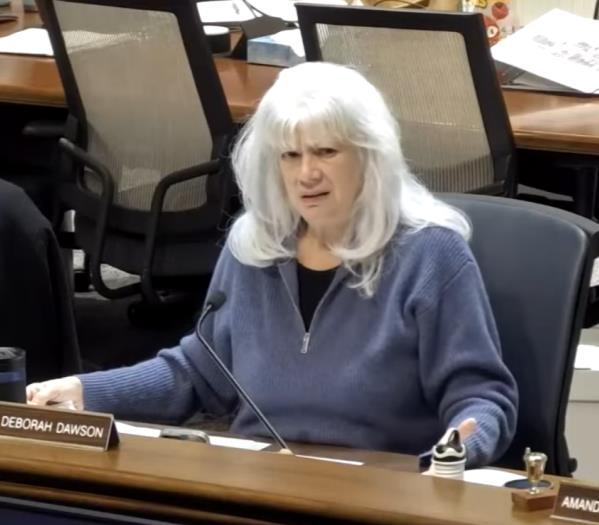
But Budget Committee Chair Deborah Dawson, a three-term lawmaker stubbornly resolved to keeping fund balances full, described the vacancy rate as “kind of a blunt instrument, when what we really need is a scalpel.”
And whether hammer or scalpel, the percentages debated that night were basically best-guesses, hypotheticals subject to reality’s correction.
“It takes time to hire people,” Greg Mezey countered his critics. “This is just an accounting assumption based on facts that we know to be true.”
“I’m just not willing to watch these fund balances get further whittled away,” Caroline-Danby’s Irene Weiser commented.
Yet to an extent, Tompkins County has become a slave to its own fund balance policy. In December 2023, lawmakers raised from 18 to 25 percent the amount of a prior year’s expenses that should be bankrolled and left undisturbed within a future year’s budget. They also altered the method of calculation. Tompkins County’s fallen short of its fund balance goals, and the shortfalls worry Akumfi. That concern has motivated his desire to pump more and more into savings.
After a revised motion to stick with Akumfi’s 1.5 percent vacancy estimate fell by just a single vote (one member’s temporary absence could have made the difference that night), Greg Mezey moved to jack the vacancy prediction up to three percent. Mezey’s motion fell, five votes to ten. When Shawna Black returned to a two percent compromise, her amendment passed ten votes to five. Brown joined fellow Republicans Mike Sigler and Lee Shurtleff, along with Democrats Mezey and Wakeman to oppose the final compromise.
The meeting moved on, although the tax numbers changed little thereafter. When the final recommendation came to a vote, four hours after meeting’s start, Brown, Mezey, Sigler and Adam Vinson, the legislature’s youngest member, voted “No,” with all others in support. (Lee Shurtleff and Travis Brooks had left before the vote).
Enfield’s other legislator, Rachel Ostlund, supported the committee’s recommended budget.
“I voted against this because we are not transparent about income and expense for 2026,” Randy Brown would inform the Enfield Town Board the following night. Brown also told Enfield he may move to roll back the constricting 2023 fund balance policy sometime soon.
When the Tompkins County Legislature convenes October 20 as an official “legislature”—and not just as an ad-hoc committee-of-the-whole—it’ll take up the proposed 2027 Budget again. It could always ratify what the committee had forged one week earlier. History proves it may tinker some more.
But Randy Brown wasn’t finished after the vacancy factor debate had ended last Tuesday. He had another route to lower the tax rate. Rightly or wrongly, Brown had concluded that for the year now three-quarters through, Tompkins County had spent $7.4 Million less on payroll than it had budgeted for the year. Brown would take only $3 Million of that overestimate, direct one million of it to reduce the 2027 tax levy and roll two million of it into the fund balance.
“We could do the right thing for our constituents and lower their taxes,” Brown asserted. ”This isn’t in the budget anywhere… so I’m actually increasing the fund balance,” he said. “If we’re not recognizing income, we’re not doing justice, and it’s not transparent to our constituents… The math is the math.”
County Administrator Akumfi didn’t help Brown’s effort when Akumfi countered that his own numbers showed 86 percent of the personnel account already expended by the end of September That’s for a year only three-quarters over.
From an accounting standpoint, if 2026 payrolls were truly overstated, any surplus would eventually roll into fund balance anyway. But the tax levy impact was what Brown sought to address. He found little support. When he sought to revise the new budget to reflect uncounted revenue, only Travis Brooks joined him. The amendment fell two votes to 14.
Addressing the Enfield Town Board later, Brown also insisted that County Administration underestimates sales tax revenue.
But could Tompkins County shrink its footprint; do as much as needs to do, and do it with a leaner payroll?
“Do you think it’s realistic through attrition that we reduce staffing?” Brown asked Korsah Akumfi as the vacancy percentage alternatives were hemmed and hawed.
Akumfi deflected: “Like I said, you set policy, and as administrators we implement the policy to the best of our abilities.”
Yet downsizing, Akumfi cautioned, would prove difficult.
“It’s not realistic in the environment we are in right now because of the amount of work is coming on our way and the things we need to do,” the Administrator said of potential cuts. It was the predictable reply.
Legislator Brown wasn’t satisfied.
“Shouldn’t we have a plan to control the growth of our staff?” Brown implored. $100 Million of our budget is payroll, which is why we’re spending so much time on this… I realize cutting people and all these things is difficult and not fun for anybody, but I just don’t see how we have a plan to figure out ways through attrition to reduce staffing.”
“We can develop a plan,” Akumfi responded.
Tompkins County’s long, long—very long—budget process continues. Next stop is the Legislature, October 20. We’ve still got another month of this.
###