

Enfield Fire Chief lauds first responders’ efforts
by Robert Lynch; September 3, 2026
One neighbor described the sound like the slam of a truck’s tailgate. “I’m kind of shook up, but I’ll be OK,” he assured me three days after a small airplane fell from the sky near his Enfield home last Sunday afternoon and killed its two occupants. Nevertheless, the man recognized, the crash was “pretty dramatic.”
Dramatic—and also in its own way, fortunate.
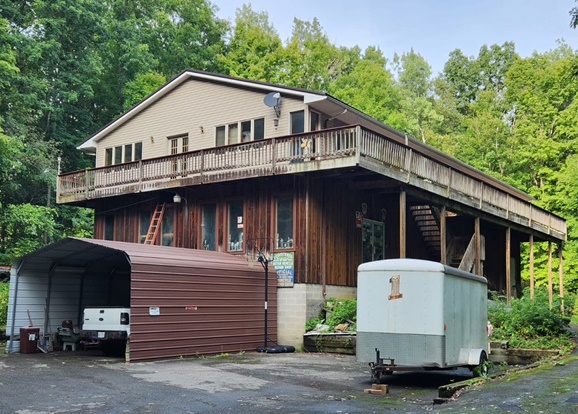
That neighbor and several others reside within a few hundred feet of where the aircraft went down. They and their homes were spared injury or damage. But it was a close call. One double-wide stands very close to where the wreckage landed. I’m told multiple people were present inside the home. They declined to be quoted for this story.
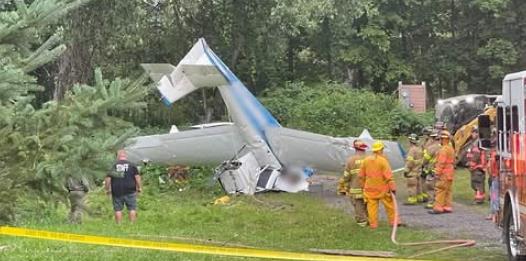
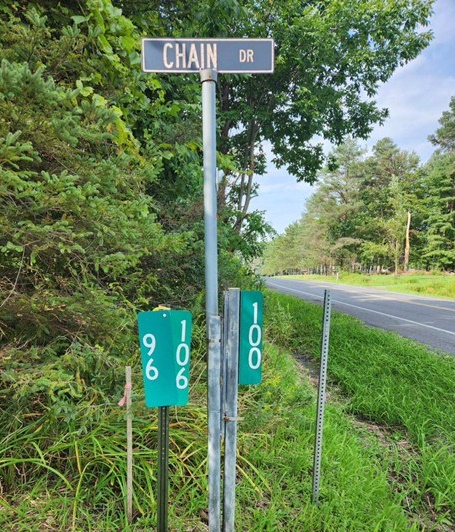
Sunday, August 30, the Tompkins County Sheriff’s Department responded to the 100 block of Applegate Road North, Enfield. At the right-angled bend of “Chain Drive,” a private driveway leading past several residences, a 1977 Lake LA-4-200 plane—a “Cessna-style aircraft,” as the Sheriff’s Department described it—had crashed.
The plane’s owner and pilot, 52-year-old David Kornreich, was found dead at the scene. His passenger, 31-year-old Andrew R. Harrell, was alive and extricated by first responders. Harrell later died of his injuries at Cayuga Medical Center.
Media reports identify Kornreich as an adjunct physics professor, who taught at both Cornell University and Ithaca College. Kornreich was also chief instructor at Ithaca’s East Hill Flying Club.
Harrell, it’s reported, lived in Cortland and was studying for his master’s degree in aviation sciences. He aspired to become a commercial airline pilot.

According to a Sheriff’s Department news release, a preliminary investigation “revealed that the plane was cleared for takeoff from the Ithaca Airport at 11:24 AM (Sunday), and the last contact with the tower was at 12:02 PM.”
The craft crashed in the semi-wooded area off Chain Drive about a half-hour later.
Applegate Road resident Craig Hammond was first to arrive at the scene.
“It’s something I never want to see again,” Hammond told me three days later, late Wednesday afternoon, as we talked briefly outside his home.
Hammond pointed to a tree line north of his house. Hammond said he heard the plane’s engine cutting out. The aircraft then disappeared behind that line of trees and crashed. “I called 911, jumped into my car and headed out,” Hammond said. When he arrived, Hammond said, he saw no others around the wreckage.
To the best of knowledge, there were no eyewitnesses at the moment of impact.
“The responders were so fantastic,” Hammond said of emergency personnel. “Their response was excellent.”
“I never heard it,” Salvatore Inserra, a retired motorcycle mechanic, whose home and former shop lie at the end of Chain Drive, told me. His home was within a few tenths of a mile from where Kornreich’s plane went down. One friend had left Inserra’s house and traveled down the driveway shortly before the crash. A second friend, “Don,” was on his way to visit.
Don saw all those police cars following him down Applegate Road, Inserra recounted. The vehicles, lights flashing, turned with him onto Inserra’s long private drive.
Don said he’d thought he’d done something illegal, Inserra related his friend’s reaction. Only at that point did Don phone Inserra to advise him of the crash.
The mid-seventies-aged Inserra discounted any risks to his own safety that day. My attitude is, “I can help them; I run toward them,” he said of how he treats accident victims. “Maybe it’s because I grew up in Brooklyn,” he remarked jokingly.
Most other neighbors spoken with late Wednesday declined to be quoted by name or on-the-record. Their request for privacy deserves respect. But most brushed off the thought that there’d been any risk to themselves the day of the crash. And three days after the tragedy occurred, they sounded prepared to move on.
Enfield Fire Chief Jamie Stevens served as command officer during the recovery efforts. Two days later, Stevens briefed the Enfield Board of Fire Commissioners as he returned from an after-incident meeting at the Tompkins County Department of Emergency Response.
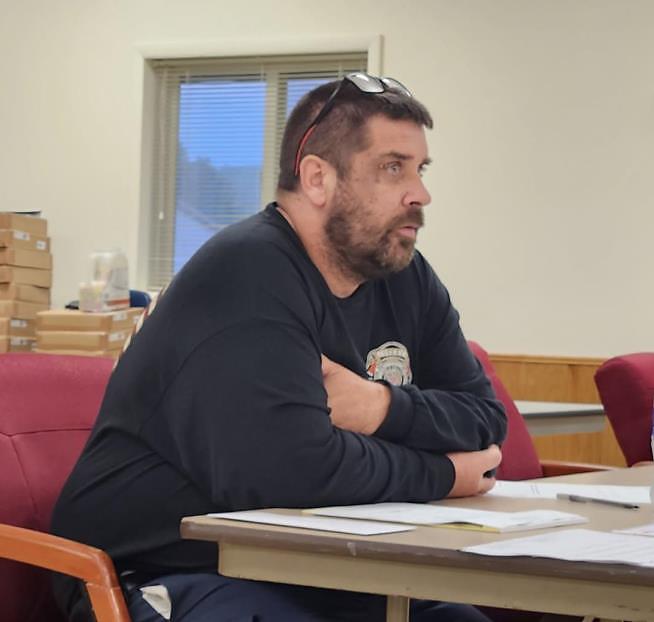
“We did the best we could for the situation,” Stevens described the effort undertaken Sunday afternoon. The chief reported that 34 units—each unit is a fire truck, ambulance, or other emergency vehicle—participated. Stevens estimated 50-60 firefighters were at the scene.
Each person had a job to do, Stevens said. They were “like a lot of little ants all around doing their thing,” he described their activity that day.
Stevens reported it took about 45 minutes after arrival for responders to extricate both bodies from the wreckage.
“A lot of credit goes to the (Enfield Volunteer Fire) company, and the chief and the officers,” Board of Fire Commissioners Chair Greg Stevenson said after Stevens gave his report. This is a “low-frequency, high-risk kind of operation,” Stevenson, a firefighter himself, assessed Sunday’s effort.
Expect Fire Chief Jamie Stevens to provide a further update of the incident to the Enfield Town Board when it convenes on September 9.
Sunday’s marked the first plane crash within 25 years in Tompkins County, Stevens told fire commissioners. And it was the first fatal plane crash that any who’d worked at the scene that day had ever encountered.
In addition to Enfield, responding agencies Sunday included Trumansburg, Mecklenburg and Ithaca fire departments. Bangs Ambulance, Tompkins County Emergency Response, and the Tompkins County Airport Rescue and Firefighting (ARFF) service also sent equipment and manpower.
Chief Stevens gave special credit to Airport Deputy Director and ARFF Chief Josh Nalley and Nalley’s deputy chief, Jeremy Puterbaugh.
“If it weren’t for Josh, we would have been so far behind the 8-ball,” Stevens acknowledged to commissioners. “So much had to be documented. It was not an ideal situation,” Stevens said.
As Chief Stevens briefed commissioners, a large tractor-trailer was scheduled to arrive at the scene late Tuesday from the National Transportation Safety Board (NTSB) in Washington DC. That night, NTSB personnel were to load the wreckage onto the truck, transport it back to the nation’s capital, where Stevens predicted it would rest in a warehouse for about a month and then be disassembled, piece by piece, to ascertain a cause for the crash.
By the following day, Wednesday, any vestiges of a plane crash were gone from the scene.
A determination of cause takes months, sometimes a year or longer. Yet based on the engine sputtering that witness Craig Hammond had heard, engine malfunction stands as the most likely explanation.
“An event of this severity tests every facet of our local emergency response system,” Chief Stevens wrote in a statement, issued one day after the fatal crash had occurred. Stevens’ statement continued:
“From the initial 911 dispatch calls to the long hours on scene in the 100 block of N. Applegate Road, the professionalism, technical skill, and interoperability displayed by our dispatchers, neighboring fire departments, EMS, law enforcement, county coordinators, and community members were exceptional. We are deeply grateful for the overwhelming support brought to our district during this extended operation.”
On a personal note, the Fire Chief added, “The Commissioners, Officers, and Members of the Enfield Fire District extend our deepest condolences to the families, friends, and loved ones affected by this heartbreaking loss.”
Remembrances of Andrew Harrell, and particularly David Kornreich, extended to the Tompkins County Legislature, which met the same night as Chief Stevens addressed Enfield fire commissioners.
Lansing legislator Mike Sigler is a pilot. He owns a plane. And he knew David Kornreich well.
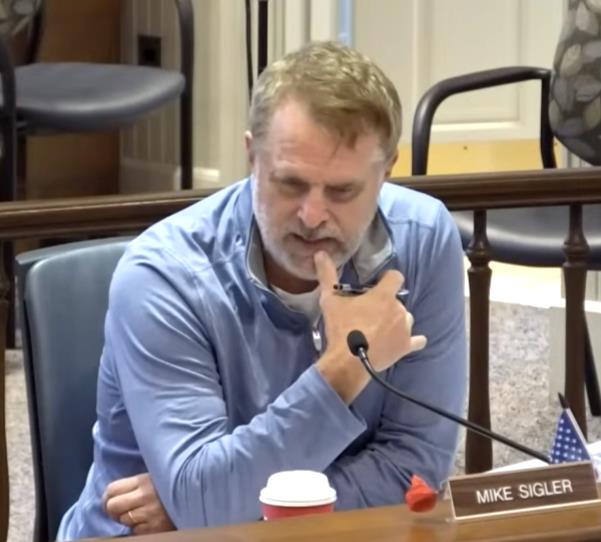
“I looked at my logbook today of the flights I took with Dave, and I’ve probably flown with him for over 20 hours,” Sigler estimated. Mike also knew Kornreich through roller derby, an activity in which both David and two of Sigler’s daughters participated.
Roller derby “was a big part of his life,” Sigler recalled. “I didn’t want that to go unnoted,” the Lansing legislator stated, “that you lose people in a community that has such a large impact.”
Legislature Chair Shawna Black added her condolences. “Our thoughts are with their families, friends, and everyone who knew and loved them during this incredibly difficult time,” Black said of Kornreich and Harrell.
And Ithaca lawmaker Veronica Pillar knew Kornreich as a fellow instructor. She credited him with having passed on her name to the Newfield Central Schools, which then hired her for a one-year job teaching physics.
By Thursday, September 3, a GoFundMe page had been set up to benefit the families of Kornreich and Harrell.
###