Intermunicipal group seeks new home, new voice, new rules
Analysis and Commentary by Councilperson Robert Lynch; January 25, 2026
“My opinion is that the Tompkins County Council of Governments is a public meeting body. It meets all of the requirements.”
Tompkins County Attorney Maury Josephson; December 11.
“We’re just a voluntary group of people getting together to decide mutual issues; we’re not a governmental body.”
Jude Lemke, Enfield’s new TCCOG representative, January 22.
****
For the past six years, ever since 2000, this Councilperson has represented our Town of Enfield on the Tompkins County Council of Governments, better known as TCCOG. I no longer do. This January, the Town Board’s majority voted a change. I was replaced. I did not object. And I’m glad that I did not. If ever there was a moment for the past to exit and the new to arrive, that time is now. With the start of this New Year, perhaps more than at any other time in its 20-years of life, TCCOG has moved to reinvent itself. At least it’s trying to.
Some around Enfield and County Government may accuse me of writing a hit piece. This is not that. There are too many good people on TCCOG. I hope to continue working with them in other capacities. What I write here is part reporting and part constructive criticism; a former member’s pointed evaluation of an organization that in recent months met a fork in the road and then in my opinion chose the wrong path.
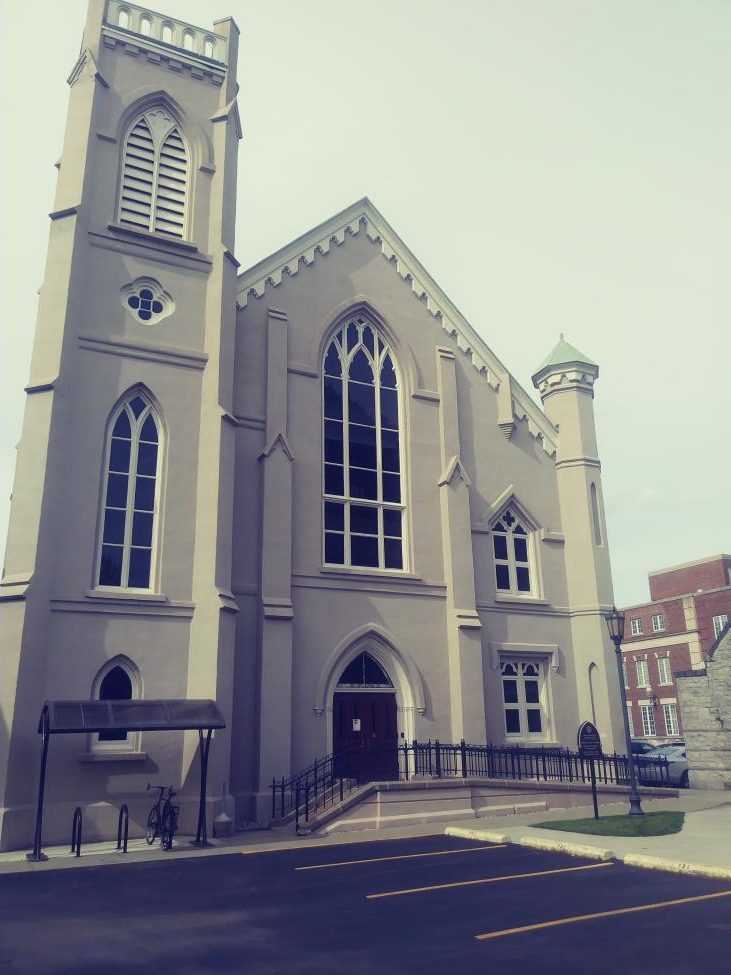
The last meeting I’d attended as Enfield’s representative was last December 11. On that day, we set our 2026 meeting schedule. As usual, we’d planned to convene roughly once every other month. We set our first session for 3 PM on Thursday, January 22. We’d meet in Tompkins County Legislative Chambers, as we always have. There’s always an online option for those who’d rather stay close to home.
But then during the days before January 22, I noticed something amiss. The six upcoming 2026 meetings were no longer posted on the Legislature’s meeting portal. The upcoming YouTube tile for public attendance and after-meeting viewing had disappeared. And unless—like me— you’d emailed multiple County officials and at least one continuing TCCOG municipal member beforehand, you’d never have known the group had actually planned to meet. In fact, you might have suspected TCCOG had disbanded.
But TCCOG had not dissolved. And TCCOG, indeed, did meet. And it met at its appointed day and hour, just not at its designated place. TCCOG held its January session only on a Zoom portal. And yes, I was its only non-member who found his way into the meeting.
What’s more, don’t expect to ever see or hear anything that was said or done that day. Meeting leaders admitted they hadn’t recorded it.
Welcome to the TCCOG of 2026; the organization as it prepares to enter its third decade. You may ask why does anything I’ve written here really matter. Or to grind a sharper point, why does TCCOG itself matter?
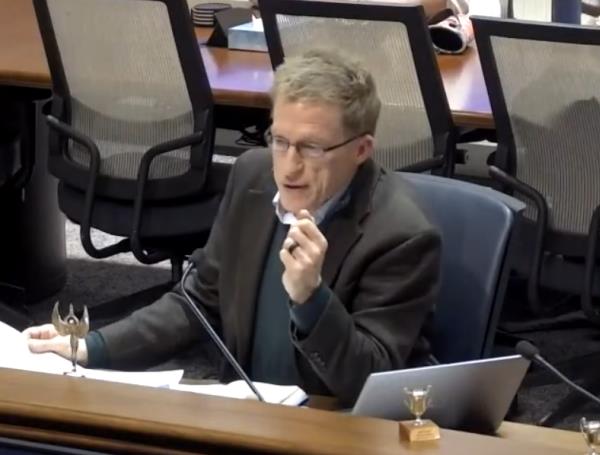
Well, it matters because over two decades, the Tompkins County Council of Governments has done a lot of good things for Tompkins County and for its people. TCCOG’s municipal members, convened together, have planted the seeds for strong initiatives that later grew to become law or policy or institutional structure. And by and large, TCCOG has made those decisions and recommendations out in the open for all of us to view.
In its earliest days, TCCOG drove the initiative that led to creation of the Greater Tompkins County Municipal Health Insurance Consortium (GTCMHIC), the Ithaca-based alliance that pools local governments to buy employee health insurance at cheaper rates. Consortium participation now reaches across the Finger Lakes.
TCCOG has worked toward extending broadband Internet to every nook and cranny of Tompkins County. And most recently, the organization has played a vital role in modernizing local emergency medical response services.
Created by the Tompkins County Legislature, TCCOG invites each of our county’s nine towns, six villages, and the City of Ithaca to designate one member and one alternate member. TCCOG meets bi-monthly. (It once met monthly). It passes resolutions by majority vote, each member’s vote carrying equal weight regardless of a municipality’s size or influence. And TCCOG then passes its recommendations on to the County Legislature, and sometimes to New York State lawmakers.
That’s what TCCOG is and where it’s been. Now the question is, where’s it heading?
One place where it’s obviously not heading is back to Tompkins County Legislative Chambers.
“Korsah, Deborah and others had to meet to decide how to hold this meeting,” TCCOG Co-Chair Dan Lamb conceded at one telling moment January 22. Lamb referred to County Administrator Korsah Akumfi and Legislator and newly-appointed TCCOG rep. Deborah Dawson as he revealed that theirs had been very much a hurried mission driven under duress.
During the final months of last year, a rift had opened between certain members of TCCOG leadership and the County Legislature’s Clerk over whether and to what extent TCCOG fell under the dictates of the New York State Open Meetings Law (OML). Tompkins County Attorney Maury Josephson had sided with the clerk, Katrina McCloy.
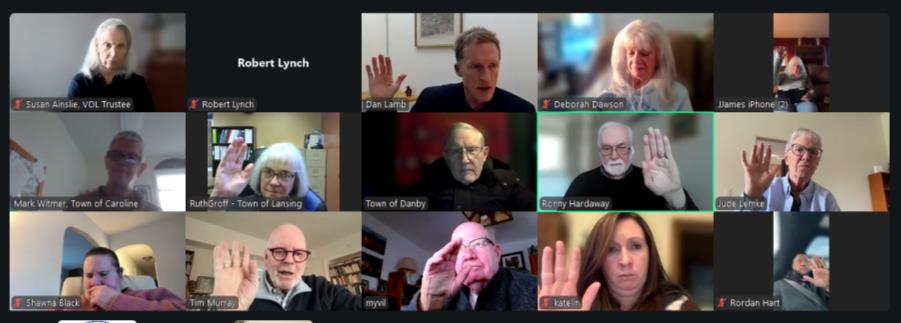
Both Josephson and McCloy had insisted that TCCOG should comply with the OML. But at the earlier, December meeting, a straw poll had been taken and showed member sentiment otherwise. The online video screen showed no more than two attending members believed TCCOG was legally required to follow the OML. Only Cayuga Heights Mayor Linda Woodard and this writer were shown raising our hands in support. County legislator Dan Klein may have concurred, yet off-screen.
At the January meeting, little was said as to why meetings were no longer in chambers apart from Lamb’s quoted moment of candor. Was TCCOG evicted? Did leadership leave voluntarily; or maybe in disgust? Those closest to the decision don’t want to discuss it, other than to make firm that from here forward, Tompkins County Administration, not the Legislature’s office, will provide TCCOG its staff support.
“We are happy to administer the meetings,” County Administrator Akumfi advised the session.
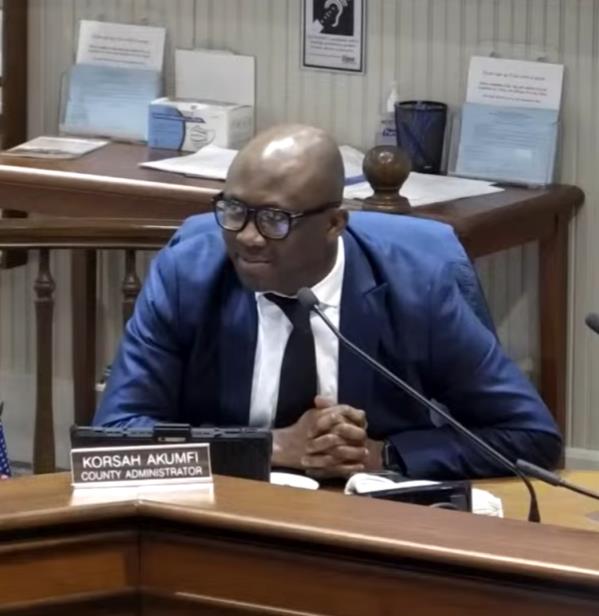
That said, quite clearly this new assignment had been dropped into Administration’s lap with minimal forethought or preparation. December meeting minutes weren’t ready for January approval. A public meeting link never went up that day. No recording was made. And no one could tell membership how those things would be dealt with for the next meeting in March.
How will the Zoom link be established for members and the public, someone asked. “We will work through it administratively,” Akumfi answered. “We have two months to work through it,” he said.
“How’s the public going to find out?” Danby Supervisor Joel Gagnon followed up.
“We’ll know more (about how to do it) when Korsah figures it out,” Lamb told his Danby colleague.
To some, those responses may less than reassure. The public never knew of the January 22 meeting. Who says they’ll know about the one that’s planned for March?
“We’re all concerned about transparency, and now we’ve made ourselves less transparent,” Ulysses Supervisor and TCCOG Co-Chair Katelin Olson rightly observed.
At its December meeting, a session that feels like so long ago, Dan Klein, then Chair of the Tompkins County legislature, but now retired, presented a multi-point resolution for TCCOG to consider and adopt. The resolution would have affirmed TCCOG’s compliance to the Open Meetings Law, even for its sometimes-secretive “subcommittees” (now rebranded as “working groups” at the January session.).
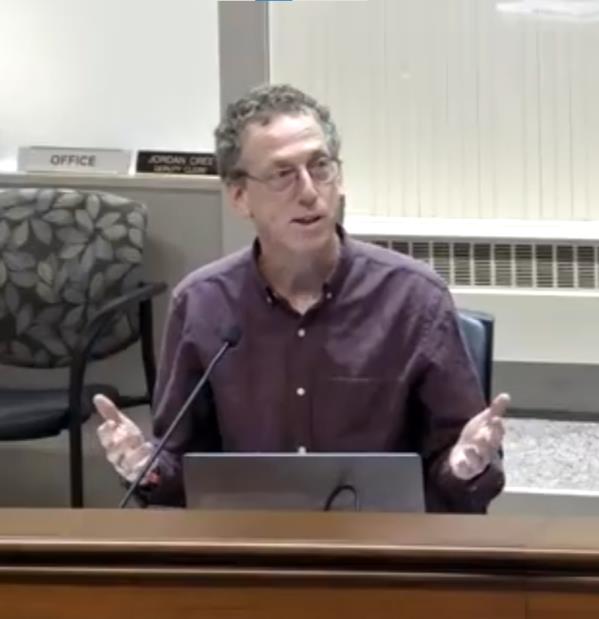
After debating Klein’s resolution to the point of deadlock that December day, and with meeting chambers soon to darken and clerks to go home, this Enfield Councilperson moved to table the Klein motion for one month and pick it back up in January. That was the last time the Legislature Chair’s motion ever saw the light of day.
With both Klein and his motion now gone (and with me as a member gone as well), TCCOG leadership, under Akumfi’s guidance, brought something totally new to the Zoom room in January. Under whose parliamentary rules that was done, one can only guess.
What emerged instead for members to consider was a wordy, two-page, resolution “Establishing the Structure and Consistency for Accurate Record Keeping of (TCCOG) Meetings.” It started out with 18 “Whereas” qualifiers followed by ten bullet-pointed commands. Eighteen and ten, that is, before membership started cutting.
The closest the new text came to what Dan Klein had wanted was to pay brief deference to the acknowledgement that “the Tompkins County Attorney believes TCCOG to be subject to Open Meetings Law.” But TCCOG members, by amendment, cut that sentence out.
Instead, the January adopted resolution, stressed that:
- TCCOG is not an agency or sub-agency of Tompkins County;
- TCCOG is not a government, does not have jurisdiction nor authority to enact or enforce regulation of any kind; and
- TCCOG decisions are non-binding on its membership.
That said, the resolution—which by a show of hands appeared to hold unanimous support—still called for all meetings to be noticed, to be open to the public, and to have minutes produced and a recording made publicly available, but only “if a recording of a meeting is produced,” the resolution qualified.
Notably, a final bullet point clarified that the afore-mentioned requirements “do not apply to work groups of TCCOG.” Those sub-groups can be as private as their members prefer, it seems.
“We’re just a voluntary group of people getting together to decide mutual issues; we’re not a governmental body,” Councilperson Jude Lemke, Enfield’s newly-named TCCOG representative, stated.
Nobody much disagreed with Lemke’s assessment that day.
But square the Councilperson’s opinion with that of Tompkins County Attorney Maury Josephson, who in December advised TCCOG the following:
“My opinion is that the Tompkins County Council of Governments is a public meeting body. It meets all of the requirements,” Josephson insisted. “It requires a quorum to meet. It conducts public business… and it performs a governmental function.”
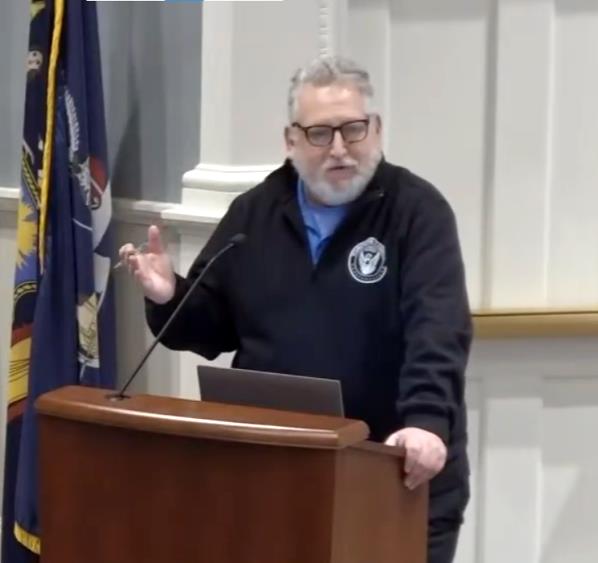
The County Attorney cited that day’s own discussions of countywide emergency medical response and TCCOG’s possible EMS funding recommendations to the County Legislature as evidence to underscore his position.
“TCCOG is able to effectively recommend legislation to the County Legislature,” Josephson pointed out. “The issue that has been raised is, is this body purely advisory, and it is not,” he insisted. “If the committee (that is, TCCOG or its sub-group) is voting on what the law is, as County Attorney, I can’t recommend that the County pursue initiatives that are in violation of applicable laws.”
Jude Lemke and Maury Josephson are each lawyers. Attorneys get paid to argue, of course. But from the January 22 discussions what’s become ever so apparent is that with the transfer of TCCOG’s oversight from the Legislature to the County Administrator, Maury Josephson’s opinion doesn’t seem to count for much anymore.
Right now, the Tompkins County Council of Governments has no real home; that is, no physical meeting place aside from cyberspace. It may never have one again.
“It’s nice to have an in-person option,” Dan Lamb acknowledged, even though he conceded remote attendance is easier. Expect Zoom to become the only option of choice from here on out.
“The Zoom meeting is just fantastic,” Caroline’s Mark Witmer chimed in. Still, had TCCOG remained controlled by the Open Meetings Law, its having a physical location with a quorum present there would likely have become a pesky requirement.
Legislative clerks had complained that counting votes at TCCOG has become a problem for some time. Members raise hands, especially online. Clerks found it hard to preserve for the minutes whose side had the majority. Clerk McCloy had requested a roll call requirement. The new, January resolution had initially carried forth McCloy’s roll call rule, only to have an amendment strip it out.
“You don’t have to make the clerk happy anymore,” Legislator Dawson remarked. Perhaps she spoke in jest. One couldn’t tell.
As I said, it’s a new TCCOG. And it’s one where I no longer vote. Given what’s happened, I’m kinda’ glad I no longer do. Maybe fate did me a favor.
###