
Highlights of February 17 meeting; Tompkins County Legislature
Reporting courtesy, Tompkins County Department of Communications; Monika Salvage, Communications Director; February 19, 2026
[Editorial note: The Tompkins County Legislature consumed two and one-quarter hours of its February 17 meeting receiving prepared presentations from New York State Electric and Gas Corp. (NYSEG) personnel and asking NYSEG representatives a variety of questions. The Legislature directed questions only from its members, not the general public. / RL]
NYSEG Rate Matters:
The legislature received presentations on the pending rate case involving New York State Electric & Gas (NYSEG). NYSEG’s proposal includes a delivery rate increase of 35% for electricity and 39% for natural gas. In turn, NYSEG is proposing over $10 billion in system investments over five years, aiming to provide cost stabilization for customers and address infrastructure needs. For the Ithaca Division, NYSEG is proposing investments of $991 million to area substations, addressing emergent capacity constraints, meeting future electrification needs, and reinforcing the transmission system for increased resilience and reliability.
NYSEG representatives stressed that supply charges (the cost of the electricity or gas commodity itself) are passed through without profit to the company. Supply charges constitute 44% of a household’s bill and have increased due to increasingly cold weather and the high wholesale gas prices due to the high demand. Delivery charges (covering poles, wires, substations, maintenance, and operations) make up 40% of a utility bill and fund system upgrades and represent the portion of the bill affected by the rate case.
Tompkins County Chief Sustainability Officer Terry Carroll outlined the rate case process before the New York State Public Service Commission (PSC) and the county’s formal participation. He explained that utility companies file rate proposals with the PSC, which then conducts a detailed review, allows for intervenor testimony, and may negotiate settlements before issuing a final order. He highlighted that Tompkins County joined the proceedings to submit testimony focused on affordability, reliability, and infrastructure accountability, arguing for a dedicated heat pump rate and against an electrification tariff and closing the Ithaca walk-in center, emphasizing impacts on county residents.
Legislators raised concerns about the magnitude of delivery charge increases, affordability for low-income households, service reliability, vegetation management, lack of transparency, and the cumulative impact of repeated rate hikes. Several questioned how investments would translate into measurable reliability improvements and whether customers would see tangible benefits relative to the scale of the proposed increases.
Adoption of local law increases low-income senior property tax exemption:
The legislature adopted a local law increasing the maximum low-income senior property tax exemption from 50% to 65% under the New York State Real Property Tax Law. The change applies to qualifying older adults with annual incomes below $33,500 and adjusts exemption tiers for those earning under $35,500. Seniors need to apply with the Tompkins County Department of Assessment for this increased senior property tax exemption, but they may not need to apply with New York State for the enhanced STAR exemption.
Legislator Bianconi (D-Ithaca Town) introduced the measure, describing it as “an opportunity for us to give some relief to folks in our community who may be struggling,” adding that the broader community impact would be minimal ($2.36 on a median house’s tax bill) while potentially making “a huge difference” for eligible seniors.
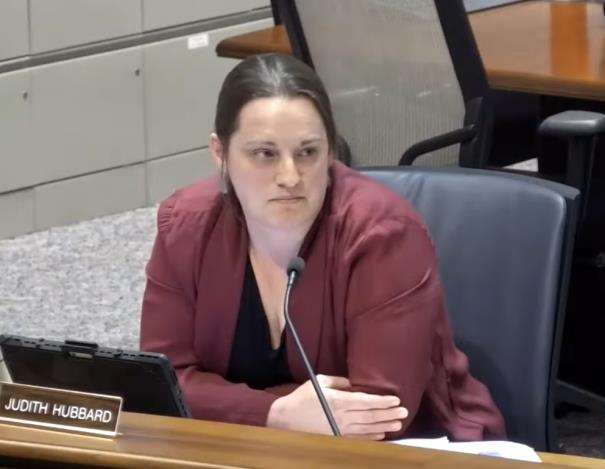
Legislator Hubbard (D-Ithaca City, Town), who expressed initial concerns about shifting the tax burden to other property owners, ultimately supported the resolution. She emphasized that the benefit is limited to the lowest-income category and acknowledged the financial strain many seniors face. Hubbard also cited the argument that helping seniors remain in their homes may reduce long-term public costs, concluding that the measure offers “an obvious positive with possibly no negative.”
The local law was adopted in a 15-1 vote, with Legislator Wakeman (D-Dryden) opposed.
Other business:
- The Legislature considered appointments to the Tompkins County Industrial Development Agency (TCIDA) and the Tompkins County Development Corporation Board. The chair appointments included Legislator Dawson (D-Lansing, Ithaca Town) as Chair, along with Legislators Mezey (D-Dryden) and Black (D-Ithaca Town) as members, Ducson Nguyen (member at-large), and Prentice Smith (organized labor representative). Legislator Sigler (R-Lansing) pulled the resolution from the consent agenda, noting the significance of IDA appointments given the agency’s authority to grant long-term tax abatements and sales tax exemptions. The appointments were approved in a 15-1 vote, with Legislator Sigler (R-Lansing) opposed.
- The legislature unanimously approved a resolution submitting the Hanshaw Village infrastructure project in the Town of Dryden to the New York State County Infrastructure Grant Program for up to $1 million. The project would connect the manufactured home community to municipal water and sewer, addressing aging systems and enabling at least 10 new housing units by filling vacant pads.
- The Tompkins County Legislature proclaimed February 2026 as Black History Month, marking the 100th anniversary of the first formal national observance organized by Carter G. Woodson and the 50th anniversary of the first U.S. presidential recognition of the month, while reaffirming the importance of historical study to uplift present and future generations.
###