by Robert Lynch; February 18, 2026
As the week of February 16 dawned, James Talarico was slipping badly in the polls. The Austin-area State Representative stood as many as eight points behind intra-party rival, Congresswoman Jasmine Crockett, in the latest University of Houston poll comparing the two in their Democratic fight to face Republican U.S. Senator John Cornyn or his own primary opponent, Attorney General Ken Paxton, in the fall. Early voting in the primary would start that Tuesday. The primary would conclude March 3. Talarico needed a miracle, a game-changer.
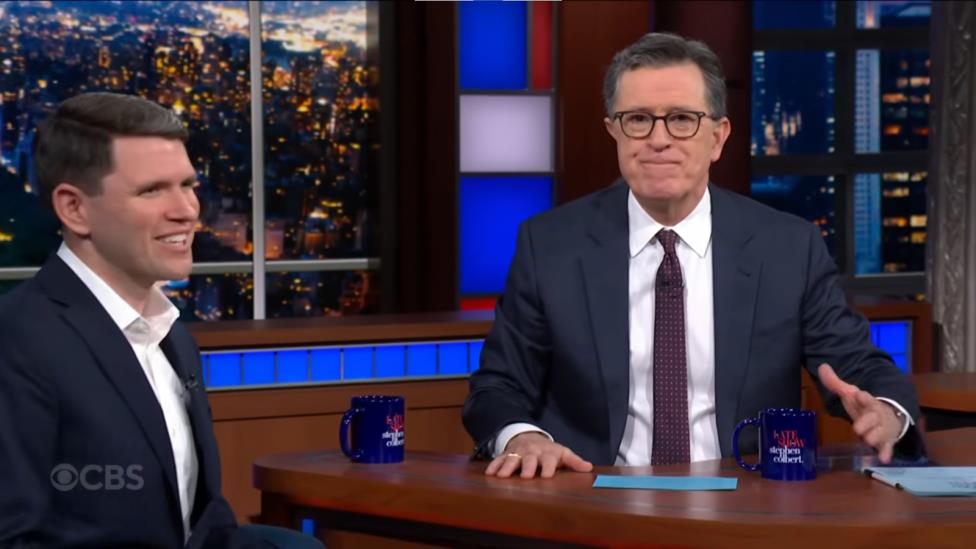
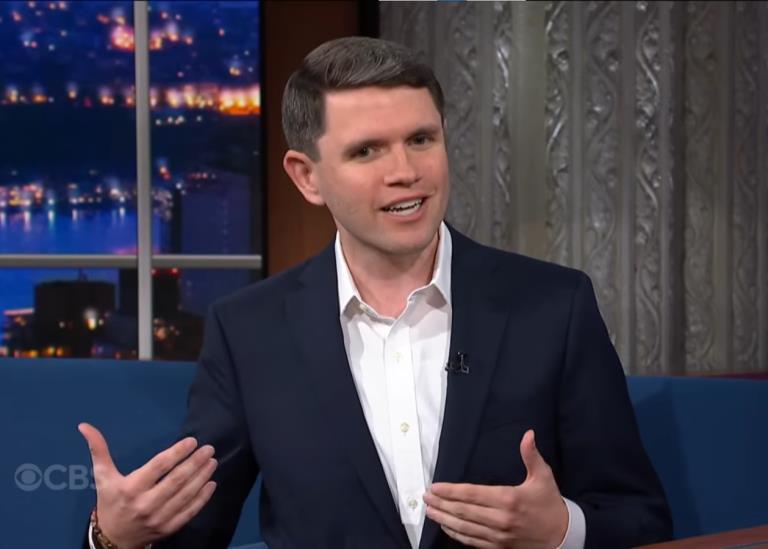
That miracle flew in from out of nowhere Monday night. Representative Talarico got more free exposure than his big campaign budget could ever have purchased. It came courtesy of Steven Colbert, host of the CBS Late Show.
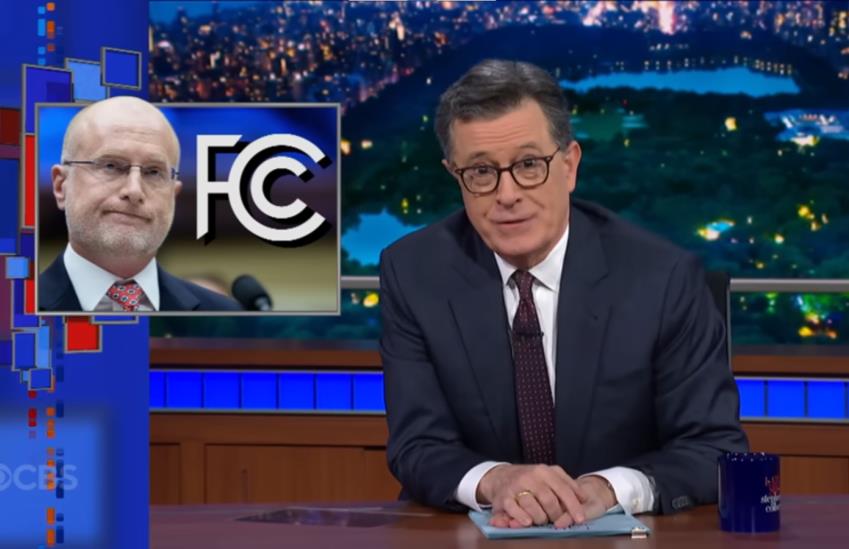
“You know who is not one of my guests tonight? Colbert asked as he began his opening February 16 monologue. “That’s Texas State Representative James Talarico. He was supposed to be here, but we were told in no uncertain terms by our network’s lawyers, who called us directly, that we could not have him on the broadcast.” Colbert continued, “Then I was told in some uncertain terms that not only could I not have him on, I could not mention me not having him on. And because my network clearly doesn’t want us to talk about this, let’s talk about this.”
Wow. Steven Colbert had not only just baited his bosses, but he was marching forth to torpedo the powerful bureaucrat who bosses those bosses.
“I can’t interview James Talarico. I can’t show any pictures of James Talarico. I’m not even sure I can say the words James Talarico,” Colbert told viewers. But what the always irreverent host did reveal for us was the frontal graphic of a nude male model with a potted cactus concealing his privates and the face of the Federal Communications Commission (FCC) Chairman photo-shopped as his head. [Yes, Colbert’s humor is an acquired taste.]
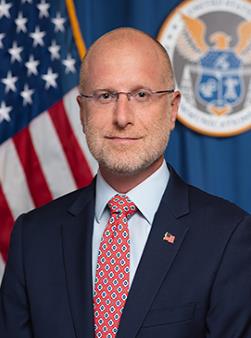
What happened Monday underscored the controversy from which Representative Talarico so greatly benefited. It showcased the ongoing battle between late night comics and FCC Chairman Brendan Carr. Although CBS has claimed its planned cancellation of The Late Show this coming May was “a financial decision,” Colbert and others believe Brendan Carr’s and Donald Trump’s dislike of him had much to do with it.
The Late Show monologue went viral the next day. So, too, did Colbert’s 15-minute interview with Talarico. It was relegated to YouTube by necessity, yet still got watched in record numbers. Jasmine Crockett should have been so lucky.
I, your Enfield Councilperson, don’t often write about national politics, certainly not something as detached as a Senatorial primary in the Lone Star State. But what’s at stake here is not political jousting in a faraway place. No, the issue here is the overarching reach of governmental control into broadcast decision-making. It’s about a media-hostile Administration’s incursion into First Amendment freedoms. I’ve invested most of my career one way or another into over-the-air broadcasting. This stuff is my baby. When I think it’s threatened, I deserve to give it some ink.
Many others will write about this dustup, I’m sure. I’ll approach it a little differently.
My memory is long. I recall the 1971 election for Ithaca Mayor. Democrat Ed Conley would be elevated to his first of four terms in office. Candidates crowded the field. Keith McNeill was the Republican, Hunna Johns the incumbent, funeral director John Bangs and taxpayer advocate Florence Rumph were thrown in for good measure. I was a Cornell student and volunteer reporter at WVBR-FM. Back then, unlike today, the Voice of the Big Red actually covered local news. We’d interviewed each mayoral aspirant. Then a handful of days before the election, panic struck.
“We’ve forgotten Sonny Day,” someone said. (Excuse any misspelling; Sonny’s name is now lost to antiquity.) “Sonny,” I recall, was a lowly cook at Cornell Dining. He’d launched a last-minute write-in campaign for Ithaca Mayor—or had been arm-twisted into doing so—perhaps in an effort to assuage the counterculture and gay rights communities, or maybe to boost his own ego. Records show Day never drew many votes. But that still didn’t stop his supporters from demanding equal airtime.
WVBR management solicitously obliged, finding itself under the gun to provide the write-in aspirant everything he’d sought. A last-minute interview was speedily arranged. Even though the candidate’s legitimacy held question, WVBR exercised excess caution. It stood well aware that Richard Nixon sat in the White House and his loyal foot soldier, Dean Burch, reined as Chairman of the FCC. Fines could be imposed; licenses challenged, even pulled. Broadcasters those days ran scared of the “Friendly Cookie Company.” History has a way of repeating itself.
“So, you might have heard of this thing called the Equal Time Rule, okay?” Stephen Colbert reminded his viewers on this more recent Monday night. “It’s an old FCC rule that applies only to radio and broadcast television, not cable or streaming, that says if a show has a candidate on during an election, they have to have all that candidate’s opponents on as well… There’s long been an exception for this rule, an exception for news interviews and talk show interviews with politicians.”
But as Colbert would go on to say—and as Brendan Carr has countered, and this essay will attempt to explain—the interview exception to the FCC’s Equal Time Rule is not without limits.
Let’s first go to legal authority, the regulation’s text. It holds more weight than does Colbert’s conjecture.
Unlike its onetime companion “Fairness Doctrine” that FCC Commissioners neutered decades ago, 47 CFR 73.1941, the “Equal opportunities” section, remains in force. It holds that:
“[N]o station licensee is required to permit the use of its facilities by any legally qualified candidate for public office, but if any licensee shall permit any such candidate to use its facilities, it shall afford equal opportunities to all other candidates for that office to use such facilities.”
Yet, immediately after that command, the “Interview exception” qualifies it:
“Appearance by a legally qualified candidate on any: (1) Bona fide newscast; (2) Bona fide news interview; (3) Bona fide news documentary… or (4) On-the-spot coverage of bona fide news events… shall not be deemed to be use of broadcasting station….” (The Rule mirrors FCC powers under Section 315(a) of the Communications Act of 1934.)
Note the key qualifier, “Bona fide.” And on that compound word, the Carr-Colbert controversy emerges.
On January 21 of this year the FCC’s Media Bureau, overseen by the five-member FCC, an agency chaired by Brendan Carr since Donald Trump most recently took office, issued “guidance” on how the “Equal Opportunities” rule should be interpreted and a “Bona fide” interview defined. Critics view the reinterpretation as chilling. It may be only “guidance” and not a final rule. But Brendan Carr’s Trump-friendly fingerprints are found all over it.
The four-page, 12-paragraph, heavily-footnoted guidance document addresses late-night and daytime TV talk programs exclusively. It makes no reference to conservative-biased talkradio, arguably today’s far more egregious offender.
And as to TV talk, the document calls into question the most recent FCC ruling on the subject, a 2006 staff decision that exempted former California Governor Arnold Schwarzenegger’s interview by then- Tonight Show host Jay Leno from triggering an equal time opportunity by competing candidates. The Leno decision reportedly reversed a 1960 holding in which the Commission had declined to uphold the exemption concerning an earlier Tonight Show host, Jack Paar.
“Concerns have been raised that the industry has taken the Media Bureau’s 2006 staff-level decision to mean that the interview portion of all arguably similar entertainment programs— whether late night or daytime—are exempted from the section 315 equal opportunities requirement under a bona fide news exemption. This is not the case,” the January guidance document cautioned. “[T]hese decisions are fact specific and the exemptions are limited to the program that was the subject of the request.”
“Importantly, the FCC has not been presented with any evidence that the interview portion of any late night or daytime television talk show program on air presently would qualify for the bona fide news exemption,” the document continued.
Thus, as the Carr FCC sees it, there is no precedent. We, the FCC, will judge case-by-case.
If you feel a chill in the air, you’re not imagining things. And with an overly-ample sprinkling of snark, Stephen Colbert this past week felt the chill as well.
“Let’s just call this what it is,” Colbert’s caustic monologue rolled on. ”Donald Trump’s administration wants to silence anyone who says anything bad about Trump on TV because all Trump does is watch TV. Okay? He’s like a toddler with too much screen time.”
Colbert said a lot more, opprobrium not relevant to this story. Suffice it to say, Stephen Colbert’s words did not enhance his venue’s status that The Late Show is a “bona fide news interview” program.
And that’s why what’s happening on programs like Colbert, Jimmy Kimmel, or daytime’s “The View” defies a lazy-minded, partisan-tinged kneejerk rejoinder. Instead, what’s happening here points to a troubling, partisan double-standard applied by government’s First Amendment gatekeepers to those they must regulate.
Addressing a news conference following the FCC’s January 29 monthly meeting, Chairman Carr said his agency had no plans to impose the latest cautionary guidance upon America’s talk radio programs, despite those broadcasts’ nearly-universal right-leaning bias.
“Carr said it wasn’t part of the agency’s calculations because there wasn’t the same need,” John Hendel of Politico reported that day. “There wasn’t a relevant precedent that we saw that was being misconstrued on the radio side,” Hendel quoted Carr as saying.
And that’s what’s become most worrisome. Tightened government oversight applied to liberal commentators, but a hands-off approach when it comes to Trump-friendly talkers.
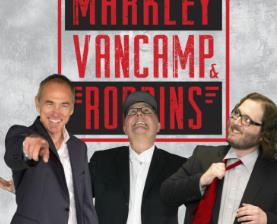
From Noon until late at night, Ithaca’s talk station, WHCU, carries a string of syndicated, conservative voices: Sean Hannity, Mark Levin, and a trio of bozos at midday, Markley, VanCamp and Robbins. Each host makes no effort to avoid maligning Biden, Kamala Harris, or just about anybody President Trump hates. There’s no Fairness Doctrine to bridle them. No fines issued or licenses pulled. And Laisse Faire rules in market after market. We locally are no exception.
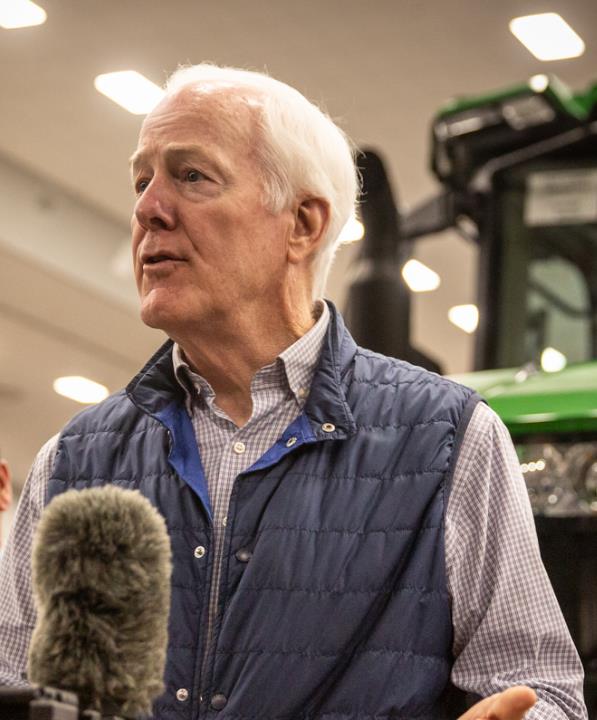
There’s another primary election underway in Texas, this one on the Republican side. Incumbent Senator John Cornyn faces a formidable challenge from State Attorney General Ken Paxton. Representative Wesley Hunt is also in the Republican race. If Cornyn, Paxton, or Hunt avail themselves for interviews, no doubt, right wing radio will talk to them. They’ve likely done so already. And when conservatives grant and conduct those interviews, hosts will do so with complete impunity from Brendan Carr’s FCC.
On Tuesday, CBS denied Colbert’s account that the corporate counsel had spiked the Talarico interview.
“The Late Show was not prohibited by CBS from broadcasting the interview with Rep. James Talarico,” a network spokesperson told The Hill. Instead, the network maintained that in light of Carr’s earlier guidance, Jasmine Crockett and a lesser-known candidate could have petitioned for equal time.
“It was ‘The Late Show’ itself, CBS said, that ‘decided to present the interview through its YouTube channel with on-air promotion on the broadcast rather than potentially providing the equal-time options.’” The Hill reported.
Colbert later called the CBS response “crap.”
On this finer point, however, the network may hold the better side of the argument. Nothing in the text of the Equal Time Rule or the Commission’s January 21 guidance document muzzles a broadcaster or network from talking to a candidate, even should the forum at issue fall short of a “bona fide news interview” to allow an Equal Time exception.
In Jasmine Crockett’s case, she’s a liberal Democrat, like Representative Talarico, if not more liberal than he. Crockett’s young, photogenic, articulate, and outspoken perhaps to a fault. She’d draw eyeballs. She’d energize the audience. She’d make them roar. (Colbert has said Crocket has appeared twice before on his show.)
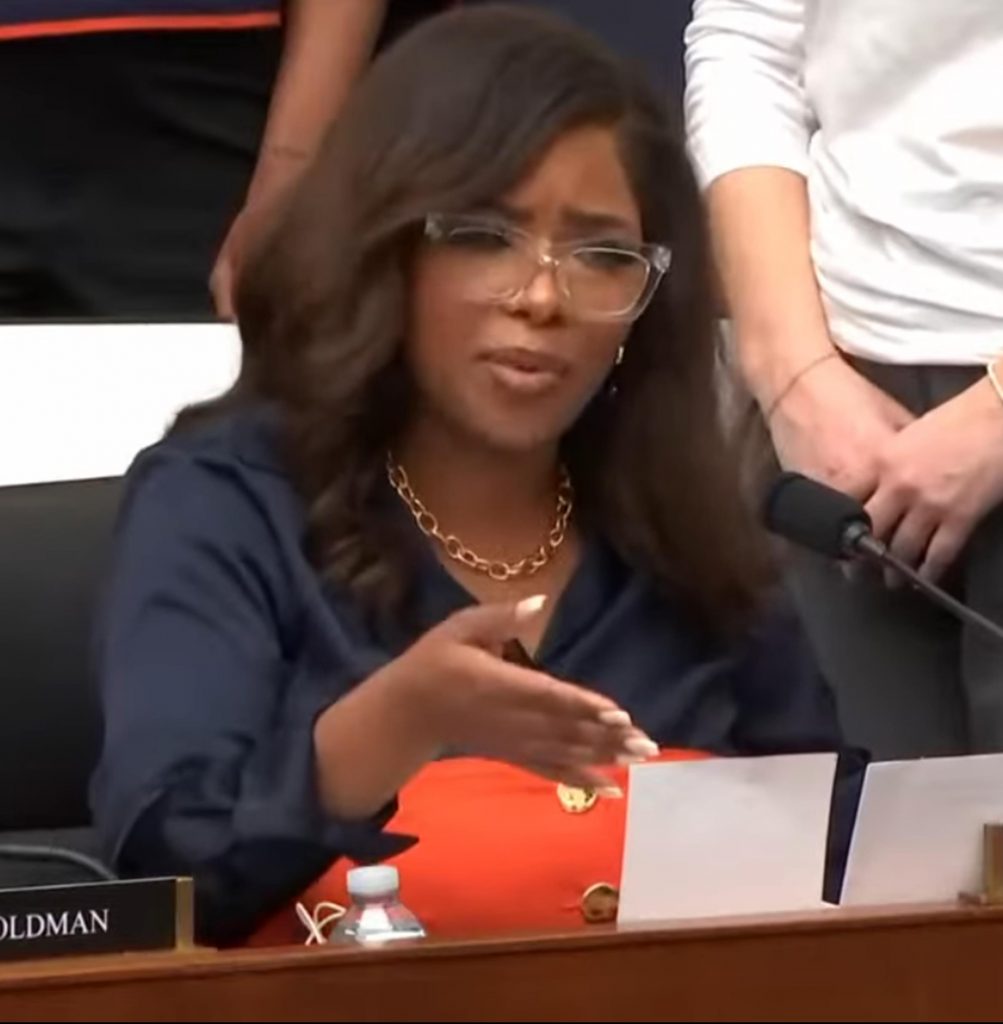
And on the other hand, had the Late Show also invited Republicans Cornyn, Paxton, and Hunt, none would likely show up. They’d fear the host would grind them into mincemeat and provide them no purpose toward pleasing their base. Even if one or two from the GOP side had the courage to come on, it would still have made great TV.
The same benchmark should apply to all; late-night TV and AM talkradio. AM talk is dangerous ground where progressives seldom tread. Maybe they should. Maybe responsible regulation should erase the long-ignored double-standard.
Rule 47 CFR 73.1941 places the burden upon the competing candidate to prove his or her qualifications for the election and to a request any equal time. Or they can all be invited. In Colbert’s case, what harm would it have done to think and act outside the box?
Brendan Carr chairs the Federal Communications Commission, but he does not own it. Anna Gomez holds the lone Democratic-assigned seat on what should be a five-person board, but is now two members short. Gomez made it clear the day after the Monday Colbert meltdown that what had happened at the purported behest of the CBS suits never should have. She faulted both her agency and CBS:
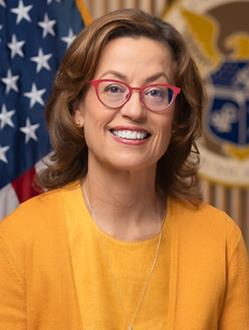
“This is yet another troubling example of corporate capitulation in the face of this Administration’s broader campaign to censor and control speech,” Gomez said in a statement. “The FCC has no lawful authority to pressure broadcasters for political purposes or to create a climate that chills free expression. CBS is fully protected under the First Amendment to determine what interviews it airs, which makes its decision to yield to political pressure all the more disappointing,” she said.
But of course, with CBS, the motivation was money, and also, no doubt, the desire to grease the skids with the Trump Administration for a hoped-for merger, their (so-far) hostile takeover bid for Warner Brothers-Discovery.
“It is no secret that Paramount, CBS’s parent company, has regulatory matters before the government, but corporate interests cannot justify retreating from airing newsworthy content,” Commissioner Gomez observed.
On Wednesday (Feb. 18), NBC quoted Brendan Carr as doubling down on his earlier warnings of stricter Equal Time Rule enforcements.
“What’s so ironic about it is, you know, had they gone down the path of complying with equal time provisions here, it would have meant more air time for more Democrats to say whatever those Democrats wanted,” NBC quoted Carr saying about the CBS incident.
****
What went viral on YouTube this week didn’t tell us much about the Texas Senate race or why Texans should elect James Talarico rather than Jasmine Crockett. Talarico consumed much of his YouTube quarter-hour with Colbert criticizing Christian nationalism. He was asked briefly about a one-time comment he’d made against a candidate no longer in the race, and talked about a frivolous Texas bill somehow tying in school kids with cat litter boxes. Talarico never mentioned Congresswoman Crockett, by name, nor did he directly counter any of the Republicans whom he may someday face.
Meanwhile, on February 18, during the noon hour at WHCU, one of those laughing, right-tilting wags on Markley, VanCamp and Robbins described James Talarico’s supposed media manipulation to upstage African-American Crockett as a “racist and misogynistic stunt.” Where, oh where on today’s media highway, Brendan Carr, do we most need a traffic cop?
###