

Verizon seeks new cell spot; Enfield planners cautious
Reporting and Analysis by Robert Lynch; February 6, 2026
Up front, let’s make one point clear: This has nothing to do with what you’d tell the mythical, geeky Verizon guy when he once asked you on TV, “Can you hear me now?” It wouldn’t matter. What this is all about is how well the geeky guy’s supposed employer, a mega-billion dollar telecommunications giant, can succeed in lining its wallet. The telco guy admits as much. What’s more, the rationale he asks the Town of Enfield to stomach reaffirms Adam Smith’s law of the marketplace; supply and demand.
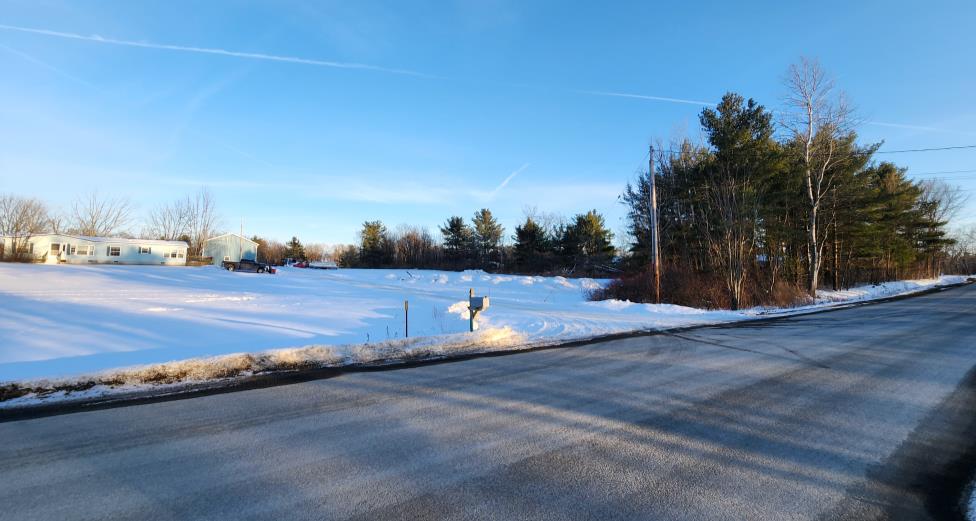
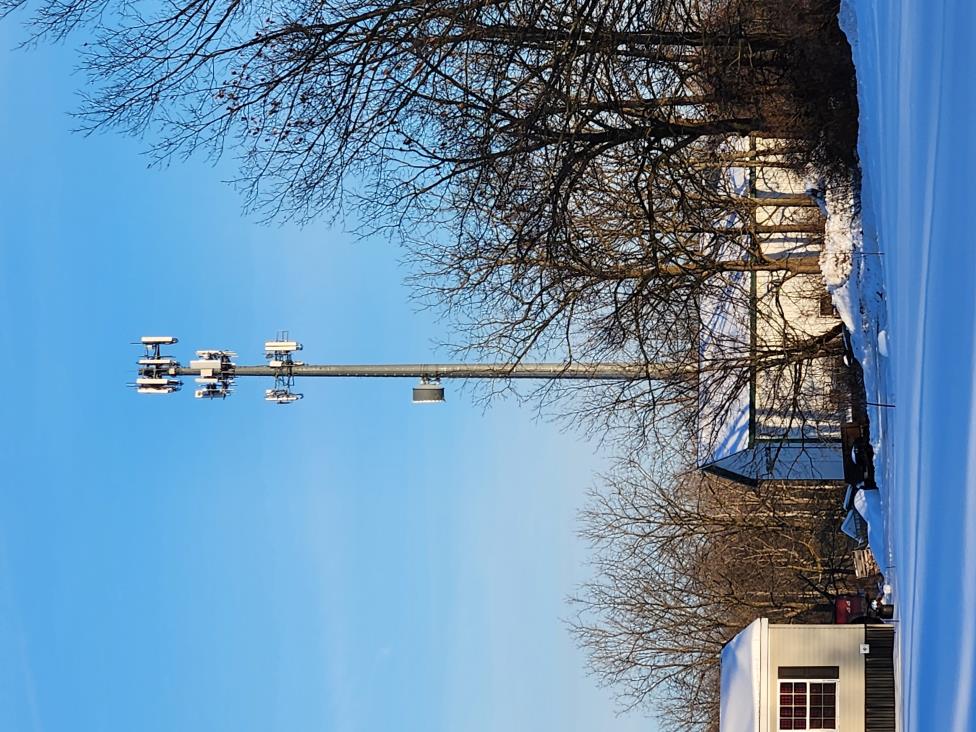
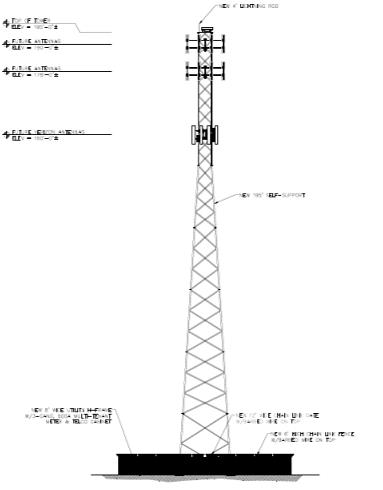
The telco guy—more aptly put, Verizon’s agent, Tony Phillips of Kendall Communications—brought to the Enfield Town Planning Board this week Verizon’s heretofore undisclosed plans to erect a new, free-standing, 195-foot tall communications tower on a postage-stamp plot of land located at 217 Van Dorn Road North, just north of the Hayts Road intersection. The site lies a mere two-tenths mile from another cell tower to its northeast, a site where Verizon now locates. Verizon would like to hop its cell antennas from the old tower to the new one… and save money.
“Rent is rising and rising; the rent becomes just crazy,” Tony Phillips advised Enfield planners as he Zoomed into the February 4th meeting. “Every time we touch” the tower’s antennas, “the rent goes up.” Verizon is in “financial hardship” and needs “another option to locate,” Phillips pleaded.
There’s a twisted irony in all of this, of course. An industry that not all that long ago held a monopoly over the American consumers’ telephones, ruling us all as “Ma Bell,” now whines about itself becoming monopoly’s victim.
Whoever owns the nearby tower is apparently holding Verizon over a barrel. Phillips said Verizon’s upgrade from 3G to 4G, to (now) 5G has escalated the tower’s rental expense exponentially.
“This project is part of a High Rent Relocation program,” Phillips described Verizon’s strategy, writing in an email sent the Planning Board prior to its meeting. “By relocating to our proposed tower, Verizon and the other carriers can typically save over a million dollars in rent during the lifetime of the lease,” the agent claimed. Phillips then wrote—we assume he wrote keeping a straight face—that, “This savings is passed on to the consumer.”
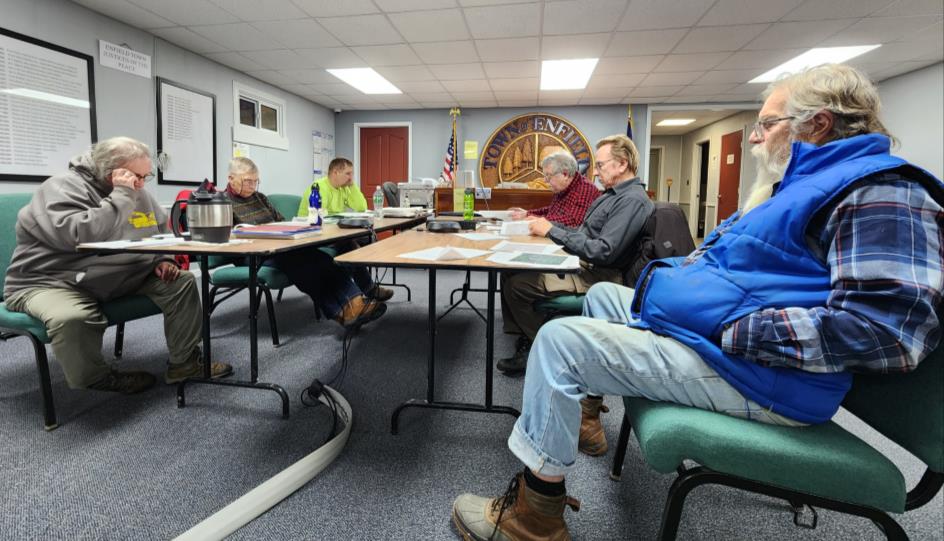
But Enfield planners had misgivings. They spent more than an hour peppering Phillips with questions about the project’s observed weak points and then took another 30 minutes tossing around those reservations among themselves.
“I don’t like the location at all,” Planning Board Chair Dan Walker remarked at one point during the latter discussion.
“It’s great you’re making Verizon more money,” Board member Rich Teeter observed. But as for Enfield, Teeter concluded, “It’s not going to do us any good.”
The Town of Enfield has no zoning. And because of that, probably neither the Planning Board nor the Town Board can block the tower’s construction. But planners can impose restrictions under Enfield’s Site Plan Review Law. They could move the tower back on the property or expand the size of the leased footprint on which it would sit. That would provide a sufficient “fall zone” should the tower ever collapse.
Cell carriers typically lease tower space from third party providers. And documents indicate that a Charlotte, NC-based firm, Harmoni Towers, would own the tower now being proposed.
Harmoni would build a 195-foot self-supporting tower centered on a tiny 100-foot by 100-foot lot leased from owners Michael and Jamey Kartychak. The lot, already staked out, lies just south of the Kartychaks’ driveway. And the tower would stand a mere 125 feet from Van Dorn Road’s centerline, according to survey documents presented the Planning Board.
The Kartychaks did not attend Wednesday’s Planning Board meeting, nor did anyone from Verizon. Documents list Kendall Communications as the project’s “Site Acquisition Firm.”
“I think we’re going to get a lot of pushback from the public, given the location of it and proximity to other houses,” Chairman Walker predicted Wednesday. He said were the current plan to go to public hearing as it stands now, objecting neighbors could fill more seats than they did for the Planning Board’s last controversial project, the 33-lot Breezy Meadows subdivision approved three years ago.
“We have to take into consideration the public’s concerns and the environmental concerns,” Walker advised Phillips and Board colleagues.
Expect “a lot of pushback from a lot of people living right there,” Teeter agreed with the board chair. Rich Teeter said he owns rental property across the road from the proposed tower.
The stretch of Van Dorn Road north of Hayts is rural residential, with homes at roadside; fields and open areas behind them. Board members questioned Kendall’s representative as to why the tower couldn’t be set further back on the Kartychak property, possibly behind the house and barns. They never got a firm answer.
We have to be one-half mile from the existing tower, Phillips explained. But that said, a rear portion of the owners’ property would still appear to satisfy the requirement.
One by one, more communications towers pop up in Enfield. The tallest and most expensive of them, the 365-foot, multi-lighted American Towers’ structure on Alfred Eddy’s farm south of Bostwick Road, was built first, just when cell phone technology hit the Ithaca area. This writer’s been told it’s one of the best cellular antenna sites in the county.
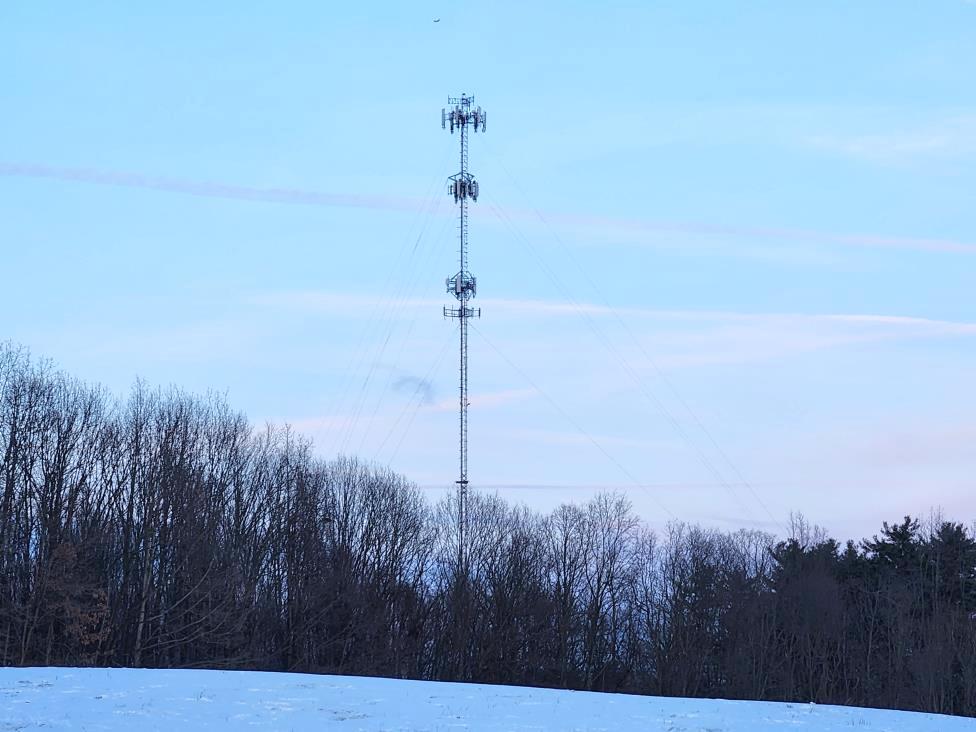
At least seven communications structures would exist in Enfield, should the newest one be built. Each of the others is shorter than the one on Eddy’s farm and requires no lights. Most accommodate cell phone antennas. A few serve specialized functions.
Clarity Connect built a tower north of Route 79 to facilitate a terrestrial broadband Internet network that never really caught on. In 2021, Family Life Ministries built a tower off Enfield Center Road for its Christian FM station, WCID. Tompkins County owns a tower off Tucker Road, within the Breezy Meadows subdivision, employing it for emergency communications services.
Most of these other towers are set well back from their respective roads. This newest one would not be.
“I’m not opposed to technology, but I don’t like the location, close to the road and next to ten houses,” Rich Teeter told Verizon’s agent. “You don’t have a very big area (should the tower fall),” Teeter maintained. “Roofs aren’t supposed to do that either, but things happen.”
Tony Phillips held firm to the frequently-made argument that failing towers are designed to collapse upon themselves, rather than fall intact. And if this one ever fell straight, it might tumble across Van Dorn Road or the Kartychak’s driveway. They “very rarely” fall that way, Phillips asserted.
Those are the key words you said, “Very rarely,” Board member Mike Carpenter rebutted. “How would neighbors be protected?”
Philips and the Board then danced around the issue of exactly who would carry the liability insurance and what catastrophes might be covered. At one point Phillips equated the falling risk to that of a “six-story building right close to the road.”
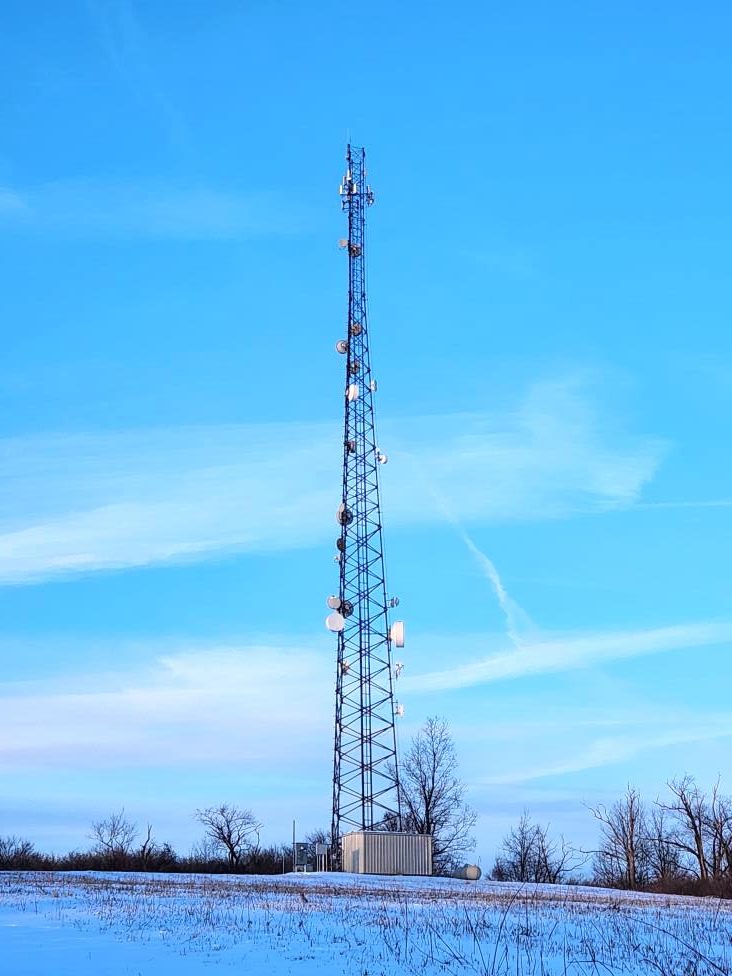
Dan Walker questioned whether Verizon could hang its antennas on the Clarity Connect tower perhaps a mile away. Phillips dismissed the suggestion.
Additionally, planners raised in their discussion whether tower owners should post some sort of decommissioning bond to ensure prompt removal should the tower’s use discontinue.
Wednesday night’s “sketch plan review conference” marked the first of three steps tower developers must take before they can break ground. A formal application and an environmental assessment must first get completed and filed. Once reviewed by the Planning Board, the board would hold a public hearing prior to its granting final consent.
Phillips doubted that he and his client could meet the deadlines required for review by the March meeting. More likely, that review will occur in early-April, placing any public hearing later in the spring.
Yet consider this: The public interest considerations that underpin this whole Verizon initiative are negligible, if not nonexistent. If the tower were built, you’d get the same number of bars on your Verizon phone as at present; no better, no worse. Dead spots in Enfield would persist. If the new tower goes up, the one that’s so near it would not come down. It’s owned by somebody else. The current tower would remain even were it nothing more than a useless, ugly, naked stick stuck in the air.
“Carriers can have another place to go,” Tony Phillips represented to the board, implying that more total tower space may invite new, competing cell providers into the market. Yet those are business decisions, speculative ones at best, and decisions made by those far removed from Enfield. Don’t count on them.
“It’s being built to do a favor for the industry,” Planning Board member Henry Hansteen asserted.
“It’s all financial. It’s not like the Town’s going to get any benefit,” Rich Teeter reiterated. There’ll not be any better service, he pointed out.
But “it’s an allowed use under the Site Plan Review Law,” Chair Dan Walker cautioned. “Denying something like this is complicated,” he said. Worst case, Verizon or Harmoni could take Enfield to court.
But what most struck an observer at the meeting that night was the perceived level of corporate hubris. It represented another instance of a big-city business interest praying upon presumed small-town naiveté, and playing those at Enfield’s board table as patsies. One can argue it happened with the giant Applegate Road solar project in 2020; and then, again, with the Breezy Meadows subdivision three years later.
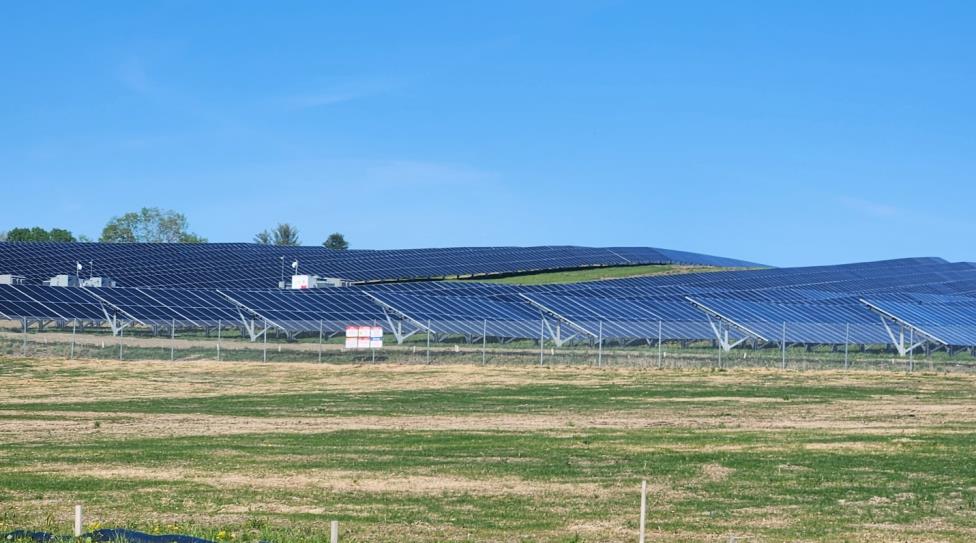
With the solar project—safely-stated, the one thing Enfield residents of all political stripes have most derided this decade—outside developers had first said one thing, and then done something else. The Planning Board had specified woven-wire fencing, and builders erected chain-link. Legally-mandated open areas were abandoned to weeds and scrub. And whereas owners had first represented they’d keep forested areas near the solar arrays undisturbed, they later clear-cut.
“They didn’t do their homework,” Mike Carpenter appraised what Verizon’s agent had presented the Planning Board Wednesday night. A colleague remarked, partly under her breath, “It’s a snow job.”
###